Description
Product Introduction
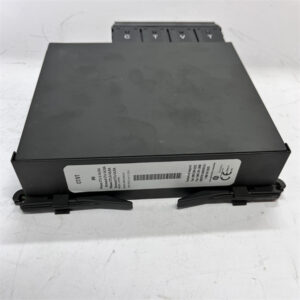
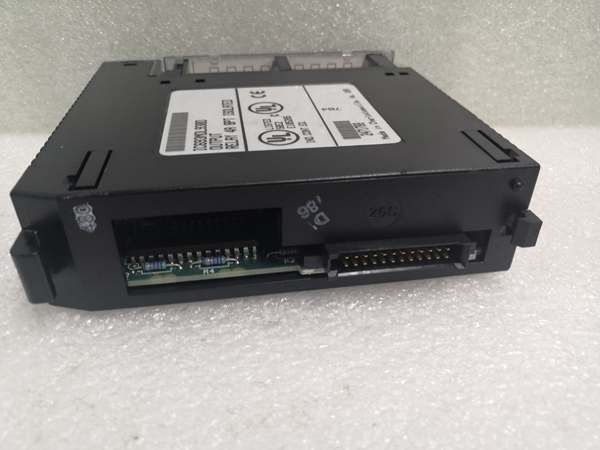
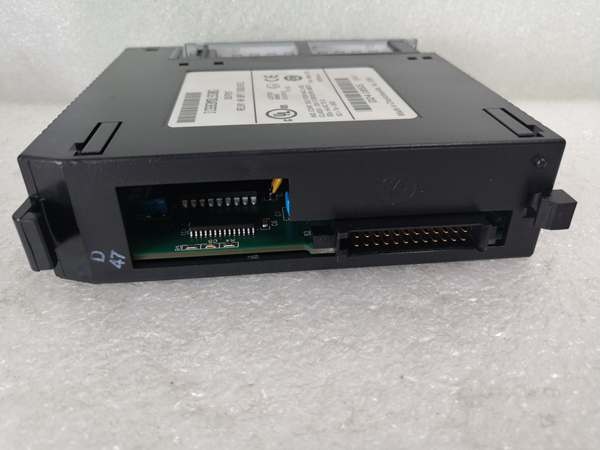
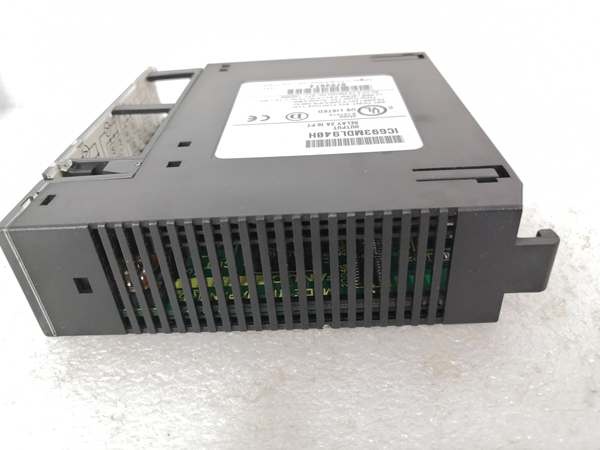
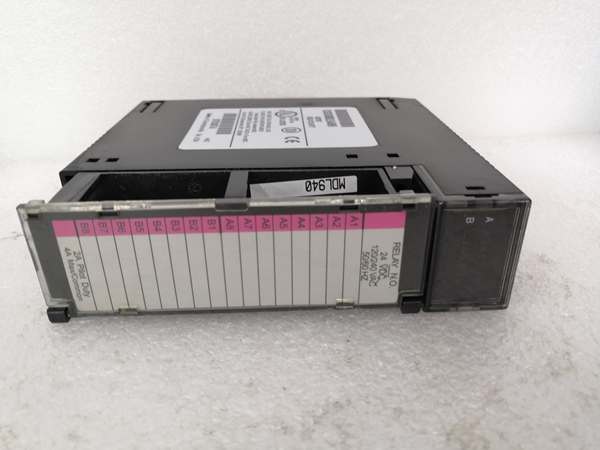
I’ve wired these for motor starters and high-voltage limit switches in dusty industrial environments. The GE IC694MDL231 is an 8-channel isolated input module that handles 240V AC signals directly—no external relays needed. That red stripe on the label isn’t decoration; it’s a serious high-voltage warning.What makes this module practical is its 1500V isolation between channels. Each input has its own common terminal, so you can mix different AC sources without creating ground loops. The 30ms on-response and 45ms off-response times are slow by modern standards, but honestly, that’s fine for motor contactors and manual switches. Just don’t use it for high-speed counting.
Key Technical Specifications
| Parameter | Value |
|---|---|
| Input Channels | 8 (individually isolated) |
| Rated Voltage | 240 VAC, 50/60 Hz |
| On-State Voltage Range | 148-264 VAC |
| Off-State Voltage Range | 0-40 VAC |
| On-State Current | 6 mA minimum |
| Off-State Current | 2.2 mA maximum |
| Response Time (On) | 30 ms maximum |
| Response Time (Off) | 45 ms maximum |
| Isolation Rating | 1500 VAC (60 seconds) |
| Power Consumption | 60 mA @ 5 VDC from backplane |
| Operating Temperature | 0°C to 60°C (32°F to 140°F) |
| Wire Size | 12-22 AWG |
| LED Indicators | 8 green LEDs (one per channel) |
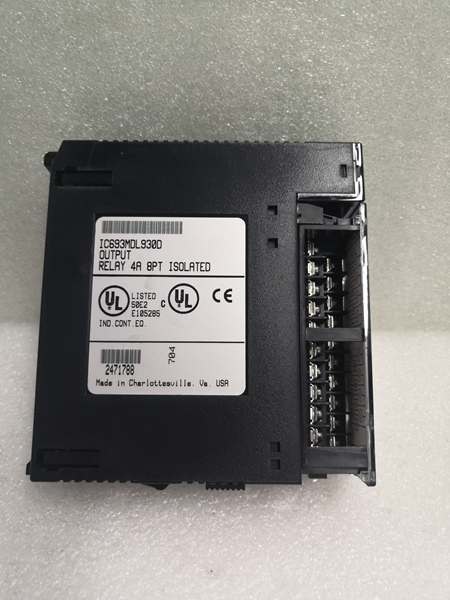
GE IC693MDL930
Quality Control Process (SOP Transparency)
Testing high-voltage input modules requires verifying both isolation integrity and signal accuracy.
- Incoming Verification: Serial validation against Emerson’s database, visual inspection of the red high-voltage warning stripe and terminal blocks. We check for any signs of previous use or contamination on the isolation barriers.
- Isolation Test: Hi-Pot tester applies 1500V AC between each input channel and ground for 60 seconds. We also test channel-to-channel isolation at 1500V AC. Any breakdown below 1400V AC fails the unit.
- Functional Test: Using a variable AC power supply, we apply voltage to each channel from 0V to 280V AC. We verify the module recognizes “ON” state between 148-264V AC and “OFF” state below 40V AC. Current draw is measured at 6mA minimum for on-state.
- Response Time Verification: Using a function generator and oscilloscope, we measure turn-on and turn-off times. Must be ≤30ms for on-response and ≤45ms for off-response. We test all 8 channels—variation beyond 5ms between channels indicates potential issues.
- Final QC & Packaging: QC inspector signs off, terminal screws tightened to specified torque, module sealed in anti-static bag with warning label. QC label shows “1500V isolation passed, all 8 channels functional.”
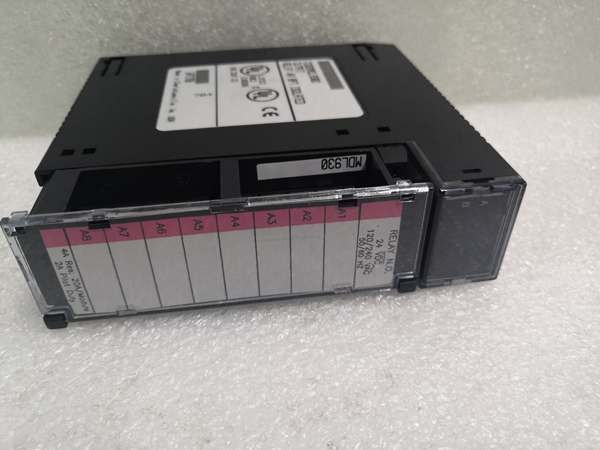
GE IC693MDL930
Replacement Pitfall Guide (Field Engineer’s Warnings)
High-voltage modules demand respect—one wiring mistake can damage your entire rack.
- ❗ AC Power Only—No DC Compatibility: This module only works with 50/60 Hz AC power. I’ve seen technicians try to wire 24VDC signals—it won’t work and can damage the input circuitry. The module uses reactive (resistor/capacitor) input circuits designed specifically for AC .
- ❗ External Power Required for Field Devices: The module doesn’t power your field devices. You must supply separate 240V AC to operate buttons, limit switches, or proximity sensors. Each input channel needs its own common connection to the external power source .
- ❗ Response Times Are Too Slow for Fast Signals: With 30ms on-response and 45ms off-response, this module can’t handle high-speed inputs. Don’t use it for encoder pulses or fast counters—you’ll miss transitions. It’s designed for motor contactors, manual switches, and status indicators where speed isn’t critical.
- ❗ Mixing Voltage Sources Requires Careful Grounding: While channels are isolated, mixing different AC sources (like 120V and 240V) requires proper grounding of each source. Ground loops between different power supplies can induce noise that the module might interpret as false signals.
- ❗ Red Stripe Means High Voltage—Respect It: That red warning stripe on the label indicates 240V AC is present at the terminals. Use proper personal protective equipment when wiring. I’ve seen arcing damage terminal blocks when wires were inserted with power applied—always de-energize before working on this module.
Keep these five points in mind and you’ll eliminate roughly 90% of rework.