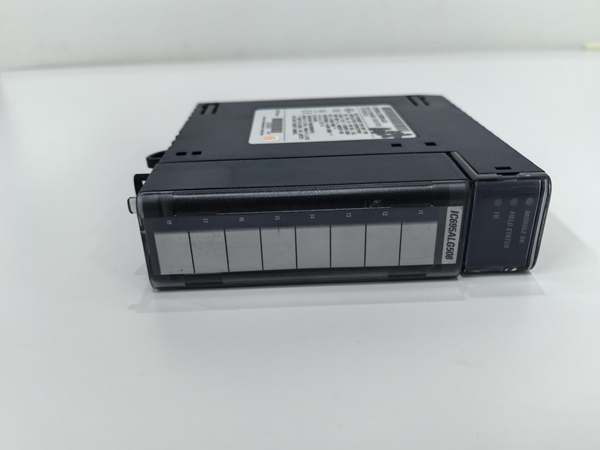
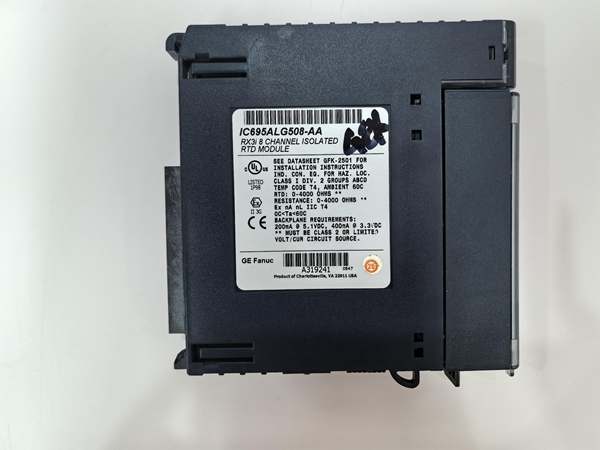
Description
Product Introduction
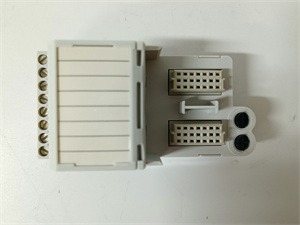
I’ve calibrated these modules for furnace temperature loops—they handle Pt100 sensors without external transmitters. The GE IC695ALG508 is an 8-channel isolated RTD input module for PACSystem RX3i systems, designed for direct connection to resistance temperature detectors and resistive sensors .This unit supports multiple RTD types including Pt385, Pt391.6, Ni618, and Cu426, plus direct resistance inputs up to 4200 ohms. Each channel configures independently for 2-wire, 3-wire, or 4-wire connections with 32-bit IEEE floating point resolution .
Key Technical Specifications
| Parameter | Value |
|---|---|
| Input Channels | 8 isolated differential |
| RTD Types | Pt385, Pt391.6, Ni672, Ni618, NiFe518, Cu426 |
| Resistance Ranges | 0-260, 0-525, 0-1050, 0-2100, 0-3150, 0-4200 Ω |
| Wiring Configurations | 2-wire, 3-wire, 4-wire RTD |
| Measurement Units | °C, °F, or Ω (configurable per channel) |
| Data Format | 32-bit integer or 32-bit IEEE float in 32-bit field |
| Filter Settings | 3.28 Hz to 694 Hz notch filter (configurable) |
| Isolation | 250 VAC continuous; 1500 VAC for 1 minute |
| Accuracy | ±0.5% at 25°C (verify with OEM datasheet) |
| Operating Temperature | 0 to 60°C (32 to 140°F) |
| Storage Temperature | -40 to 85°C (-40 to 185°F) |
| Terminal Blocks | IC694TBB032, TBS032, TBC032 |
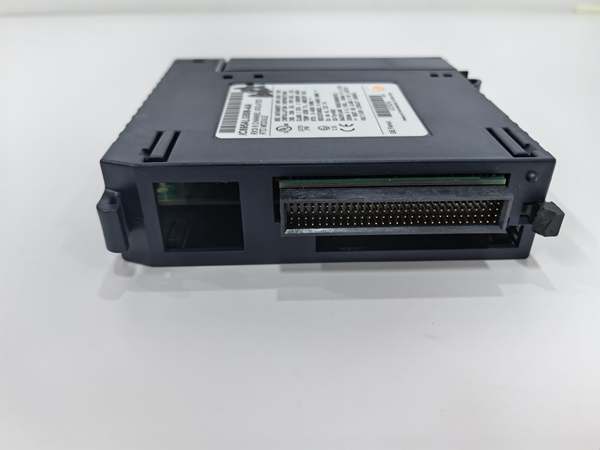
GE IC695ALG508
Quality Control Process (SOP Transparency)
RTD modules fail when you need them most—during a thermal runaway event. Here’s our verification sequence for the GE IC695ALG508.
- Incoming Verification: Cross-reference part number against Emerson’s compatibility matrix. Check for GE Intelligent Platforms or Emerson Automation branding. Inspect connector pins for gold plating integrity—corrosion here means moisture exposure during storage.
- Live Functional Test: Install in test RX3i rack with CPE400 CPU. Configure channels for various RTD types using Proficy Machine Edition. Apply calibrated resistance values from Fluke 725S process calibrator across full range (0-4200 Ω). Verify temperature conversion accuracy within ±0.5% at 25°C ambient.
- Electrical Parameter Test: Measure insulation resistance at 500 V between adjacent channels (>100 MΩ). Verify channel-to-ground isolation withstands 1500 VAC for 60 seconds. Check 3-wire compensation circuitry by simulating lead resistance imbalances.
- Firmware Verification: Read firmware version via Ethernet Station Manager. Document DIP switch settings (though honestly, most field engineers never touch them). Photograph all status LED patterns during normal operation and open-circuit fault conditions.
- Final QC & Packaging: Inspector signs off after confirming UL/CE/ATEX markings. Seal in anti-static bag with desiccant. Bubble wrap and carton with QC label showing calibration date and measured resistance accuracy.
GE IC695ALG508
Replacement Pitfall Guide (Field Engineer’s Warnings)
The IC695ALG508 looks straightforward but has specific failure modes that only appear with temperature cycling. Keep these five points in mind and you’ll eliminate roughly 90% of rework.
- ❗ RTD Type Mismatch: Supports six RTD types with different alpha coefficients. Case: An engineer configured all channels for Pt385 but installed Pt391.6 sensors—the 0.6% difference created a 15°C error at 400°C.
- ❗ Wiring Configuration: Each channel configures independently for 2/3/4-wire. “The factory default is 2-wire. If you’re using 3-wire RTDs without reconfiguration, you’ll get lead resistance errors that increase with cable length.”
- ❗ Filter Settings: 3.28 Hz to 694 Hz notch filter reduces noise but adds lag. For furnace control, I typically set 60 Hz rejection—fast enough for temperature loops without excessive phase delay.
- ❗ Self-Heating Errors: The module applies excitation current to RTDs. High resistance RTDs (1000 Ω) draw less current but are more susceptible to self-heating errors in still air environments.
- ❗ Terminal Block Compatibility: Requires specific removable terminal blocks—IC694TBB032, TBS032, or TBC032. Standard 90-30 terminal blocks physically fit but won’t make proper contact with the module’s connector pins.