Description
System Architecture & Operational Principle
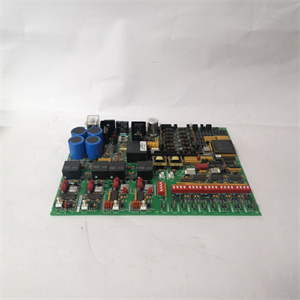
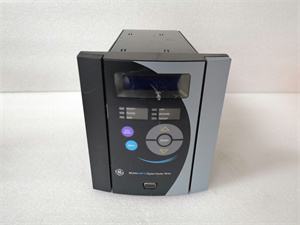
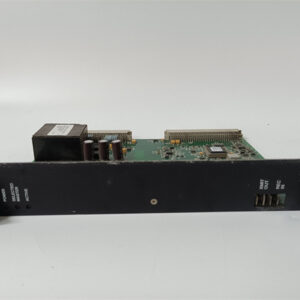
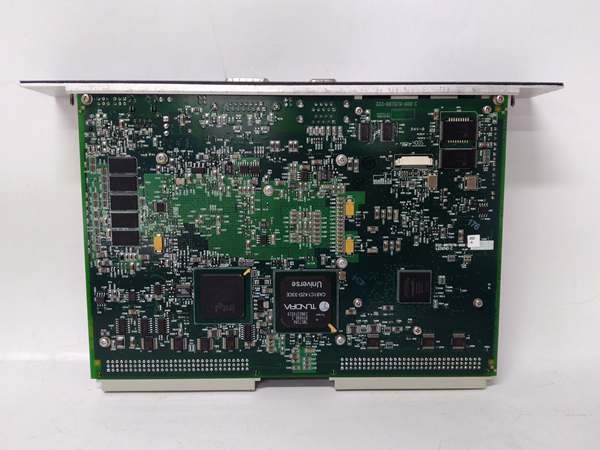
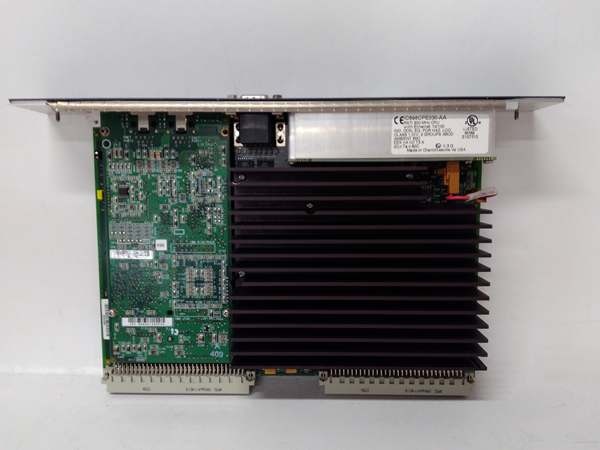
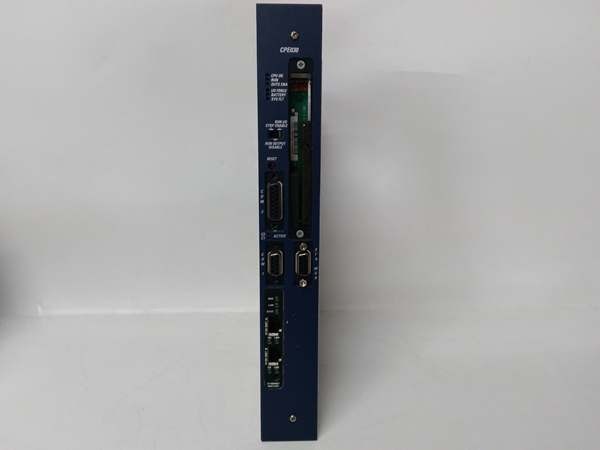
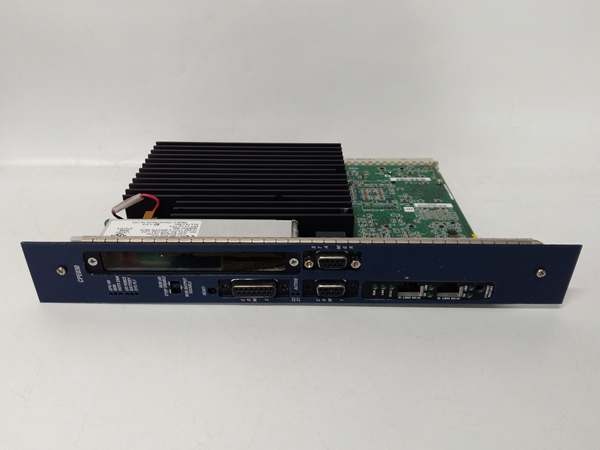
The IC698CPE030 is a core CPU module in the GE PACSystems RX7i family, designed to reside in Slot 1 of an RX7i rack (Purdue Level 1–2 boundary). It serves as the computational heart of the control system, executing user-defined control programs (downloaded via Proficy Machine Edition) and coordinating communication between I/O modules (local and remote) and external systems (HMIs, SCADA, enterprise networks).
Operational Workflow
-
Program Execution: The CPU fetches and executes ladder logic, structured text, or function block instructions from its memory, performing real-time control calculations (e.g., PID loops, motion control).
-
I/O Communication: It communicates with I/O modules in the same rack or remote racks via the RX7i high-speed backplane, exchanging data (e.g., sensor inputs, actuator outputs) at high speed.
-
External Connectivity: The dual 10/100 Mbps Ethernet ports enable integration with external systems using protocols like Modbus TCP, Ethernet Global Data (EGD), and SRTP, allowing remote monitoring and control.
-
Diagnostics: The CPU performs self-checks (e.g., memory integrity, communication link status) and reports faults (via LEDs or software) to aid in troubleshooting.
Key Architectural Advantages
-
Hot-Swappable: Can be replaced without shutting down the rack, minimizing downtime in 24/7 applications.
-
Battery-Backed RAM: Preserves program and data during power outages, ensuring continuity of operation.
-
Compact Design: Fits in standard RX7i racks, simplifying system integration.

IC698CPE030
Core Technical Specifications
|
Parameter
|
Specification
|
|---|---|
|
Processor
|
600 MHz Pentium-M microprocessor
|
|
Memory
|
64 MB battery-backed RAM, 64 MB non-volatile Flash memory
|
|
Backplane Compatibility
|
RX7i (PacerStack) rack, Slot 1
|
|
I/O Capacity
|
Up to 32 K bits of discrete I/O, 32 K words of analog I/O
|
|
Communication Ports
|
2x 10/100 Mbps Ethernet (RJ45), 1x RS-232, 1x RS-485, 1x station manager port
|
|
Protocols Supported
|
Modbus TCP (server/client), EGD, SRTP, Modbus RTU (slave), SNP
|
|
Programming Languages
|
Ladder logic, structured text, function block diagrams, C
|
|
Execution Speed
|
0.069 ms per 1000 Boolean contacts/coils
|
|
Operating Temperature
|
-40°C to +70°C (-40°F to +158°F)
|
|
Power Consumption
|
8 W typical, 12 W max
|
|
Dimensions
|
~312 mm × 27 mm × 215 mm (12.3 in × 1.06 in × 8.5 in)
|
|
Weight
|
~0.9 kg (2.0 lbs)
|
|
Certifications
|
UL/cUL, CE, FCC Class A
|
Customer Value & Operational Benefits
1. Reliable Operation in Harsh Environments
The IC698CPE030’s wide operating temperature range (-40°C to +70°C) and robust construction make it suitable for industrial environments like power plants, oil refineries, and manufacturing facilities, where temperature fluctuations and vibration are common.
2. Seamless Integration with Existing Systems
Support for multiple communication protocols (Modbus TCP, EGD, SRTP) allows the CPU to integrate with legacy systems (e.g., GE 90-70 PLCs) and modern SCADA systems, reducing the need for costly system overhauls.
3. Minimized Downtime with Hot-Swap Design
The ability to replace the CPU without shutting down the rack is invaluable for 24/7 power generation or continuous manufacturing processes. Technicians can perform maintenance during scheduled outages, avoiding unplanned downtime.
4. Easy Diagnostics with Visual Indicators
The CPU features status LEDs (e.g., “RUN”, “FAULT”) that provide instant feedback on its operation. For example, a blinking “FAULT” LED indicates a program error or hardware fault, allowing technicians to quickly identify issues.
5. Scalable Memory for Complex Applications
The 64 MB battery-backed RAM and 64 MB Flash memory support large, complex control programs (e.g., batch processing, advanced process control), making the CPU suitable for applications requiring high computational power.
IC698CPE030
Field Engineer’s Notes (From the Trenches)
When replacing an IC698CPE030, always back up the program and configuration files first—losing the runtime database means re-downloading and re-validating the entire control strategy, which can take days. I once spent a week recovering a program for a refinery’s distillation column after a CPU failure, all because the backup was outdated.Check the battery status regularly—if the “BATT LOW” alarm triggers, replace the battery immediately. A dead battery can cause the CPU to lose its clock and program data, leading to unexpected shutdowns.Verify Ethernet port settings (e.g., IP address, subnet mask) if the CPU isn’t communicating with external systems. I’ve seen duplicate IP addresses cause intermittent comms that looked like hardware faults, wasting hours of troubleshooting time.
Real-World Applications
1. Power Generation: Gas Turbine Control
A natural gas power plant uses the IC698CPE030 to control a 500 MW gas turbine. The CPU executes PID loops to adjust fuel flow and turbine speed, maintaining grid frequency (50/60 Hz) within strict limits. The dual Ethernet ports enable remote monitoring via the plant’s SCADA system, allowing operators to adjust setpoints from the control room.
2. Manufacturing: Robotic Welding Line
An automotive plant uses the IC698CPE030 to control a robotic welding line with 12 servo axes. The CPU’s fast execution speed (0.069 ms/1000 coils) ensures precise motion control, while the RS-485 port communicates with the robot controllers. The hot-swap design allows technicians to replace the CPU during lunch breaks, minimizing downtime.
3. Oil & Gas: Pipeline Monitoring
A pipeline company uses the IC698CPE030 to monitor pressure and flow in a 100-mile gas pipeline. The CPU collects data from field sensors (via I/O modules) and transmits it to the company’s enterprise network using Modbus TCP. The wide operating temperature range (-40°C to +70°C) ensures reliable operation in remote areas with extreme temperatures.