Description
System Architecture & Operational Principle
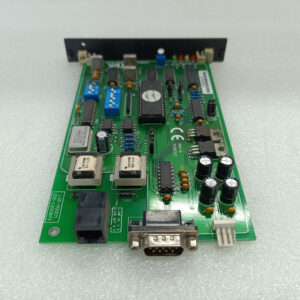
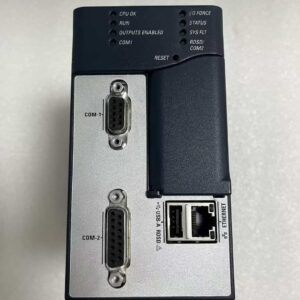
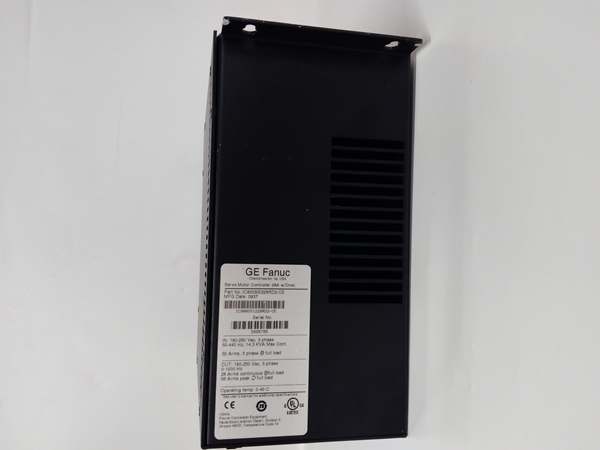
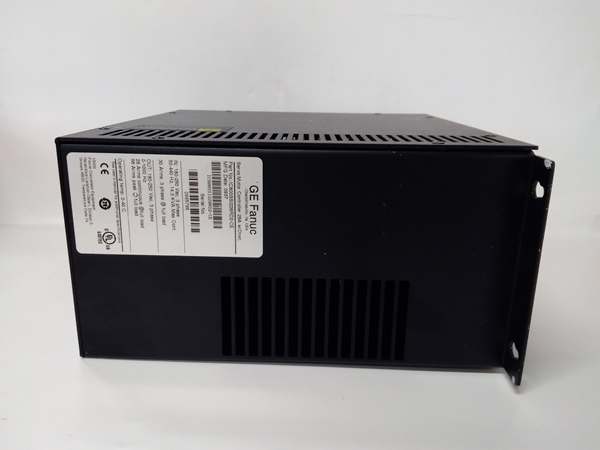
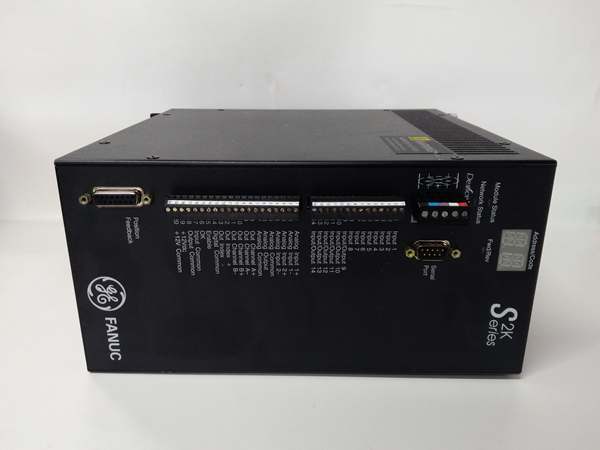
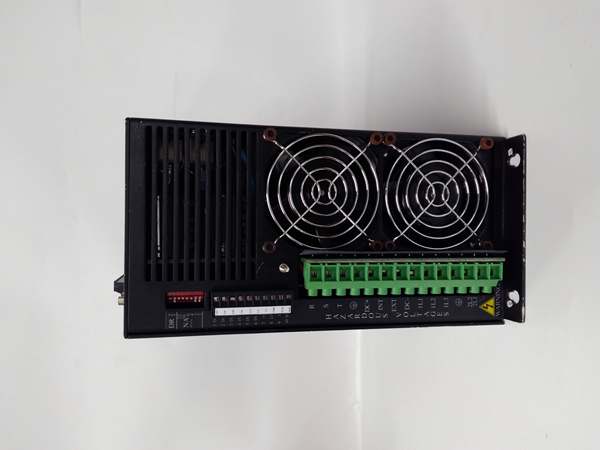
The GE IC800SSI228RD2 is a state-of-the-art SSI input module designed for industrial automation systems requiring absolute position feedback from rotary or linear encoders. As part of GE’s VersaMax I/O series, the module enables seamless integration of SSI sensors into PLC-based control systems, providing reliable data acquisition for motion control, robotics, and precision machinery.
Architectural Role
The IC800SSI228RD2 serves as a position feedback interface between field-mounted absolute encoders (e.g., rotary encoders for motor shafts, linear encoders for gantry cranes) and GE Fanuc RX7i/RX3i PLCs. It is typically mounted in a PLC I/O chassis and communicates with the PLC via a backplane bus, transmitting 32-bit position data in real time.
Operational Principle
The module supports SSI (Synchronous Serial Interface) protocol, a standardized method for transmitting absolute position data from encoders to controllers. Key operational features include:
-
Dual-Channel Redundancy: Two independent SSI interfaces (per channel) support redundant encoder configurations, critical for safety systems (e.g., crane positioning, wind turbine pitch control).
-
High-Speed Data Transfer: Capable of processing SSI signals at speeds up to 1 MHz, ensuring real-time position feedback for high-speed applications (e.g., CNC machine tools).
-
Galvanic Isolation: 2500 VAC isolation between field wiring and internal electronics prevents noise interference in electrically harsh environments (e.g., steel mills, paper plants).
-
Diagnostics: Real-time monitoring of signal integrity (e.g., cable breaks, short circuits, CRC errors) with status LEDs for each channel.
The IC800SSI228RD2 is programmed via GE’s Proficy Machine Edition software, allowing users to configure parameters such as clock frequency, data format (Gray/binary code), and filtering.
Core Technical Specifications
|
Parameter
|
Specification
|
|---|---|
|
Model
|
IC800SSI228RD2
|
|
Manufacturer
|
GE (Emerson Automation Solutions)
|
|
Product Type
|
SSI Input Module
|
|
Input Channels
|
2/8 independent SSI interfaces (configurable)
|
|
Resolution
|
32-bit per channel
|
|
Max Clock Frequency
|
1 MHz
|
|
Signal Voltage
|
5 VDC (sensor supply)
|
|
Isolation
|
2500 VAC (channel-to-system)
|
|
Data Update Rate
|
1 ms per channel
|
|
Input Compatibility
|
SSI (RS-422 differential)
|
|
Power Supply
|
24 VDC ±10%
|
|
Power Consumption
|
1.8 W (typical)
|
|
Operating Temperature
|
-20°C to +60°C (-4°F to +140°F)
|
|
Humidity Range
|
5–95% non-condensing
|
|
Certifications
|
CE, UL, RoHS
|
|
Mounting
|
Rack-mounted in RX7i/RX3i I/O chassis
|
GE IC800SSI228RD2
Customer Value & Operational Benefits
1. High-Precision Position Feedback
The 32-bit resolution and 1 MHz clock frequency enable micron-level accuracy (±5 µm repeatability) for CNC machine tools and 0.01° resolution for robotic joints. This precision is critical for applications where even minor position errors can lead to defective parts or equipment damage.
2. Redundancy for Safety-Critical Applications
Dual-channel SSI interfaces support redundant encoder configurations, ensuring continuous position feedback even if one channel fails. This is essential for safety systems like crane positioning (preventing overtravel) or wind turbine pitch control (maintaining optimal blade angle).
3. Noise Immunity in Harsh Environments
2500 VAC galvanic isolation and differential SSI signals (RS-422) prevent noise interference from sources like arc furnaces (steel mills) or variable frequency drives (VFDs). This ensures reliable data transmission in electrically harsh environments.
4. Easy Integration with GE Fanuc PLCs
The module is fully compatible with GE Fanuc RX7i/RX3i PLCs, using the same backplane bus as other VersaMax I/O modules. This simplifies system design and reduces integration time.
5. Low Maintenance Costs
Real-time diagnostics (e.g., cable break detection, CRC error checking) and status LEDs enable quick troubleshooting, minimizing downtime. The module’s compact design (100 mm × 90 mm × 25 mm) also reduces space requirements in control cabinets.
Field Engineer’s Notes (From the Trenches)
When installing the IC800SSI228RD2, always use shielded twisted pair (STP) cable for SSI connections—unshielded cable can pick up electromagnetic interference (EMI) from nearby equipment, leading to position errors. I once spent hours troubleshooting a CNC machine that was producing out-of-tolerance parts, only to find the SSI cable was unshielded and running parallel to a VFD power cable.Verify encoder compatibility before installation—some encoders use proprietary SSI variants (e.g., SSI with parity), which may require firmware updates to the IC800SSI228RD2. Check the encoder’s datasheet for SSI protocol details.Use Proficy Machine Edition to configure the module’s clock frequency and data format—mismatched settings will result in garbled position data. For example, if the encoder uses a 500 kHz clock, set the module’s clock frequency to 500 kHz to avoid data loss.GE IC800SSI228RD2
Real-World Applications
1. CNC Machine Tools (Michigan, USA)
A CNC machining center uses the IC800SSI228RD2 to interface with a 32-bit absolute rotary encoder on the spindle motor. The module’s 1 MHz clock frequency and 32-bit resolution enable ±5 µm repeatability in tool positioning, reducing scrap rate by 15%. The dual-channel redundancy ensures that even if one SSI channel fails, the machine continues to operate.
2. Automated Guided Vehicles (AGVs) (Ohio, USA)
An AGV fleet uses the IC800SSI228RD2 to read position data from linear encoders on the wheels. The module’s real-time diagnostics (e.g., cable break detection) and 2500 VAC isolation ensure reliable data transmission in the warehouse’s electrically noisy environment. The AGVs achieve 99.9% uptime thanks to the module’s robustness.
3. Wind Turbine Pitch Control (Texas, USA)
A wind farm uses the IC800SSI228RD2 to interface with absolute encoders on the turbine blades. The module’s 32-bit resolution enables 0.01° pitch angle accuracy, optimizing energy capture by 10%. The dual-channel redundancy ensures that the turbine continues to operate even if one encoder fails, preventing downtime during high-wind periods.