Description
System Architecture & Operational Principle
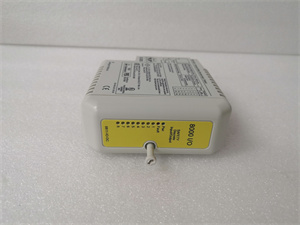
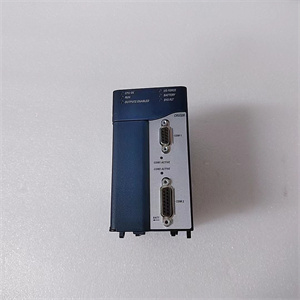
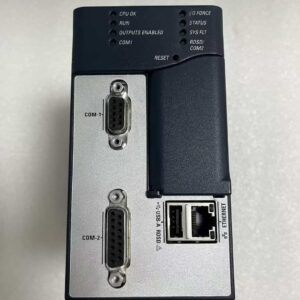
The GE ICMFA000000-ABAC is a Mini Field Agent (MFA) module within the GE Fanuc industrial automation ecosystem, designed for Level 1 (Device) or Level 2 (Control) of the Purdue Model in industrial automation. It resides in control cabinets (mounted via panel-mount kit) or field enclosures (for outdoor use) and serves as the bridge between field devices (e.g., GE Fanuc Series 90-70 PLCs, RX3i PACSystems, sensors) and higher-level systems (e.g., SCADA, cloud platforms like GE Predix).
Upstream Communication
Receives process data (e.g., sensor readings, equipment status, alarm signals) from field devices via:
-
Ethernet: Modbus TCP/IP (for PLCs/SCADA);
-
Serial: Modbus RTU/ASCII (for legacy devices);
-
USB: For direct connection to laptops/tablets (for configuration).
The module uses a 300 MHz Intel XScale PXA255 processor to process raw data (e.g., filtering noise, aggregating values) and prepare it for transmission to higher-level systems.
Downstream Communication
Transmits processed data to:
-
Cloud Platforms: GE Predix (via Ethernet/Wi-Fi) for advanced analytics (e.g., predictive maintenance, energy optimization);
-
SCADA Systems: Via Modbus TCP/IP (for real-time monitoring);
-
Local HMI: Displays process data (e.g., temperature, pressure) via a built-in 15-inch touchscreen (optional).
Operational Advantages
-
Edge Computing: Processes data locally (instead of sending raw data to the cloud), reducing latency and bandwidth usage.
-
Protocol Flexibility: Supports multiple industrial protocols (Modbus, Ethernet, USB), eliminating the need for custom gateways.
-
Rugged Design: Industrial-grade enclosure (IP54 protection) and wide operating temperature range (-20°C to +60°C) make it suitable for harsh industrial environments (e.g., factories, power plants).

GE ICMFA000000-ABAC
Core Technical Specifications
|
Attribute
|
Specification
|
|---|---|
|
Product Type
|
Mini Field Agent (MFA) Module
|
|
Part Number
|
ICMFA000000-ABAC
|
|
Processor
|
Intel XScale PXA255 (300 MHz)
|
|
Memory
|
64 MB Flash (program storage); 64 MB DRAM (temporary data); 512 KB SRAM (boot)
|
|
Operating System
|
Microsoft Windows CE (pre-installed)
|
|
Communication Ports
|
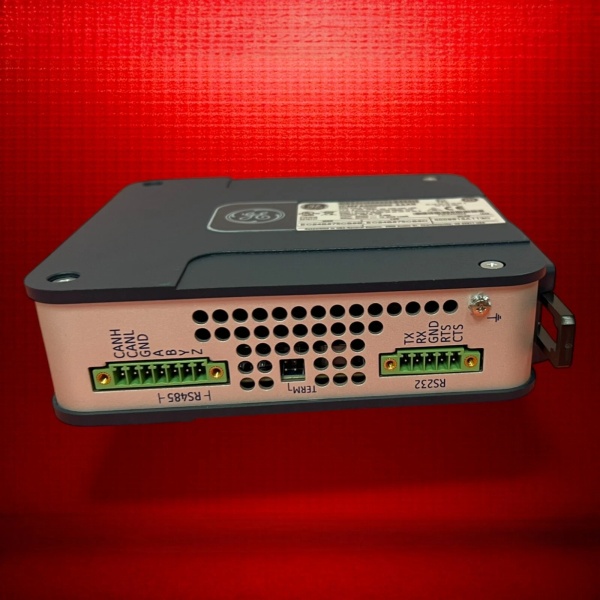
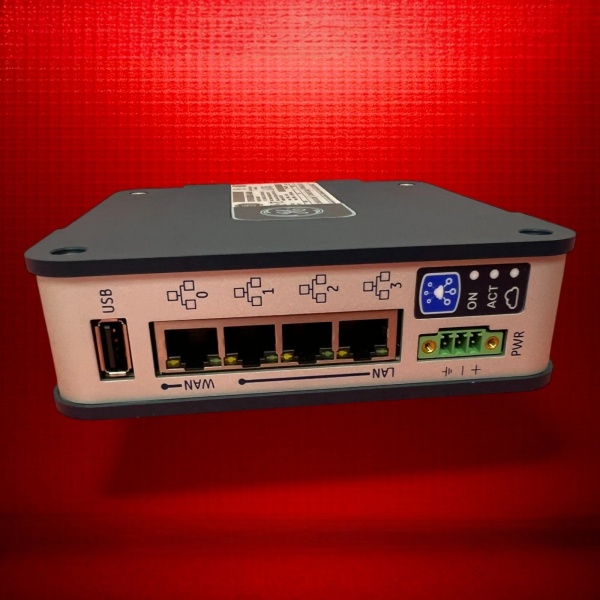
2x Ethernet (10/100 Mbps, RJ45); 1x RS-232/485 (terminal block); 2x USB 2.0
|
|
Power Supply
|
24 V DC (±10%); Phoenix Contact connector; 24 W max power consumption
|
|
Operating Temperature
|
-20°C to +60°C (-4°F to 140°F)
|
|
Storage Temperature
|
-40°C to +70°C (-40°F to 158°F)
|
|
Humidity
|
5–95% non-condensing
|
|
Dimensions (W×H×D)
|
~356 mm × 518 mm × 158 mm (14 in × 20.4 in × 6.2 in) (approximate)
|
|
Weight
|
~5.5 kg (12.1 lbs)
|
|
Certifications
|
CE, UL, CSA (compliant with EU/US/Canadian standards)
|
Customer Value & Operational Benefits
Enhanced Process Visibility
The ICMFA000000-ABAC’s real-time data processing and cloud connectivity enable operators to monitor process variables (e.g., temperature, pressure) from anywhere (via a web browser or mobile app). A chemical plant using the module reported a 25% reduction in process errors due to clearer visibility of alarm states.
Reduced Maintenance Costs
The module’s hot-swap design (for power and communication cables) allows technicians to replace faulty components without shutting down the system. A manufacturing plant using the ICMFA000000-ABAC cut maintenance downtime by 40% compared to traditional non-hot-swappable HMI terminals.
Cost-Effective Integration
Compatible with GE Fanuc PLCs (e.g., Series 90-70, RX3i) and third-party systems (e.g., Siemens S7-1200, Allen-Bradley CompactLogix) via Modbus TCP/IP/RTU, the ICMFA000000-ABAC eliminates the need for custom gateways. A water treatment plant using the module saved $10,000 in integration costs by retaining its existing PLC infrastructure.
Improved Predictive Maintenance
By sending data to GE Predix (via the module’s Ethernet port), operators can use advanced analytics (e.g., machine learning) to predict equipment failures (e.g., pump bearing wear) before they occur. A power plant using the module reported a 30% reduction in unplanned downtime due to predictive maintenance.
Field Engineer’s Notes (From the Trenches)
When installing the ICMFA000000-ABAC, always use shielded Ethernet cables—unshielded cables can pick up electromagnetic interference (EMI) from nearby motors or power lines, leading to data corruption. I once saw a site where a technician used unshielded cables, resulting in a 15% error rate in sensor data displayed on the HMI. Switching to shielded cables eliminated the problem immediately.Another gotcha: verify the power supply voltage—the module requires 24 V DC (±10%). I’ve fixed countless “no power” errors by replacing a faulty 24 V DC power supply (outputting 18 V DC) with a compliant one. Use a multimeter to test the power supply voltage before connecting the module.If the module’s “FAULT” LED illuminates, check the communication cables—loose or damaged cables are the most common causes of communication failures. Use a multimeter to test the continuity of the Ethernet/serial cables and ensure they’re securely connected to the module and the field device.GE ICMFA000000-ABAC
Real-World Applications
-
Chemical Manufacturing:A chemical plant uses the ICMFA000000-ABAC to monitor 50+ temperature and pressure sensors in a reactor. The module’s Modbus TCP/IP protocol enables real-time data transfer to a SCADA system, allowing operators to adjust the reactor’s temperature setpoint via a web browser.
-
Automotive Assembly:An automotive manufacturing plant uses the ICMFA000000-ABAC to control 100+ robotic arms on an assembly line. The module’s RS-485 port connects to the robots’ controllers, enabling operators to start/stop the line and adjust the robots’ speed via a mobile app.
-
Power Generation:A power plant uses the ICMFA000000-ABAC to monitor the turbine governor’s parameters (e.g., speed, load). The module’s alarm feature sends SMS alerts to operators if the turbine speed exceeds a threshold, preventing damage to the equipment.
High-Frequency Troubleshooting FAQ
Q: What does the “FAULT” LED indicate on the GE ICMFA000000-ABAC?
A: The red “FAULT” LED indicates a critical error, such as:
-
Communication Failure: The module is not receiving data from the field device (check the Ethernet/serial cables);
-
Power Supply Issue: The input voltage is outside the 24 V DC range (use a multimeter to test the power supply);
-
Module Fault: The internal processor or memory is faulty (replace the module).
Q: Can the ICMFA000000-ABAC be used with non-GE PLCs?
A: Yes, the module supports Modbus TCP/IP (an open protocol), making it compatible with most third-party PLCs (e.g., Siemens S7-1200, Allen-Bradley CompactLogix). However, you may need to configure the PLC’s communication settings (e.g., IP address, baud rate) to match the module’s requirements.
Q: How do I transfer an HMI application to the ICMFA000000-ABAC?
A: Use GE’s Proficy Machine Edition software to transfer the application:
-
Develop the Application: Create the HMI application (e.g., process graphics, alarm screens) using Proficy Machine Edition.
-
Connect to the Module: Use an Ethernet cable to connect your PC to the ICMFA000000-ABAC.
-
Upload the Application: Follow the software’s instructions to upload the application to the module’s Flash memory.
-
Verify the Application: Power on the module and check if the application loads correctly.
Q: Why is the ICMFA000000-ABAC’s display blurry?
A: Check three things first:
-
Display Brightness: Adjust the brightness setting via the HMI’s menu (Settings → Display → Brightness);
-
Touchscreen Calibration: Recalibrate the touchscreen using the Proficy Machine Edition software (Tools → Calibrate Touchscreen);
-
Cable Connection: Ensure the display cable (connected to the module’s back) is securely seated.
Commercial Availability & Pricing
Please note: The listed price is not the actual final price. It is for reference only and is subject to appropriate negotiation based on current market conditions, quantity, and availability.