Description
System Architecture & Operational Principle
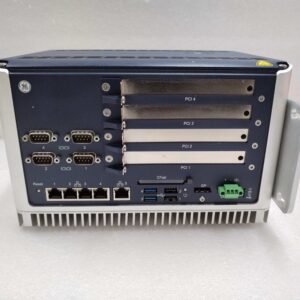
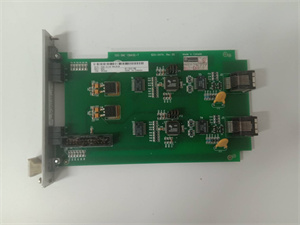
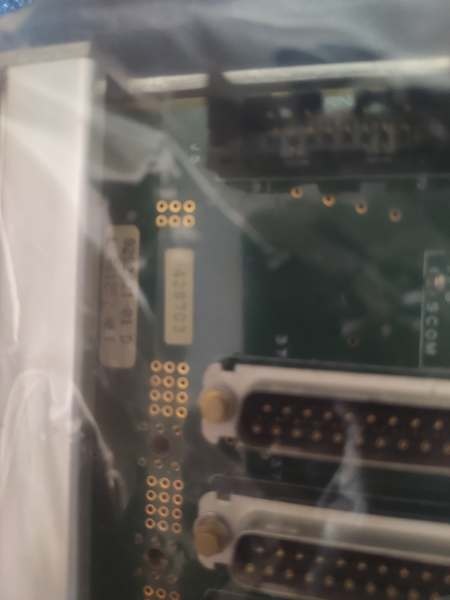
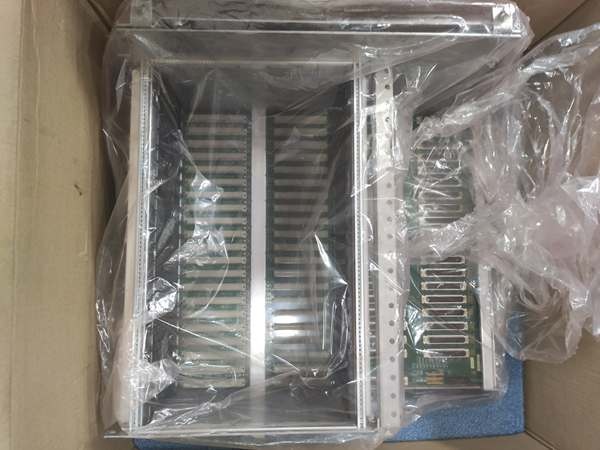
The IS200BPVCG1BR1 is a Power Voltage Control Board (BPVC) in the GE Mark VI Speedtronic family, designed to mount in a Mark VI I/O rack (Purdue Level 1). It serves as the critical interface between the Mark VI main controller and the generator excitation system (static exciter, brushless exciter, or digital voltage regulator), enabling closed-loop control of generator terminal voltage and reactive power output.
The board receives analog feedback from the generator terminal voltage transformer (VT) and current transformer (CT), as well as digital status signals from the excitation system. It uses 16-bit ADCs to digitize these signals, which are then processed by the Mark VI controller to calculate the required field current for the generator exciter. The board also contains 16-bit DACs to output control signals to the voltage regulator (e.g., 4–20 mA or ±10 VDC).
Key features include 1500 VDC optical isolation between the VME backplane and field wiring, per-channel calibration for voltage/current measurements, and status LEDs for power, communication, and fault conditions. The board is hot-swappable when installed in a supported Mark VI rack, allowing replacement without shutting down the turbine-generator set—a critical feature for 24/7 power generation and petrochemical applications.

IS200BPVCG1BR1
Core Technical Specifications
-
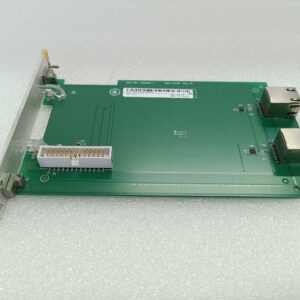
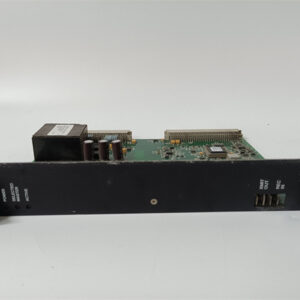
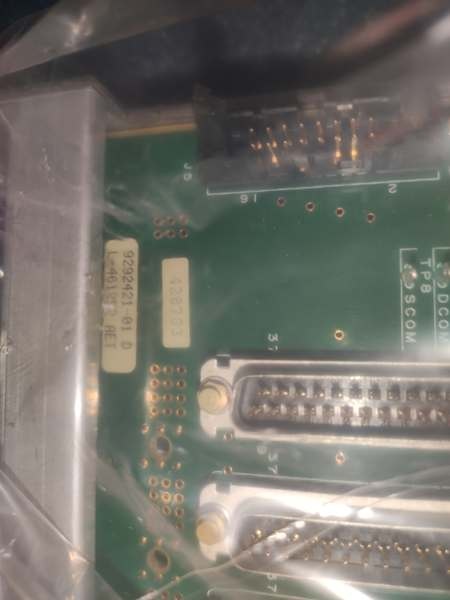
Physical Interface: 2x 20-pin terminal blocks (field I/O), 1x 96-pin VME backplane connector (P1/J1)
-
Input Channels: 8 analog inputs (4–20 mA, 0–10 VDC) for VT/CT signals; 16 digital inputs (dry contact/24 VDC) for exciter status
-
Output Channels: 4 analog outputs (4–20 mA, ±10 VDC) for voltage regulator control; 8 digital outputs (open collector, 24 VDC) for exciter enable/trip
-
ADC/DAC Resolution: 16 bits (65,536 counts)
-
Isolation: 1500 VDC analog-to-digital, 500 VDC digital-to-digital, 1500 VDC I/O-to-VMEbus
-
Operating Temperature: -40°C to +70°C (-40°F to +158°F)
-
Storage Temperature: -55°C to +85°C (-67°F to +185°F)
-
Humidity: 5–95% RH non-condensing
-
Backplane Compatibility: Mark VI VME rack (P1/J1 interface)
-
Power Consumption: 10 W typical, 15 W max
-
Dimensions: ~240 mm × 30 mm × 180 mm (9.4 in × 1.2 in × 7.1 in)
-
Weight: ~1.1 kg (2.4 lbs)
-
Certifications: UL/cUL, CE, IEEE 1613 (substation environmental compliance)
Customer Value & Operational Benefits
Precision Voltage Control for Grid Stability
The 16-bit ADC/DAC resolution and ±0.05% accuracy ensure tight regulation of generator terminal voltage (typically ±0.5% of setpoint), which is essential for grid compliance (e.g., NERC PRC standards) and preventing voltage flicker in downstream industrial facilities.
Robust Isolation for High-Voltage Environments
1500 VDC isolation between the VME backplane and field wiring prevents ground loops and protects the Mark VI controller from high-voltage transients caused by lightning, switching events, or faulty CTs/VTs. This is critical in transmission-level substations or industrial cogeneration plants with high fault currents.
Hot-Swappable Maintenance Without Downtime
The ability to replace a faulty IS200BPVCG1BR1 without powering down the rack minimizes maintenance impact. Technicians can perform replacements during scheduled outages or routine checks, avoiding costly turbine trips or forced power reductions.

IS200BPVCG1BR1
Field Engineer’s Notes (From the Trenches)
When troubleshooting voltage regulation issues, always check the VT/CT secondary wiring first—loose connections or incorrect tap settings are a common cause of erratic voltage readings. I once spent hours debugging a “voltage instability” fault only to find the VT secondary fuse was blown. Also, verify the excitation system’s response time matches the BPVC’s output update rate (5–20 ms); mismatched timing can cause oscillations in voltage control. Use a calibrated multimeter to cross-check analog inputs/outputs against the Mark VI diagnostic displays.
Real-World Applications
In a Pennsylvania natural gas power plant, the IS200BPVCG1BR1 controls the voltage regulator for a 400 MW combined-cycle turbine-generator. The 16-bit resolution allows the Mark VI controller to maintain terminal voltage within ±0.3% of the 13.8 kV setpoint, ensuring compliance with PJM Interconnection grid standards. The 1500 VDC isolation prevents interference from nearby 138 kV breakers, ensuring reliable voltage control during grid disturbances.
On a Texas refinery, the IS200BPVCG1BR1 interfaces with a brushless exciter on a steam turbine driver for a compressor train. The board’s wide operating temperature range (-40°C to +70°C) withstands the refinery’s hot control room, and its hot-swap capability allows maintenance during turnarounds without shutting down the compressor—avoiding production losses.