Description
IS200VSVOH1B: Product Overview
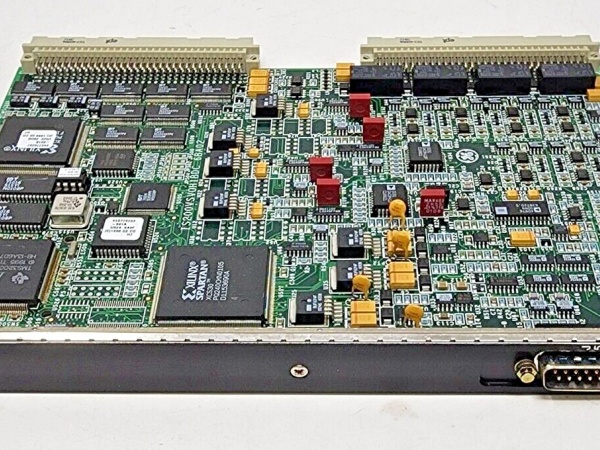
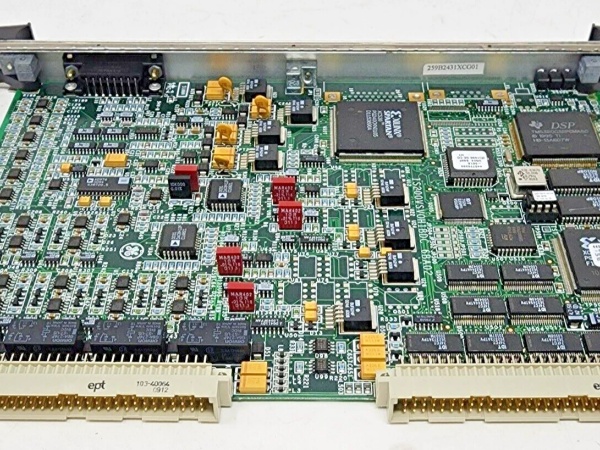
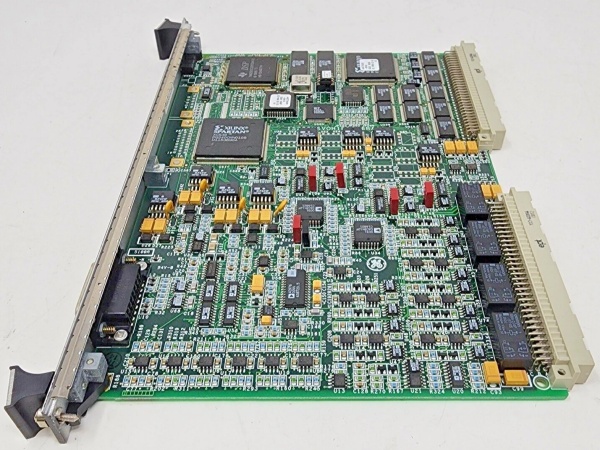
The GE IS200VSVOH1B is a VME servo control board designed specifically for GE Mark VI gas and steam turbine control systems, a legacy platform renowned for its reliability in power generation. As part of the Mark VI ecosystem, it acts as the “actuator interface” for electrohydraulic servo valves, which regulate steam and fuel flow to turbines. Its primary role is to convert control signals from the Mark VI controller into precise servo current outputs, while processing feedback from field devices (e.g., LVDT sensors for valve position) to maintain closed-loop control. This ensures accurate turbine speed and load regulation, critical for power plant efficiency and safety.
Role in Automation Systems:
Positioned as a “servo interface” in Mark VI architectures, the IS200VSVOH1B bridges the gap between the control system and physical actuators. It performs three key functions:
-
Signal Conversion: Transforms digital control commands from the Mark VI controller into analog servo current signals (bi-directional) to drive electrohydraulic servo valves.
-
Feedback Processing: Receives and conditions signals from LVDT/LVDR sensors (measuring valve position) and pulse-rate sensors (measuring flow), providing real-time data to the controller for adjustments.
-
Redundancy Support: Enables Triple Modular Redundancy (TMR) configurations for critical applications, using 3-coil servo valves and multiple sensors to enhance system reliability.
Core Functionality:
-
VME Bus Integration: Conforms to VME backplane standards, ensuring seamless communication with Mark VI components (e.g., STCA, TCQC boards) without major modifications.
-
Flexible Feedback Handling: Supports multiple sensor types (LVDT, LVDR, pulse-rate) through configurable input channels, adapting to diverse field devices in turbine systems.
-
High Precision: Provides accurate servo current control (software-selectable range) to ensure precise valve positioning, minimizing deviations in turbine operation.
-
Diagnostics: Includes LED indicators (Run, Fault, Status) and internal monitoring for servo current, feedback signals, and relay status, simplifying troubleshooting.
Platform Benefits (Mark VI Series):
The IS200VSVOH1B inherits the Mark VI platform’s strengths, including:
-
Reliability: The Mark VI system is the industry standard for gas turbine control, with a proven track record of 24/7 operation in power plants worldwide.
-
Legacy Compatibility: The board is designed to work with existing Mark VI components (e.g., TSVO terminal boards), reducing the cost of system upgrades.
-
Scalability: Supports expansion with additional servo channels or sensors to accommodate growing system demands (e.g., adding more valves to a turbine control system).

IS200VSVOH1B
Technical Specifications
-
Model Number: IS200VSVOH1B (Variant of Mark VI Series)
-
Manufacturer: GE (General Electric)
-
Product Type: VME Servo Control Board
-
Series: Mark VI (Gas/Steam Turbine Control)
-
Form Factor: 6U Eurocard (233 mm × 160 mm)
-
Bus Standard: VME backplane (compatible with Mark VI Series controllers)
-
Servo Channels: 4 channels (supports 2- or 3-coil servo valves)
-
Feedback Types: LVDT, LVDR, pulse-rate sensors (2–14 kHz)
-
Current Output: Bi-directional, software-selectable (1–30 A, application-dependent)
-
Excitation Voltage: Provided for LVDT/LVDR sensors (AC voltage, application-dependent)
-
Operating Temperature: –40 °C to +70 °C (–40 °F to 158 °F)
-
Storage Temperature: –40 °C to +85 °C (–40 °F to 185 °F)
-
Humidity: 5–95% non-condensing
-
Weight: ~0.55 kg (1.21 lbs, inferred from similar Mark VI boards)
-
Certifications: CE, UL, RoHS (inferred from GE industrial product standards)
Core Features & Customer Value
1. Precise Servo Control:
The IS200VSVOH1B’s bi-directional servo current outputs and configurable range ensure accurate valve positioning, which is critical for maintaining turbine efficiency. For example, in a gas power plant, the board adjusts fuel valve openings based on LVDT feedback to keep the turbine running at optimal speed, reducing fuel consumption and emissions.
2. Flexible Feedback Support:
By supporting LVDT, LVDR, and pulse-rate sensors, the board adapts to different field devices, eliminating the need for additional signal conditioning hardware. This flexibility saves time and money during installation and maintenance.
3. Rugged Industrial Design:
The board’s extended operating temperature range (–40 °C to +70 °C) and VME form factor make it suitable for harsh industrial environments, such as power plant control rooms or outdoor turbine enclosures. Its plug-in design simplifies replacement, minimizing downtime.
4. Redundancy for Reliability:
Support for TMR configurations (3-coil servo valves, multiple sensors) ensures that the system continues to operate even if one component fails. This is invaluable for critical applications like power generation, where downtime can result in significant losses.
IS200VSVOH1B
Typical Applications
The GE IS200VSVOH1B is widely used in industrial automation systems for:
-
Power Generation:
-
Controls steam and fuel valves in gas/steam turbines, ensuring stable power output and efficient fuel use.
-
-
Manufacturing:
-
Used in assembly lines to control hydraulic actuators for precision machining or material handling.
-
-
Petrochemical Industry:
-
Regulates valves in refinery processes (e.g., distillation columns), ensuring safe and efficient operation in hazardous environments.
-