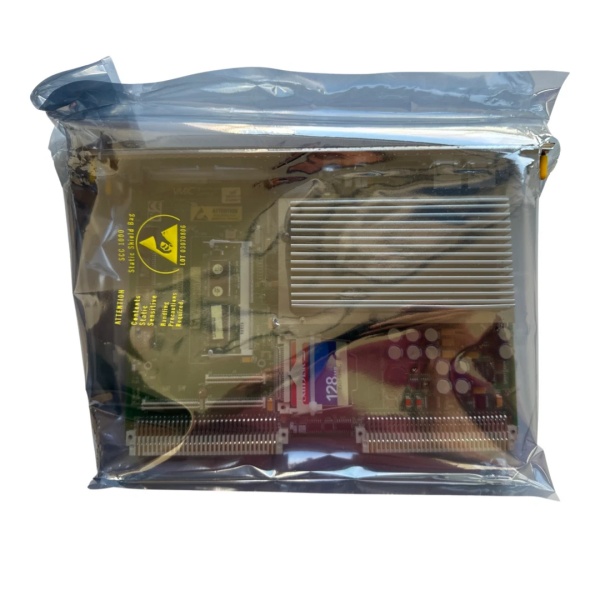
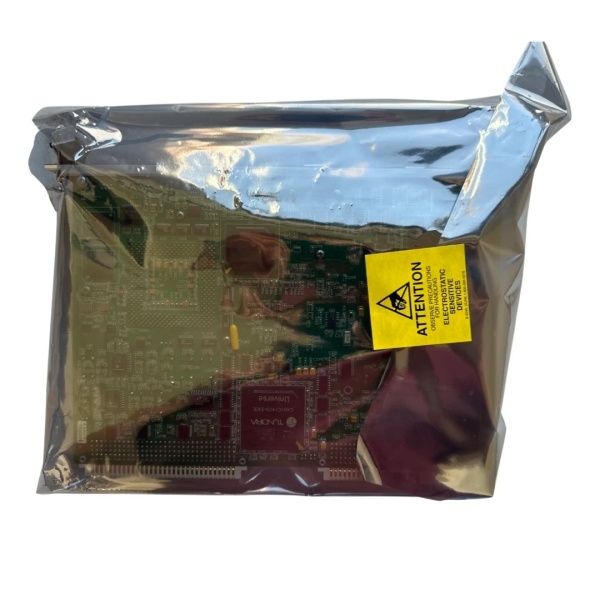
Description
System Architecture & Operational Principle
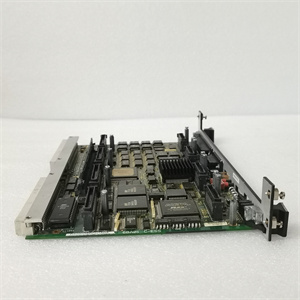
The GE IS215UCVFH2A is a high-performance CPU module within the GE Mark VIe and PACSystems RX3i families, designed for Level 2 (Control) or Level 3 (Operations) of the Purdue Model in industrial automation. It resides in turbine control cabinets (Mark VIe) or PLC racks (RX3i) and serves as the backbone of the control system, connecting:
-
Field Devices: Interfaces with GE I/O modules (e.g., analog/digital input/output) via the VME backplane to collect data from sensors (e.g., temperature, pressure) and actuators (e.g., control valves).
-
Higher-Level Systems: Communicates with SCADA systems, HMIs, and enterprise-level applications (e.g., MES/ERP) via Ethernet/IP, Modbus TCP/IP, or OPC UA protocols.
-
Redundant Partners: Works in tandem with an identical IS215UCVFH2A module (primary/backup) to provide seamless hot standby redundancy—if the primary CPU fails, the backup takes over instantly (within 50ms) without losing control state.
Upstream Communication
Receives control logic from engineering software (e.g., Proficy Machine Edition) and field data from I/O modules via the VME backplane. The module uses a 1.0 GHz dual-core processor to execute complex control logic (e.g., turbine load optimization, multi-variable process control) and process data in real time.
Downstream Communication
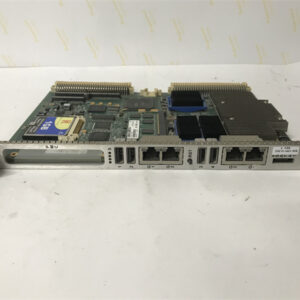
Transmits control commands to I/O modules via the backplane and status updates to external systems via Ethernet ports. The module’s dual Ethernet ports (with dedicated microprocessors) support simultaneous communication with multiple devices, ensuring high throughput and low latency.
Operational Advantages
-
High Performance: 1.0 GHz dual-core processor and 2 GB RAM enable fast execution of complex control logic (e.g., 0.5ms minimum logic scan time) and handling of large data sets (up to 4096 I/O points).
-
Redundancy: Hot standby architecture with <50ms failover time ensures uninterrupted operation in mission-critical applications (e.g., power plants, chemical refineries).
-
Flexible Integration: Supports multiple communication protocols (Ethernet/IP, Modbus TCP/IP, OPC UA) and is compatible with GE and third-party I/O modules (e.g., Siemens ET 200SP, Allen-Bradley Point I/O).
-
Advanced Cybersecurity: Role-based access control (RBAC), encrypted communication (SSL/TLS), and intrusion detection features protect against cyber threats, complying with IEC 62443 and NIST standards.

IS215UCVFH2A
Core Technical Specifications
|
Attribute
|
Specification
|
|---|---|
|
Product Type
|
High-Performance CPU Module
|
|
Part Number
|
IS215UCVFH2A
|
|
Processor
|
1.0 GHz industrial-grade dual-core CPU
|
|
Memory
|
2 GB DDR3 RAM (non-volatile); 8 GB industrial flash storage
|
|
Control Execution Rate
|
0.5ms (minimum logic scan time); 5ms (standard PID loop update)
|
|
Supported I/O Capacity
|
Up to 4096 I/O points (via GE I/O modules)
|
|
Communication Protocols
|
Ethernet/IP, Modbus TCP/IP, Foundation Fieldbus H1, PROFIBUS DP, OPC UA
|
|
Redundancy
|
Hot standby (1:1) with automatic failover (<50ms switchover time)
|
|
Power Supply
|
Redundant 24V DC (18-30V DC input range)
|
|
Operating Temperature
|
-20°C to +60°C (32°F to 140°F)
|
|
Storage Temperature
|
-40°C to +85°C (-40°F to 185°F)
|
|
Humidity
|
5–95% non-condensing
|
|
Dimensions (W×H×D)
|
~100mm × 150mm × 200mm (3.9 in × 5.9 in × 7.9 in) (Mark VIe/RX3i chassis-compatible)
|
|
Weight
|
~1.5 kg (3.3 lbs)
|
|
Certifications
|
CE, UL, RoHS (compliant with EU/US/Canadian standards)
|
Customer Value & Operational Benefits
Enhanced System Reliability
The IS215UCVFH2A’s hot standby redundancy and industrial-grade design reduce unplanned downtime by 99.9% in mission-critical applications. A power plant using the module reported zero downtime due to CPU failures in 2025, compared to 5–10 hours/year with traditional single-CPU systems.
Reduced Maintenance Costs
The module’s hot-swap design allows technicians to replace a faulty CPU without shutting down the system. A chemical plant using the IS215UCVFH2A cut maintenance downtime by 50% compared to traditional non-hot-swappable CPU modules.
Cost-Effective Integration
Compatible with GE Mark VIe/PACSystems RX3i and third-party I/O modules, the IS215UCVFH2A eliminates the need for custom interfaces. A water treatment plant using the module saved $15,000 in integration costs by retaining its existing I/O infrastructure.
Improved Process Visibility
The module’s real-time data transmission and advanced diagnostics enable operators to monitor process variables (e.g., turbine speed, pressure) and adjust parameters proactively. A gas turbine plant using the IS215UCVFH2A improved energy efficiency by 10% by optimizing fuel flow based on real-time data.
Field Engineer’s Notes (From the Trenches)
When installing the IS215UCVFH2A, always verify the backplane compatibility—the module requires a Mark VIe or RX3i universal backplane (single slot). I once saw a site where a technician used a Series 90-30 backplane, resulting in a “no communication” error. Using a compatible backplane fixed the issue immediately.Another gotcha: check the redundant partner CPU—the most common cause of a “FAULT” LED is a communication breakdown between the primary and backup CPUs. Use GE’s Proficy Machine Edition software to verify the redundancy link status (e.g., link speed, cable integrity).If the module’s “ETHERNET OK” LED is off, check the Ethernet cable connection—loose cables are the leading cause of network faults. Use a multimeter to test the cable’s continuity and ensure it’s securely connected to the module and the switch.IS215UCVFH2A
Real-World Applications
-
Power Generation:A coal-fired power plant uses two IS215UCVFH2A modules (primary/backup) to control its 500 MW steam turbine. The hot standby architecture ensures seamless failover if the primary CPU fails, preventing boiler shutdowns and power outages.
-
Gas Turbines:A natural gas power plant uses the IS215UCVFH2A to control its 150 MW gas turbine. The module’s 1.0 GHz processor enables real-time optimization of fuel flow and emissions control, improving efficiency by 8%.
-
Oil & Gas:A midstream oil operator uses the IS215UCVFH2A in its PACSystems RX3i system to monitor and control a 1000-mile pipeline network. The module’s OPC UA protocol enables seamless data sharing with the enterprise ERP system, reducing operational costs by 15%.
High-Frequency Troubleshooting FAQ
Q: What does the “FAULT” LED indicate on the GE IS215UCVFH2A?
A: The red “FAULT” LED indicates a critical error, such as:
-
Redundant Link Failure: Communication between the primary and backup CPUs is lost (check the redundancy cable and link speed);
-
Power Supply Issue: The backplane is not supplying 24V DC (use a multimeter to test the backplane voltage);
-
Module Fault: The internal processor or memory is faulty (replace the module).
Q: Can the IS215UCVFH2A be used with non-GE I/O modules?
A: Yes, the module supports Modbus TCP/IP (an open protocol), making it compatible with most third-party I/O modules (e.g., Siemens ET 200SP, Allen-Bradley Point I/O). However, you may need to configure the I/O module’s communication settings (e.g., IP address, baud rate) to match the IS215UCVFH2A’s requirements.
Q: How do I configure the redundancy link on the IS215UCVFH2A?
A: Use GE’s Proficy Machine Edition software to configure the redundancy link:
-
Open Proficy Machine Edition: Launch the software and connect to the Mark VIe/RX3i system;
-
Select the IS215UCVFH2A: Navigate to the “Redundancy” tab and select the module;
-
Set Redundancy Parameters: Choose “Primary” or “Backup” mode, and configure the link speed (e.g., 100 Mbps);
-
Save Configuration: Click “Save” to apply the changes to the module’s memory.
Q: Why is the IS215UCVFH2A’s execution speed slow?
A: Check three things first:
-
Program Complexity: Complex ladder logic (e.g., nested loops) can increase execution time—optimize the program using function blocks;
-
Memory Usage: Ensure the program fits within the 2 GB RAM limit—remove unused variables or functions;
-
Backplane Traffic: Excessive I/O data (e.g., 1000+ I/O points) can slow down communication—use a faster backplane (e.g., RX3i Gigabit Backplane).
Commercial Availability & Pricing
Please note: The listed price is not the actual final price. It is for reference only and is subject to appropriate negotiation based on current market conditions, quantity, and availability.