Description
System Architecture & Operational Principle
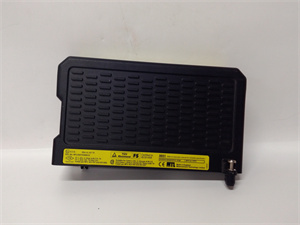
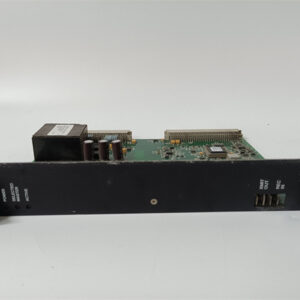
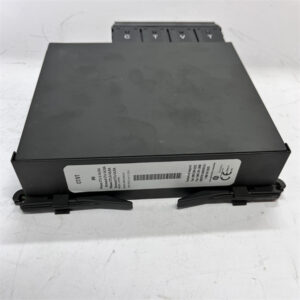
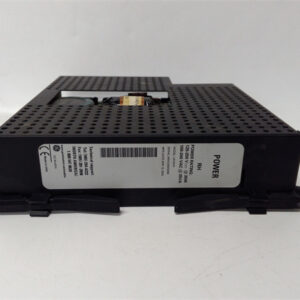
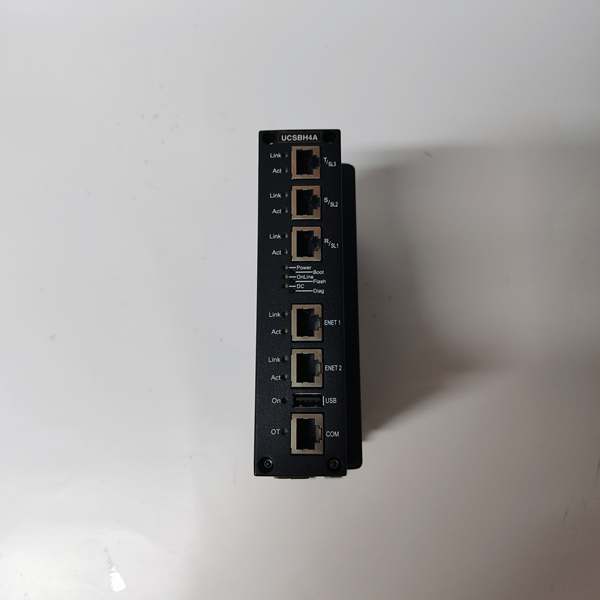
The IS420UCSBH4A is a UCSB (Universal Control System Blade) controller module in the GE Mark VIe Speedtronic family, designed to serve as the central intelligence for gas turbine control systems. It mounts directly to the turbine control panel and communicates with Mark VIe I/O modules (e.g., IS420UCSCH1A quad-core controller, IS220PDIOH1A discrete I/O pack) via a dedicated IONet (Industrial Ethernet) network.
Unlike traditional controllers, the UCSB controller does not host application I/O locally. Instead, all I/O networks are connected to each controller, ensuring that no single point of application input is lost if the controller is powered down for maintenance or repair. The module runs application-specific software (preloaded or custom-developed) that executes relay梯形图 (ladder logic) and control block language (supporting Boolean logic, 16/32-bit integer, and 32/64-bit floating-point operations).
The IS420UCSBH4A uses the IEEE 1588 protocol to synchronize the clocks of I/O components and the controller to within 100 microseconds via R, S, and T IONets. This high-precision synchronization is critical for closed-loop control of turbine parameters (e.g., fuel flow, combustion temperature, exhaust gas recirculation).
Key architectural features include:
-
Hot-swappable design (for supported Mark VIe racks) to minimize downtime during maintenance.
-
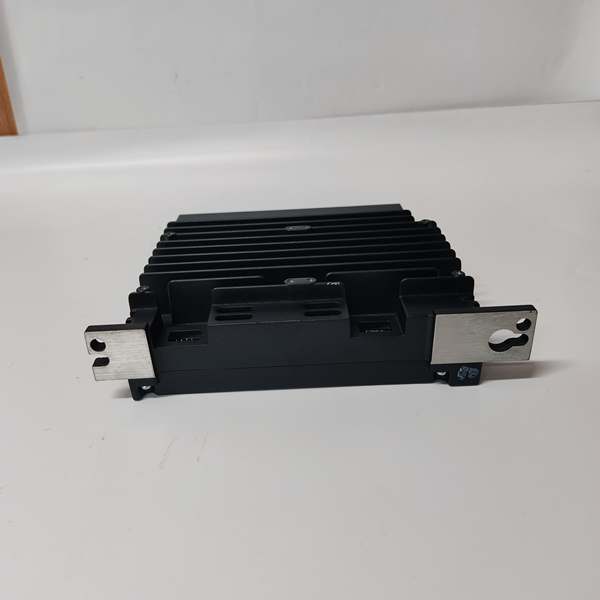
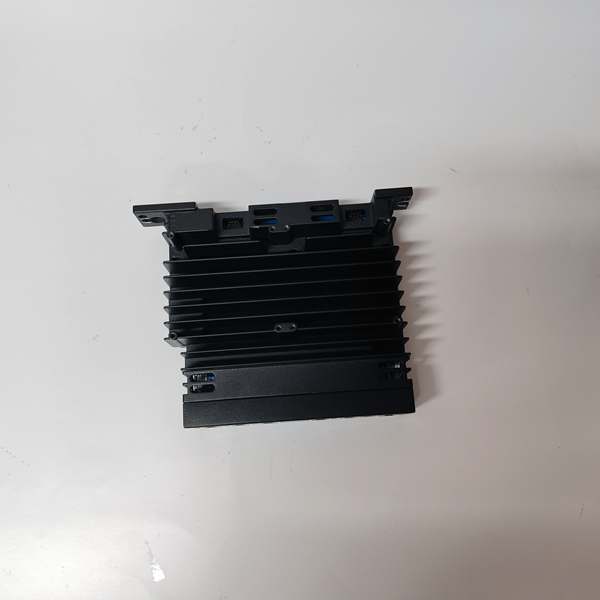
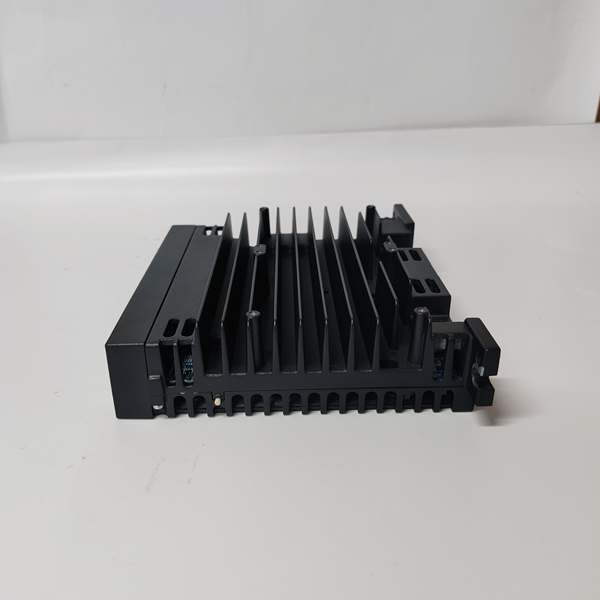
Fanless cooling (via convection) for silent operation and reduced moving parts.
-
Built-in power supply (24V DC) with surge and reverse polarity protection.

GE IS420UCSBH4A
Core Technical Specifications
|
Parameter
|
Specification
|
|---|---|
|
Processor
|
1066 MHz Intel EP80579 microprocessor (Intel® Pentium® M architecture)
|
|
Memory
|
256 MB DDR2 SDRAM (Error-Correcting Code (ECC) supported)
|
|
Storage
|
2 GB NAND flash (for firmware, application software, and configuration)
|
|
Operating System
|
QNX Neutrino real-time multitasking OS (designed for industrial reliability)
|
|
Input Voltage
|
24V DC ±20% (with overvoltage/undervoltage protection)
|
|
Operating Temperature
|
-40°C to +70°C (-40°F to +158°F)
|
|
Storage Temperature
|
-55°C to +85°C (-67°F to +185°F)
|
|
Humidity
|
5–95% RH non-condensing
|
|
Dimensions
|
~310 mm × 170 mm × 85 mm (12.2 in × 6.7 in × 3.3 in)
|
|
Weight
|
~6 kg (13.2 lbs)
|
|
I/O Interface
|
32 digital inputs, 8 analog inputs, 8 digital outputs (isolated)
|
|
Communication
|
Ethernet (10/100 Mbps), RS-232/485, Modbus TCP/IP, IONet (Industrial Ethernet)
|
|
Redundancy
|
Supports simplex, dual, or triple modular redundant (TMR) configurations
|
Customer Value & Operational Benefits
1. Uninterrupted Operation with Redundancy
The IS420UCSBH4A supports triple modular redundant (TMR) configurations, where three identical controllers execute the same logic and vote on outputs. If one controller fails, the remaining two continue to operate, ensuring zero downtime for critical turbine operations (e.g., power generation in gas-fired plants).
2. High-Precision Control for Emission Compliance
The 1066 MHz processor and QNX Neutrino OS enable sub-millisecond scan times for control loops, allowing precise adjustment of fuel flow and combustion parameters. This helps gas turbines meet strict emission standards (e.g., EPA Tier 4, EU Stage V) by minimizing NOₓ and CO emissions.
3. Reduced Maintenance Costs with Hot-Swap Design
The fanless, convection-cooled design eliminates moving parts (e.g., fans, hard drives), reducing the risk of mechanical failure. Additionally, the hot-swappable feature allows technicians to replace a faulty module without shutting down the turbine—critical for 24/7 power generation facilities.
4. Scalability for Future Upgrades
The modular design of the IS420UCSBH4A allows seamless integration with newer Mark VIe components (e.g., IS420UCSCH2A quad-core controller). This scalability ensures that the control system can adapt to evolving turbine technologies (e.g., hydrogen co-firing, carbon capture).
GE IS420UCSBH4A
Field Engineer’s Notes (From the Trenches)
When troubleshooting IS420UCSBH4A issues, start with the IONet connectivity—loose Ethernet cables or incorrect IP settings are common causes of communication failures. I once spent hours debugging a “turbine shutdown” fault only to find a disconnected IONet cable between the UCSB controller and the I/O pack.Always verify the firmware version using GE’s ToolboxST software—outdated firmware can cause compatibility issues with newer I/O modules. Use the software’s online diagnostic tools to check for CPU utilization, memory usage, and I/O status.For TMR systems, ensure that all three controllers have identical firmware and configuration files—mismatches can lead to voting errors and unexpected shutdowns.
Real-World Applications
1. Natural Gas Power Plant (Texas, USA)
A 500 MW combined-cycle gas turbine uses the IS420UCSBH4A as its core controller. The module manages fuel flow to the gas turbine, monitors combustion temperature, and adjusts exhaust gas recirculation (EGR) to meet EPA emission limits. The TMR configuration ensures that the turbine continues to generate power even if one controller fails.
2. Offshore Oil Platform (North Sea)
An offshore gas turbine driving a compressor train uses the IS420UCSBH4A for flameout protection and load sharing. The module interfaces with the platform’s distributed control system (DCS) via Modbus TCP/IP to adjust compressor speed based on pipeline demand. The fanless design withstands the platform’s harsh marine environment (high humidity, salt spray).
3. Petrochemical Refinery (Louisiana, USA)
A steam turbine driver for a distillation column uses the IS420UCSBH4A to control steam pressure and turbine speed. The module’s real-time control capabilities allow the refinery to optimize steam usage, reducing energy costs by 15%.