Description
System Architecture & Operational Principle
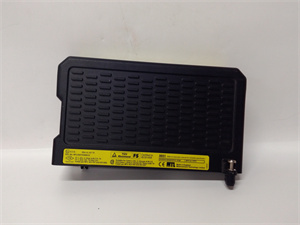
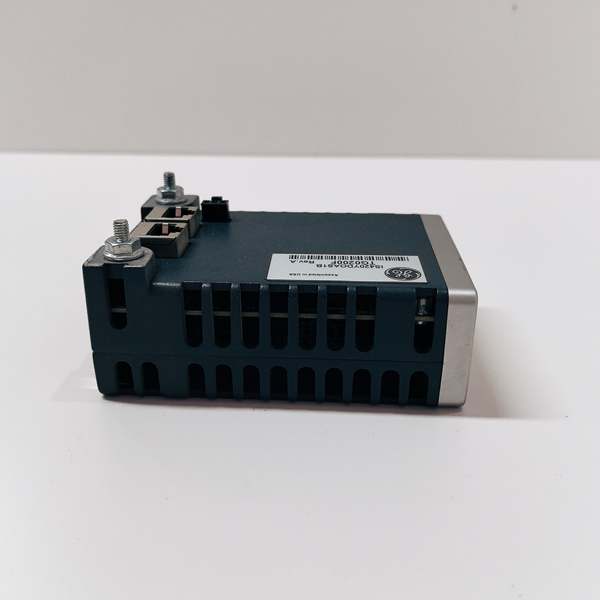
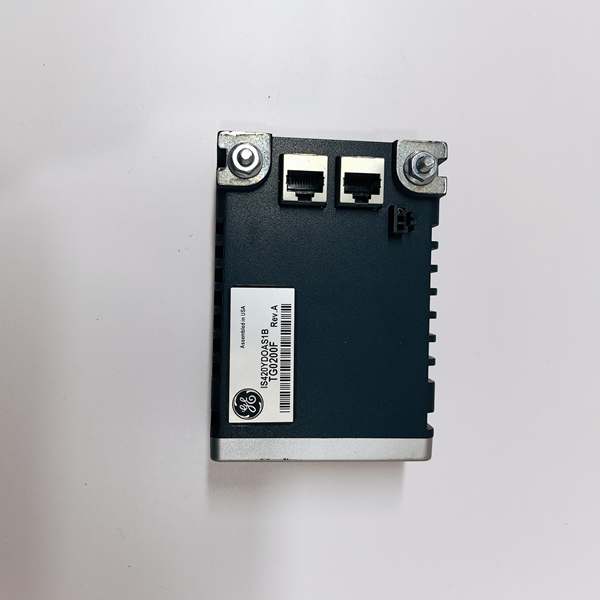
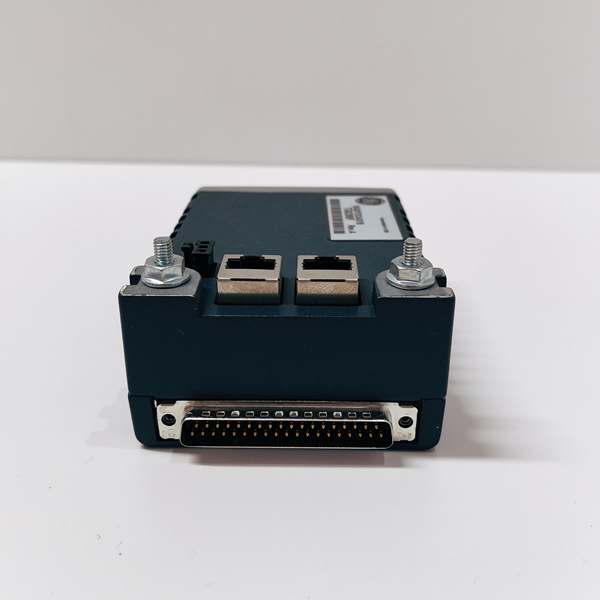
The GE IS420YDOAS1B is a discrete output I/O pack designed for the Mark VIe Speedtronic turbine control system, a cornerstone of GE’s industrial automation portfolio for power generation (gas/steam turbines) and heavy industry. It serves as the critical interface between the Mark VIe controller (e.g., IS420UCSCH1A quad-core controller) and field discrete devices (solenoid valves, motor starters, relay coils, alarm annunciators), converting low-voltage control signals from the controller into high-power switching actions for industrial equipment.
Architectural Role
The IS420YDOAS1B is positioned at the output layer of the Mark VIe control hierarchy, mounted in a controller carrier within a Mark VIe rack (Purdue Level 1–2 boundary). It communicates with the Mark VIe controller via IONet Ethernet (a proprietary industrial Ethernet protocol) for high-speed, deterministic data transfer, ensuring that control commands are executed in real time.
Operational Principle
The module’s core function is to switch 12 independent relay outputs based on commands from the Mark VIe controller. Each relay channel is:
-
Optically isolated (1500V) from the control logic to prevent fault propagation and protect the controller from field-side transients.
-
Monitored for coil health (via feedback signals) to detect stuck relays or open circuits, ensuring reliable operation.
-
Capable of switching 2A at 24VDC (or 120VAC, depending on configuration), sufficient for most industrial discrete loads.
The IS420YDOAS1B supports two redundancy modes:
-
Simplex: Single module operation (suitable for non-critical applications).
-
TMR (Triple Modular Redundancy): Three modules operating in parallel, with voting logic to ensure continued operation if one module fails (critical for safety systems like turbine shutdown).
Key Features
-
Hot-swappable: Can be replaced without shutting down the system, minimizing downtime.
-
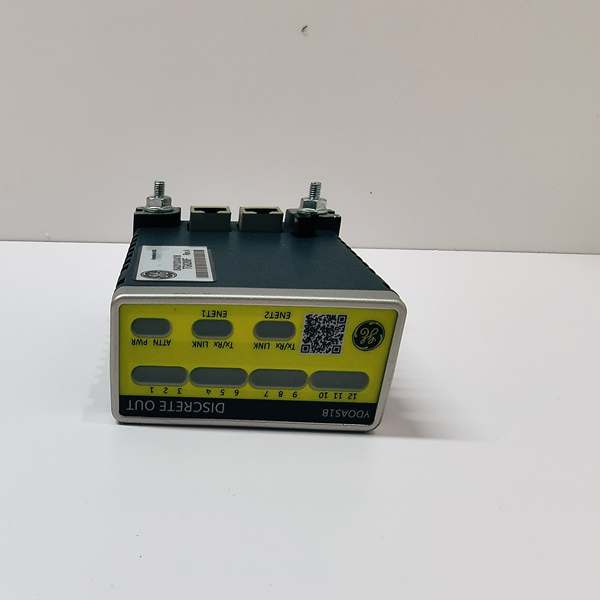
Diagnostic LEDs: 12 yellow LEDs (one per channel) indicate relay status (energized/de-energized); an ATTN LED (red/green) provides system-level diagnostics (e.g., “application online” or “fault”).
-
Rugged Design: Built to withstand harsh industrial environments (vibration, temperature extremes, electromagnetic interference).

GE IS420YDOAS1B
Core Technical Specifications
|
Parameter
|
Specification
|
|---|---|
|
Model
|
IS420YDOAS1B
|
|
Manufacturer
|
GE (Emerson Automation Solutions)
|
|
Product Type
|
Discrete Output I/O Pack
|
|
System Platform
|
Mark VIe Speedtronic Turbine Control System
|
|
Output Channels
|
12 relay outputs (dry contact or switched voltage)
|
|
Output Rating
|
2A per channel (24VDC/120VAC)
|
|
Isolation
|
1500V optical isolation (channel-to-logic)
|
|
Response Time
|
6 ms (command to relay actuation)
|
|
Communication
|
IONet Ethernet (dual RJ45 ports)
|
|
Redundancy
|
Simplex or TMR (Triple Modular Redundancy)
|
|
Operating Temperature
|
-40°C to +70°C (-40°F to +158°F)
|
|
Humidity
|
5–95% non-condensing
|
|
Dimensions
|
3.25 in (H) × 1.65 in (W) × 4.78 in (D)
|
|
Weight
|
~0.8 lbs (0.36 kg)
|
|
Certifications
|
SIL 2/3 (IEC 61508), CE, UL
|
Customer Value & Operational Benefits
1. Reliable Control for Critical Applications
The IS420YDOAS1B’s 1500V isolation and coil monitoring ensure that field devices (e.g., turbine fuel valves) are switched reliably, even in electrically noisy environments. This is critical for safety systems (e.g., emergency shutdown), where a failed relay could lead to catastrophic consequences.
2. Minimized Downtime with Hot-Swap Design
The module’s hot-swappable feature allows technicians to replace a faulty unit without shutting down the turbine or control system. This reduces maintenance time from hours to minutes, minimizing production losses in power generation or industrial processes.
3. Flexible Redundancy for High Availability
Support for TMR redundancy ensures that the control system remains operational even if one module fails. This is essential for 24/7 power generation (e.g., gas-fired power plants), where downtime can cost thousands of dollars per minute.
4. Easy Diagnostics with Visual Indicators
The 12 yellow channel LEDs and ATTN LED provide instant visual feedback on relay status and system health. This allows technicians to quickly identify faults (e.g., a stuck relay) without needing specialized tools, reducing mean time to repair (MTTR).
5. Seamless Integration with Mark VIe Ecosystem
The IS420YDOAS1B is fully compatible with Mark VIe controllers (e.g., IS420UCSCH1A) and I/O packs (e.g., IS220PAICH1A analog I/O pack). This simplifies system design and expansion, as new modules can be added without replacing the entire control system.
GE IS420YDOAS1B
Field Engineer’s Notes (From the Trenches)
When troubleshooting the IS420YDOAS1B, always start with the diagnostic LEDs—they tell you everything you need to know. For example, if a channel LED is off when it should be on, check the relay coil (use a multimeter to test for continuity). If the ATTN LED is blinking red, it means the module is in “remote I/O mode”—this is usually caused by a configuration error in the Mark VIe controller.Another common issue is relay chatter (rapid on/off cycling). This is often due to electromagnetic interference (EMI) from nearby equipment (e.g., variable frequency drives). To fix this, use shielded twisted-pair (STP) cable for the relay outputs and ground the shield at the module end only.When replacing a module, always verify the IONet IP address—mismatched IP addresses will prevent the module from communicating with the controller. Use GE’s ToolboxST software to configure the IP address and test the connection.
Real-World Applications
1. Gas Turbine Emergency Shutdown (Texas, USA)
A 500 MW gas-fired power plant uses the IS420YDOAS1B to control the emergency shutdown (ESD) system. The module’s 12 relay outputs switch the fuel shutoff valves, ensuring that the turbine is shut down safely in case of a fault (e.g., overpressure). The TMR redundancy ensures that the ESD system remains operational even if one module fails.
2. Steam Turbine Valve Control (Louisiana, USA)
A refinery uses the IS420YDOAS1B to control the steam turbine governor valves. The module’s 6 ms response time allows precise adjustment of the valve position, optimizing steam flow and turbine efficiency. The hot-swap design allows technicians to replace the module during routine maintenance without shutting down the refinery.
3. Wind Turbine Pitch Control (California, USA)
An offshore wind farm uses the IS420YDOAS1B to control the pitch of the turbine blades. The module’s 1500V isolation protects the controller from the high voltages generated by the wind turbine, while the relay outputs switch the pitch motors. The diagnostic LEDs help technicians quickly identify faults (e.g., a stuck pitch motor) during offshore maintenance.