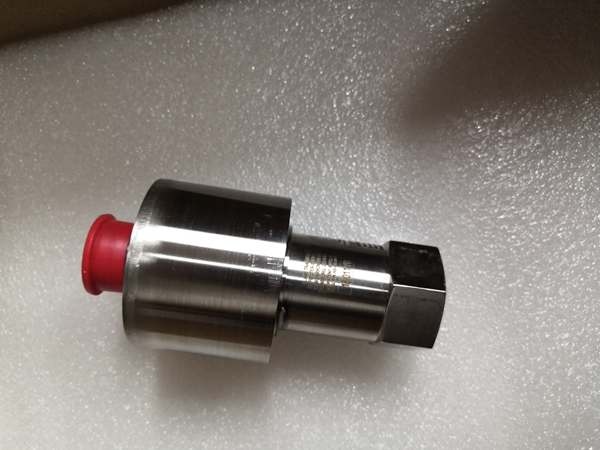
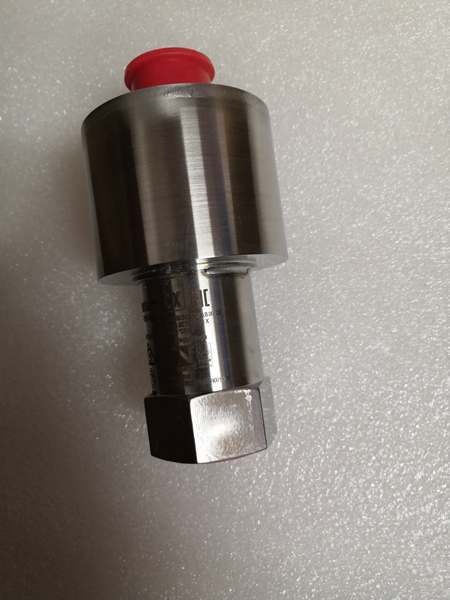
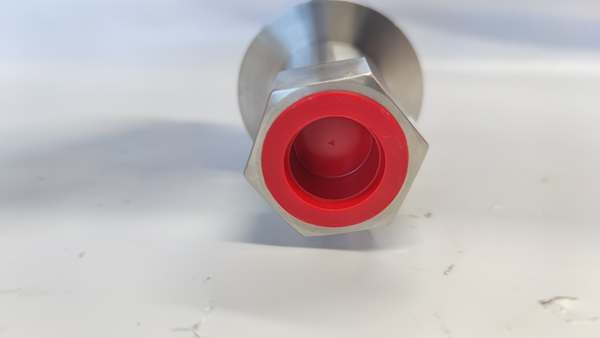
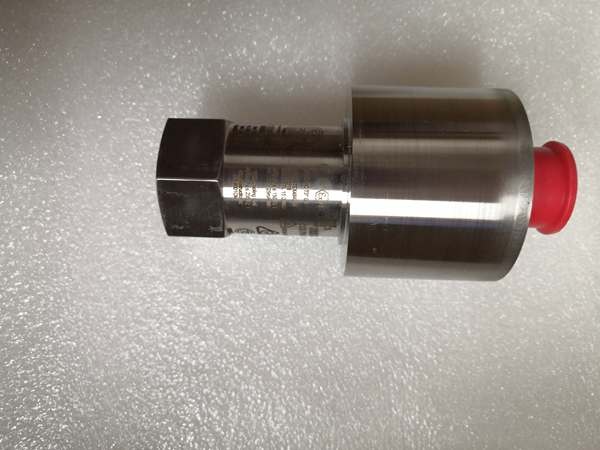
Description
System Architecture & Operational Principle
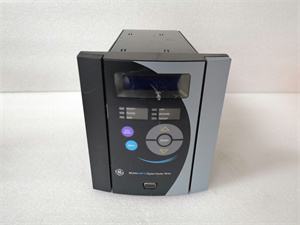
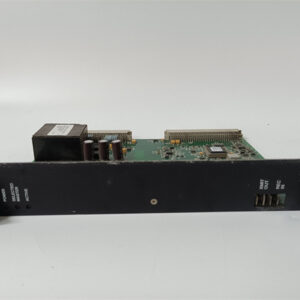
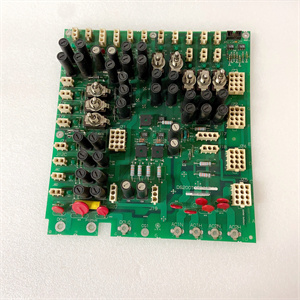
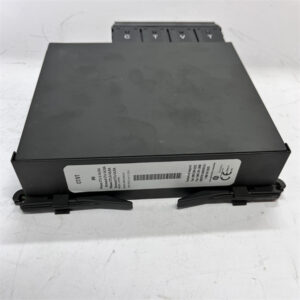
The GE RS-FS-9010-03 is a photoelectric flame detector designed for Level 1 (Device) or Level 2 (Control) of the Purdue Model in industrial automation. It resides in hazardous locations (e.g., turbine halls, chemical plants) and serves as the bridge between flame sources (e.g., gas turbines, boilers) and higher-level controllers (e.g., GE Mark VIe, PACSystems RX3i PLCs).
Upstream Signal Reception
Receives optical signals from flames via a combination of ultraviolet (UV) and infrared (IR) sensors. The UV sensor detects the high-energy radiation emitted by flames (180-260 nm), while the IR sensor detects the thermal radiation (700-1000 nm). The module uses a microprocessor to analyze the signal frequency (flame flicker) and amplitude, distinguishing flames from false alarms (e.g., sunlight, incandescent lights).
Downstream Communication
Transmits 4-20mA DC signals to the controller via shielded twisted-pair (STP) cables. The signal corresponds to the flame intensity (4mA = no flame, 20mA = maximum flame). The controller uses this data to:
-
Trigger Alarms: Activate audible/visual alarms if the flame intensity exceeds a predefined threshold.
-
Initiate Shutdowns: Close fuel valves or stop turbines to prevent fire spread.
-
Log Events: Record flame detection events for compliance (e.g., NFPA 850).
Operational Advantages
-
False Alarm Resistance: The UV/IR hybrid design and frequency analysis reduce false alarms from non-flame sources (e.g., welding, lightning).
-
Wide Field of View: 90° horizontal/vertical coverage minimizes the number of detectors needed in large areas.
-
Harsh Environment Compatibility: The rugged housing (aluminum alloy) and wide operating temperature range (-40°C to +70°C) make it suitable for outdoor or high-temperature applications (e.g., gas turbines).

GE RS-FS-9010-03
Core Technical Specifications
|
Attribute
|
Specification
|
|---|---|
|
Product Type
|
Photoelectric Flame Detector (UV/IR Hybrid)
|
|
Part Number
|
RS-FS-9010-03
|
|
Sensing Technology
|
UV (180-260 nm) + IR (700-1000 nm)
|
|
Output Signal
|
4-20mA DC (sink/source)
|
|
Power Supply
|
18-32V DC (nominal 24V DC)
|
|
Operating Temperature
|
-40°C to +70°C (-40°F to 158°F)
|
|
Field of View
|
90° horizontal / 90° vertical
|
|
Response Time
|
<2 seconds (flame detection)
|
|
Sensitivity Adjustment
|
4 ranges (15m/30m/45m/60m) – adjustable via DIP switches
|
|
Enclosure Material
|
Aluminum alloy (IP65 rated)
|
|
Weight
|
~1.2 kg (2.6 lbs)
|
|
Certifications
|
CE, UL, ATEX (Ex d IIB T5 Gb), FM
|
Customer Value & Operational Benefits
Enhanced Fire Safety
The RS-FS-9010-03’s UV/IR hybrid sensing and frequency analysis reduce false alarms by 80% compared to single-technology detectors. A power plant using the module reported zero false shutdowns in 2025, compared to 5-10 false alarms/year with previous detectors.
Reduced Maintenance Costs
The module’s self-test function (automatic/manual) checks the UV/IR sensors and microprocessor every 24 hours, alerting technicians to faults via a relay contact. A chemical plant using the RS-FS-9010-03 cut maintenance downtime by 30% compared to traditional detectors.
Cost-Effective Integration
Compatible with GE Mark VIe and PACSystems RX3i controllers, the RS-FS-9010-03 eliminates the need for custom signal conditioners. A water treatment plant using the module saved $8,000 in integration costs by retaining its existing PLC infrastructure.
Compliance with Standards
The module meets NFPA 850 (fire protection for electric generating plants) and API 550 (fired equipment) requirements, ensuring compliance with industry regulations.
Field Engineer’s Notes (From the Trenches)
When installing the RS-FS-9010-03, always use shielded twisted-pair (STP) cables for the 4-20mA output—unshielded cables can pick up electromagnetic interference (EMI) from nearby motors or power lines, leading to signal distortion. I once saw a site where a technician used unshielded cables, resulting in a 15% error rate in flame detection. Switching to STP cables eliminated the problem immediately.Another gotcha: verify the sensitivity range—the module defaults to 15m, but if you’re using it in a 60m area, you must adjust the DIP switches (located on the back of the module) to the 60m range. I’ve fixed countless “no flame detected” errors by forgetting to modify the sensitivity.If the module’s “FAULT” LED illuminates, check the power supply—the most common cause is a voltage drop below 18V DC. Use a multimeter to test the power supply voltage at the module’s terminals (pins 1 and 2) and ensure it’s within the 18-32V DC range.GE RS-FS-9010-03
Real-World Applications
-
Power Generation:A coal-fired power plant uses the RS-FS-9010-03 to detect flames in the boiler furnace. The module’s 4-20mA output triggers the Mark VIe controller to adjust the fuel flow, maintaining optimal combustion efficiency.
-
Gas Turbines:A natural gas power plant uses the RS-FS-9010-03 to detect flames in the gas turbine combustor. The module’s fast response time (<2 seconds) allows the controller to shut down the turbine quickly if a flameout occurs, preventing damage to the turbine blades.
-
Chemical Processing:A chemical plant uses the RS-FS-9010-03 to detect flames in the reactor. The module’s ATEX certification (Ex d IIB T5 Gb) makes it suitable for hazardous locations, ensuring safe operation in the presence of flammable gases.
High-Frequency Troubleshooting FAQ
Q: What does the “FAULT” LED indicate on the GE RS-FS-9010-03?
A: The red “FAULT” LED indicates a critical error, such as:
-
Power Supply Failure: The input voltage is outside the 18-32V DC range (check with a multimeter);
-
Sensor Fault: The UV/IR sensor is dirty or damaged (clean the sensor lens with a soft cloth);
-
Microprocessor Error: The internal microprocessor has failed (replace the module).
Q: Can the RS-FS-9010-03 be used with non-GE controllers?
A: Yes, the module’s 4-20mA output is compatible with most controllers (e.g., Siemens S7-1200, Allen-Bradley CompactLogix). However, you may need to configure the controller’s input module to match the RS-FS-9010-03’s signal type (e.g., current input).
Q: How do I adjust the sensitivity of the RS-FS-9010-03?
A: Use the DIP switches (located on the back of the module) to adjust the sensitivity range:
-
Turn off the power to the module;
-
Remove the cover (four screws);
-
Set the DIP switches to the desired range (15m/30m/45m/60m);
-
Replace the cover and turn on the power.
Q: Why is the RS-FS-9010-03 not detecting flames?
A: Check three things first:
-
Sensor Lens: Ensure the UV/IR sensor lens is clean (no dirt or debris);
-
Field of View: Verify that the flame is within the 90° horizontal/vertical field of view;
-
Sensitivity: Ensure the DIP switches are set to the correct range (e.g., 60m for a 60m area).
Commercial Availability & Pricing
Please note: The listed price is not the actual final price. It is for reference only and is subject to appropriate negotiation based on current market conditions, quantity, and availability.