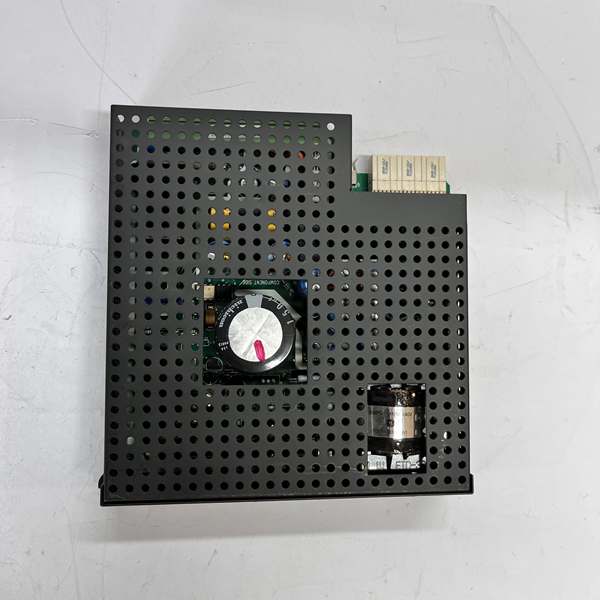
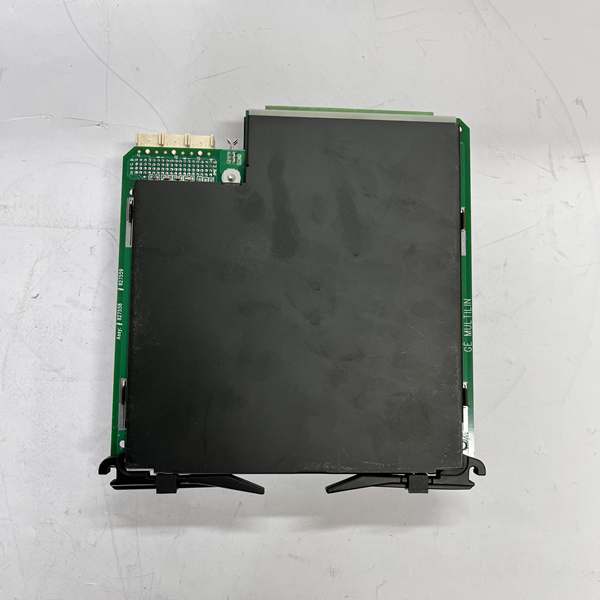
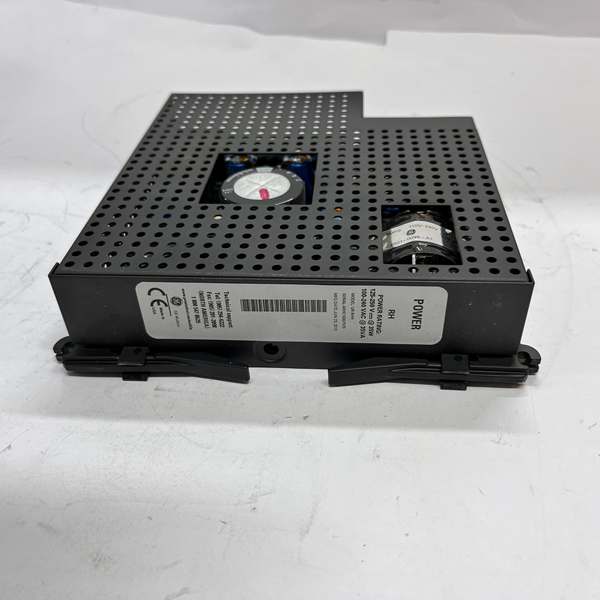
Description
System Architecture & Operational Principle
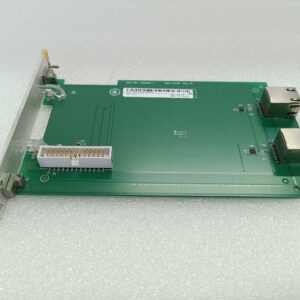
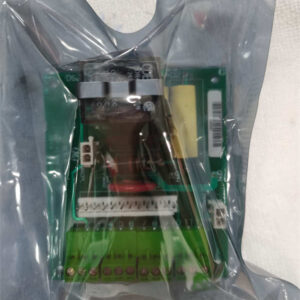
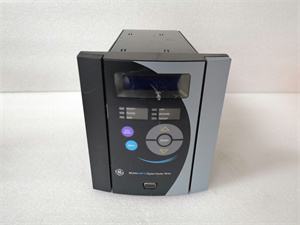
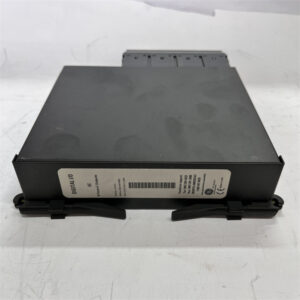
The GE URRHH is a power supply module designed exclusively for the GE Multilin Universal Relay (UR) Series, which is widely used in power systems, industrial automation, and critical infrastructure for protection and control. It resides in the UR series relay chassis (mounted on DIN rails or panel-mounted) and serves as the core power backbone for the relay system.
Upstream Communication
Receives AC or DC power from external sources (e.g., plant-wide power distribution systems, UPS). The input voltage range (100–240 VAC / 125–250 VDC) ensures compatibility with various industrial power supplies, including those in harsh environments like power plants or substations.
Downstream Communication
Converts the input power to stable 24 VDC for the UR series relay’s internal circuits and dry contact input connections. The module uses switching power supply technology to minimize energy loss and heat generation, ensuring reliable operation even under heavy loads.
Operational Advantages
-
Redundant Configuration: Supports optional redundant power supply units (PSUs) to ensure uninterrupted operation if one PSU fails. This is critical for mission-critical applications like power transmission, where a single point of failure can lead to widespread outages.
-
Health Monitoring: Integrated self-testing elements assess the module’s operational status automatically. Major and minor tests ensure hardware functionality and safety, with LED indicators (e.g., “CONTINUOUS ON,” “OFF”) providing real-time status updates.
-
Hot-Swappable Design: Can be replaced without shutting down the relay system, minimizing downtime during maintenance. This is essential for 24/7 operations like power plants, where even a short outage can result in significant costs.
Core Technical Specifications
|
Attribute
|
Specification
|
|---|---|
|
Input Voltage
|
100–240 VAC (35 VA) / 125–250 VDC (35 W)
|
|
Output Voltage
|
24 VDC (nominal)
|
|
Output Power
|
35 W (max)
|
|
Efficiency
|
≥85% (typical)
|
|
Isolation Voltage
|
2000 V AC (channel-to-ground)
|
|
Operating Temperature
|
-20°C to +70°C (-4°F to 158°F)
|
|
Storage Temperature
|
-40°C to +85°C (-40°F to 185°F)
|
|
Humidity Tolerance
|
5–95% non-condensing
|
|
Dimensions (W×H×D)
|
~165 mm × 165 mm × 45 mm (6.5 in × 6.5 in × 1.75 in) (estimated)
|
|
Weight
|
~1.2 kg (2.6 lbs)
|
|
Certifications
|
CE, UL, CSA, ATEX (Ex nA IIC T4)
|
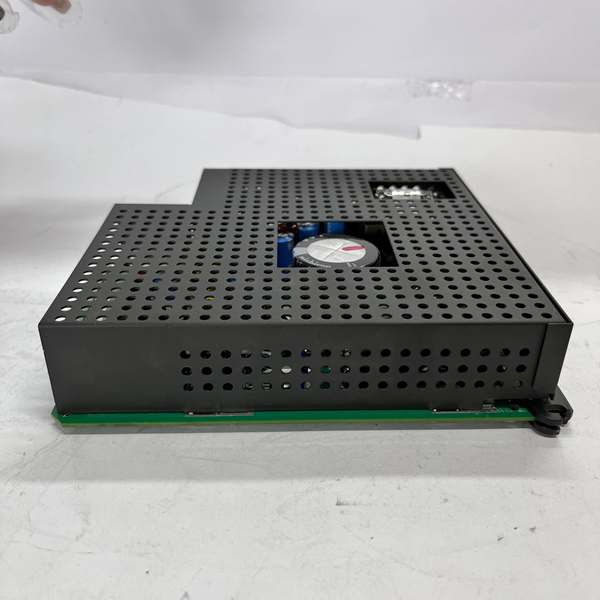
GE URRHH
Customer Value & Operational Benefits
Enhanced Reliability
The URRHH’s redundant configuration and health monitoring features ensure that the UR series relay system remains operational even if one PSU fails. For example, a power plant using the URRHH in a redundant configuration reported a 99.9% uptime, eliminating costly shutdowns due to power supply failures.
Reduced Maintenance Costs
The hot-swappable design allows technicians to replace a faulty URRHH without shutting down the relay system. A substation using the URRHH reduced maintenance downtime by 50% compared to non-hot-swappable power supplies.
Cost-Effective Power Solution
The URRHH’s wide input voltage range (100–240 VAC / 125–250 VDC) eliminates the need for site-specific power adapters, reducing installation costs. Additionally, its high efficiency (≥85%) reduces energy consumption, leading to lower electricity bills.
Compliance with Industry Standards
The URRHH’s certifications (CE, UL, ATEX) ensure it meets the rigorous requirements of industries like power generation, oil & gas, and chemical processing. This compliance is essential for facilities seeking to adhere to regulatory or corporate safety standards.
Field Engineer’s Notes (From the Trenches)
When installing the URRHH, always verify the input voltage with a multimeter before powering up. I once saw a site where a contractor connected the URRHH to a 277 VAC supply (outside the 100–240 VAC range), resulting in a “no power” fault. Checking the input voltage first saved a 2-hour troubleshooting session.Another gotcha: use shielded power cables (12–24 AWG) to connect to the external power source. Unshielded cables can pick up electromagnetic interference (EMI) from nearby power lines, leading to intermittent power loss. Shielded cables eliminate this problem.If the URRHH’s “FAULT” LED is red, check the internal fuse (4A / 250 V) first. A blown fuse is a common cause of power supply faults. Use a multimeter to test for continuity; if the fuse is blown, replace it with the correct rating.
Real-World Applications
-
Power Generation: Gas Turbine ControlA gas turbine power plant uses the URRHH to power UR series relays that monitor turbine parameters (e.g., lube oil pressure, exhaust temperature). The redundant configuration ensures that the relays remain operational even if one PSU fails, preventing turbine shutdowns.
-
Substation Automation: Busbar ProtectionA high-voltage substation uses the URRHH to power UR series relays that protect the busbar from faults. The URRHH’s health monitoring features allow technicians to proactively replace faulty PSUs before they cause failures, reducing the risk of blackouts.
-
Industrial Automation: Motor ControlA manufacturing plant uses the URRHH to power UR series relays that control motor starters. The hot-swappable design allows technicians to replace the URRHH during maintenance without shutting down the production line, minimizing downtime.

GE URRHH
High-Frequency Troubleshooting FAQ
Q: What does the “FAULT” LED indicate on the URRHH?
A: The red “FAULT” LED indicates a critical error, such as:
-
Overcurrent: The output current exceeds the module’s rating (e.g., 1.5 A for 24 VDC).
-
Overvoltage: The input voltage exceeds 250 VDC (for DC input) or 240 VAC (for AC input).
-
Fuse Failure: The internal fuse (4A / 250 V) is blown.Check the input voltage and output load first. If the input voltage is within range and the load is not excessive, replace the fuse or the module.
Q: Can the URRHH be used with non-UR series relays?
A: No, the URRHH is designed exclusively for GE Multilin UR series relays. It relies on the UR series relay’s chassis and power distribution system, so using it with non-UR series relays will result in compatibility issues.
Q: How do I configure the URRHH for redundant operation?
A: Purchase the redundant URRHH model (optional) and install it alongside the primary URRHH in the UR series relay chassis. The relay’s built-in logic will automatically switch to the redundant PSU if the primary PSU fails.
Q: Why is the URRHH overheating?
A: Overheating is usually caused by:
-
Excessive Load: The total output current exceeds 35 W (e.g., too many relays connected to the URRHH).
-
Poor Ventilation: The relay chassis has inadequate airflow.
-
Faulty Fan: The module’s internal fan is not working (replace the fan if necessary).
Commercial Availability & Pricing
Please note: The listed price is not the actual final price. It is for reference only and is subject to appropriate negotiation based on current market conditions, quantity, and availability.