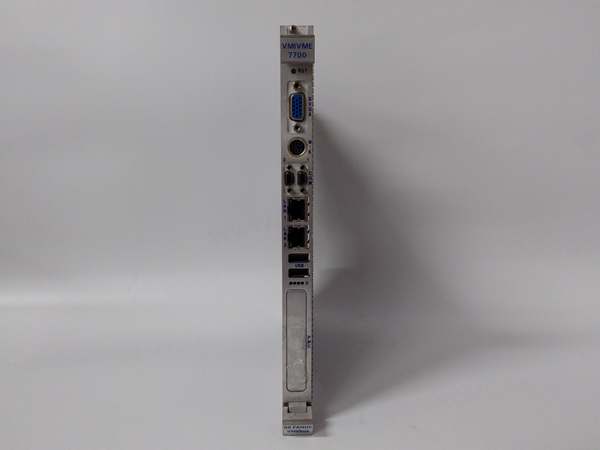
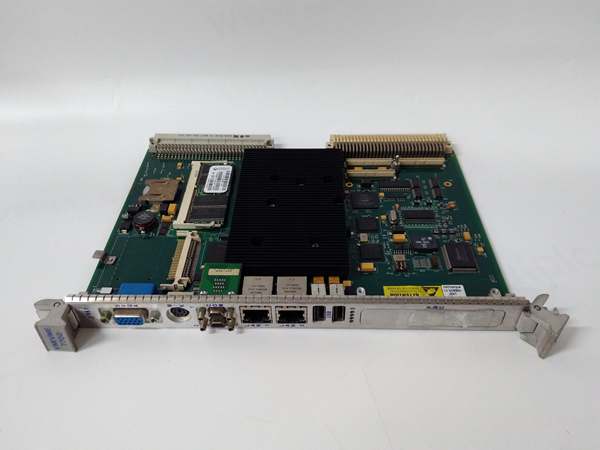
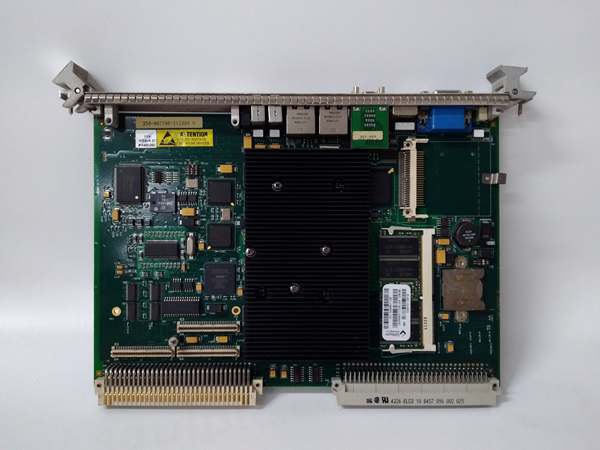
Description
VMIVME-2528: Product Overview
The GE VMIVME-2528 is a 128-bit digital I/O board designed for VMEbus-based industrial automation systems. As a critical component of the VME ecosystem, it enables reliable digital signal transmission between field devices (e.g., limit switches, proximity sensors) and the main controller, supporting real-time control and monitoring in harsh industrial environments.
Role in Automation Systems:
Positioned as a “field signal interface” in VMEbus architectures, the VMIVME-2528 performs two primary functions:
-
Digital Input Acquisition: Receives digital signals from field devices (e.g., a limit switch indicating a valve is open) and transmits them to the main controller for processing.
-
Digital Output Control: Sends control commands from the main controller to field actuators (e.g., starting a pump, opening a valve) via digital outputs.
Core Functionality:
-
128-Bit I/O Capacity: Supports 128 digital channels (configurable as input or output), accommodating large numbers of field devices in industrial systems.
-
TTL Compatibility: Uses TTL (Transistor-Transistor Logic) signaling, ensuring compatibility with most industrial sensors and actuators.
-
VMEbus Integration: Conforms to VMEbus Rev. C.1, enabling seamless integration with VME64 backplanes and controllers (e.g., GE Fanuc 90-30 series).
-
Rugged Design: Industrial-grade components and a compact form factor make it suitable for harsh environments (e.g., high temperature, vibration).

GE VMIVME-7700RC
Platform Benefits (VMEbus Series):
The VMIVME-2528 leverages GE’s VMEbus platform, which is renowned for:
-
Reliability: Industrial-grade components and a rugged design ensure 24/7 operation in harsh environments.
-
Scalability: Supports expansion with additional I/O boards to accommodate growing system demands (e.g., adding more sensors or actuators).
-
Integration: Seamlessly integrates with VMEbus-based controllers and other I/O modules, reducing setup time and effort.
Technical Specifications
-
Model Number: VMIVME-2528 (Variants: VMIVME-2528-110, VMIVME-2528-000)
-
Manufacturer: GE (General Electric)
-
Product Type: 128-Bit Digital I/O Board
-
Series: VMEbus
-
I/O Channels: 128 (digital, TTL-compatible)
-
Bus Standard: VMEbus Rev. C.1 (supports 8/16/32-bit data transfer)
-
Signal Type: Digital (positive-true logic)
-
Operating Temperature: 0°C to +55°C (32°F to 131°F)
-
Storage Temperature: -40°C to +85°C (-40°F to 185°F)
-
Humidity: 5–95% non-condensing
-
Dimensions: 160 mm × 100 mm × 20 mm (6.3 in × 3.9 in × 0.8 in) (standard VMEbus single-slot)
-
Weight: 0.2 kg (0.44 lbs)
-
Certifications: CE, UL (inferred from GE industrial product standards)
Core Features & Customer Value
1. High-Density I/O Capacity:
The VMIVME-2528’s 128-bit I/O capacity reduces the number of boards needed in a system, saving space and cost. For example, in a power plant, the board can handle all digital signals from turbine sensors (e.g., blade position, valve status) with a single module.
2. Reliable Signal Transmission:
TTL compatibility and VMEbus integration ensure accurate signal transmission, even in electrically noisy environments. This reliability is critical for maintaining turbine stability and preventing unplanned outages.
3. Rugged Industrial Design:
The board’s operating temperature range (0°C to +55°C) and compact form factor make it suitable for harsh industrial environments. Its DIN rail mounting option simplifies installation in crowded control cabinets.
4. Easy Integration:
VMEbus compatibility allows seamless integration with existing VMEbus systems, minimizing downtime and effort during upgrades. This is invaluable for facilities with legacy VMEbus installations.
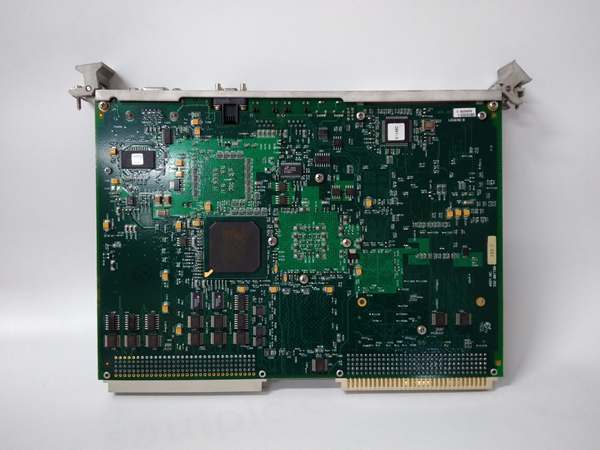
GE VMIVME-7700RC
Typical Applications
The GE VMIVME-2528 is widely used in industrial automation systems for:
-
Power Generation:
-
Monitors digital signals from gas/steam turbines (e.g., valve position switches, emergency stop buttons) and communicates them to the VMEbus controller for real-time control.
-
-
Manufacturing:
-
Used in assembly lines to monitor the status of limit switches, proximity sensors, and other digital devices, enabling precise control of manufacturing processes.
-
-
Petrochemical Industry:
-
Controls valves and pumps in chemical plants, ensuring safe and efficient operation in hazardous environments.
-