Description
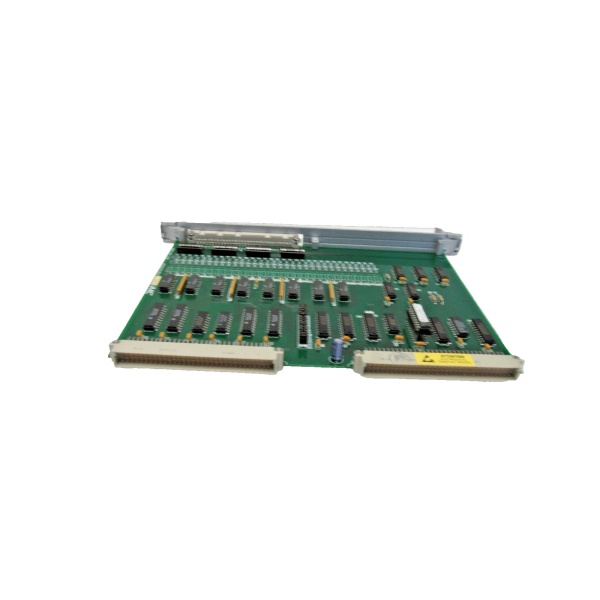
VMIVME-4514: Product Overview
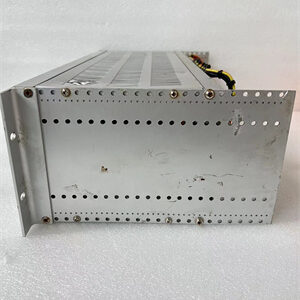
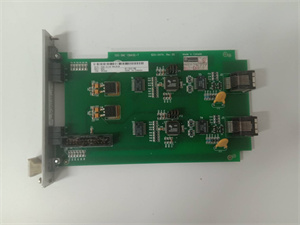
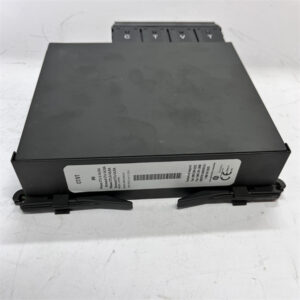
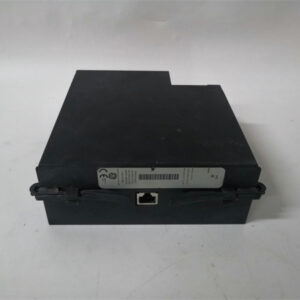
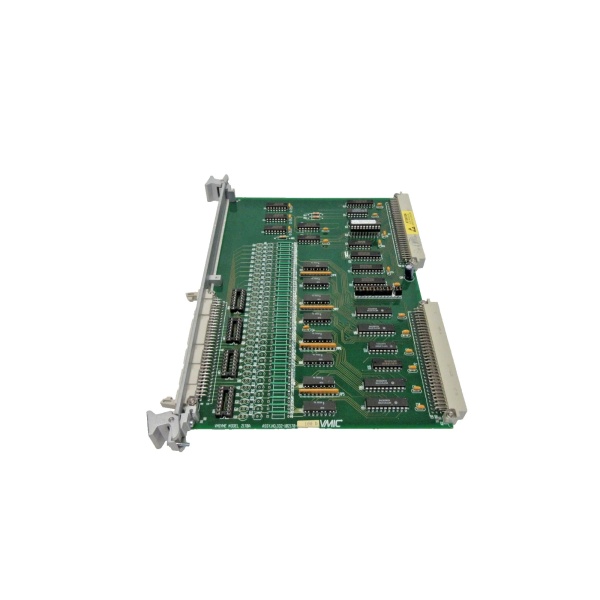
The GE VMIVME-4514 is a 16-channel analog input/output (AIO) board designed for VMEbus-based industrial automation systems. As a critical component of the VME ecosystem, it bridges the gap between field devices (e.g., sensors, actuators) and the main controller by converting analog signals to digital data (input) and digital commands to analog signals (output). Its 12-bit resolution and flexible configuration make it suitable for applications requiring high-precision signal processing in harsh industrial environments.
Role in Automation Systems:
Positioned as an “analog signal interface” in VMEbus architectures, the VMIVME-4514 performs two primary functions:
-
Analog Input Acquisition: Converts analog signals from field devices (e.g., a temperature transmitter outputting 4–20 mA) into 12-bit digital data for processing by the VMEbus controller.
-
Analog Output Control: Generates 12-bit analog signals (e.g., 0–10 V DC) from digital commands sent by the VMEbus controller to drive actuators (e.g., opening a valve via a solenoid).
Core Functionality:
-
12-Bit Resolution: Achieves a precision of 0.025% (full-scale), ensuring accurate representation of analog signals—critical for maintaining turbine stability and complying with utility regulations.
-
Flexible Input/Output Configuration: Supports 16 single-ended or differential analog inputs (configurable via software) and 16 analog outputs with programmable voltage ranges (0–10 V DC, ±10 V DC), accommodating diverse field device requirements.
-
High-Speed Conversion: Offers a maximum throughput of 40 kHz (for analog inputs), enabling real-time signal processing in fast-changing applications (e.g., vibration monitoring).
-
VMEbus Compatibility: Conforms to the VME64 standard, ensuring seamless integration with VMEbus-based controllers (e.g., GE Fanuc 90-30 series) and backplanes.
Platform Benefits (VMEbus Series):
The VMIVME-4514 leverages GE’s VMEbus platform, which is renowned for:
-
Reliability: Industrial-grade components and a rugged design ensure 24/7 operation in harsh environments (e.g., high temperature, vibration).
-
Scalability: Supports expansion with additional I/O boards to accommodate growing system demands (e.g., adding more sensors to a turbine control system).
-
Integration: Seamlessly integrates with VMEbus-based controllers and other I/O modules, reducing setup time and effort.

GE VMIVME-2120
Technical Specifications
-
Model Number: VMIVME-4514 (Variant: VMIVME-4514A)
-
Manufacturer: GE (General Electric)
-
Product Type: 16-Channel 12-Bit Analog I/O Board
-
Series: VMEbus
-
Resolution: 12 bits (ADC/DAC)
-
Input Channels: 16 (single-ended or differential)
-
Input Signal Range: 0–10 V DC, 4–20 mA (configurable via jumpers)
-
Output Channels: 16 (analog voltage)
-
Output Signal Range: 0–10 V DC, ±10 V DC (programmable)
-
Conversion Rate: Up to 40 kHz (analog input)
-
Bus Standard: VME64 (conforms to IEEE 1014)
-
Operating Temperature: -40°C to +85°C (-40°F to 185°F)
-
Storage Temperature: -40°C to +85°C (-40°F to 185°F)
-
Humidity: 5–95% non-condensing
-
Dimensions: 160 mm × 100 mm × 20 mm (6.3 in × 3.9 in × 0.8 in) (standard VMEbus single-slot)
-
Weight: 0.2 kg (0.44 lbs)
-
Certifications: CE, UL (inferred from GE industrial product standards)
Core Features & Customer Value
1. High-Precision Signal Processing:
The VMIVME-4514’s 12-bit resolution ensures accurate conversion of analog signals, which is critical for maintaining turbine stability—even minor errors in signal digitization can lead to incorrect control decisions (e.g., misadjusting fuel flow, resulting in inefficient combustion).
2. Flexible Configuration:
With 16 input channels (single-ended or differential) and configurable output ranges (0–10 V DC, ±10 V DC), the board accommodates a wide range of field devices, reducing the need for additional signal conditioning hardware. This flexibility saves time and money during installation.
3. Rugged Industrial Design:
The board’s operating temperature range (-40°C to +85°C) and compact form factor make it suitable for harsh industrial environments. Its DIN rail mounting option simplifies installation in crowded control cabinets, reducing setup time and effort.
4. Easy Integration:
VMEbus compatibility ensures seamless integration with existing VMEbus-based systems, minimizing downtime and effort during upgrades. This is invaluable for facilities with legacy VMEbus installations, allowing them to enhance system capabilities without replacing entire architectures.
GE VMIVME-2120
Typical Applications
The GE VMIVME-4514 is widely used in industrial automation systems for:
-
Power Generation:
-
Digitizes analog signals from gas/steam turbines (e.g., temperature, pressure, blade position) for real-time control, improving efficiency and reliability.
-
-
Manufacturing:
-
Converts analog signals from sensors (e.g., temperature, flow) in manufacturing processes, enabling precise control of equipment (e.g., motors, pumps).
-
-
Chemical Processing:
-
Processes analog signals from pressure transmitters and temperature sensors in chemical plants, ensuring safe and efficient operation.
-