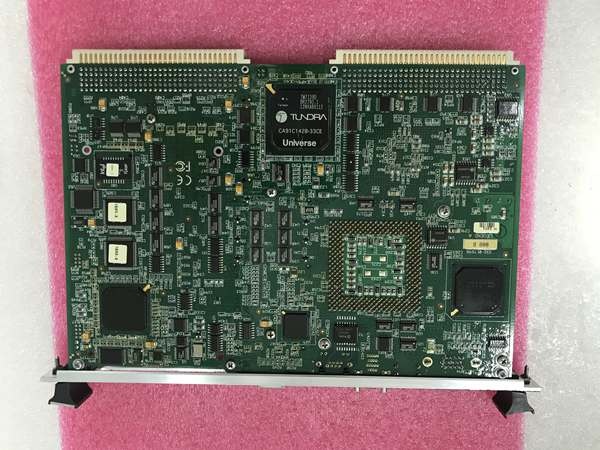
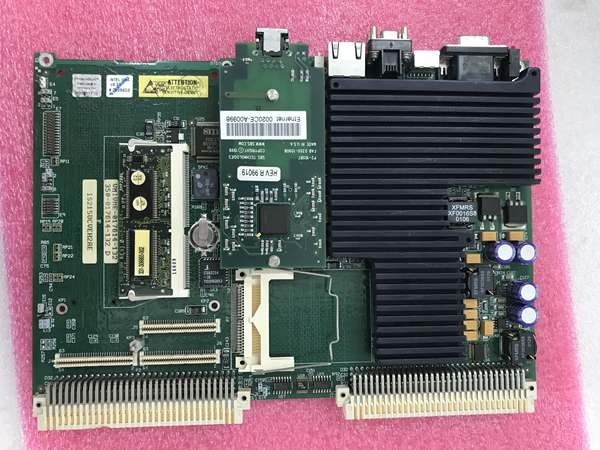
Description
System Architecture & Operational Principle
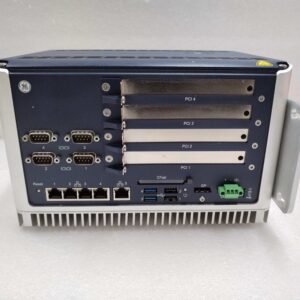
The VMIVME-7698-345 is an 8-port serial communication module designed for VMEbus-based control systems, typically installed in a VME rack (Purdue Level 1–2 boundary) adjacent to a host controller (e.g., Mark VI, Mark V, or custom VME CPU). It acts as a protocol bridge, converting VMEbus data to serial signals for field devices and vice versa.
Each of the 8 ports supports RS-232, RS-422, or RS-485 (software-selectable per port) and is optically isolated (1500 VDC) to break ground loops and protect the VMEbus from field-side transients. The module uses a VME64x-compliant backplane interface to exchange data with the host controller, supporting both polled and interrupt-driven communication modes.
Internally, the VMIVME-7698-345 contains a dedicated UART (Universal Asynchronous Receiver/Transmitter) per port with 16-byte FIFOs, allowing high-speed data transfer (up to 115.2 kbps) without data loss. The module is hot-swappable when installed in a VME rack with proper interlocks, enabling replacement without shutting down the entire system—critical for high-availability process industries (power generation, oil & gas).

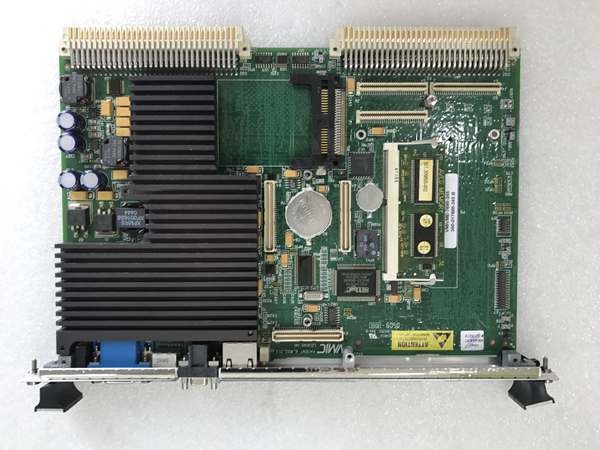
GE VMIVME-7698-345 350-017698-345 B
Core Technical Specifications
-
Physical Interface: 2x 40-pin SCSI-style connectors (front panel) for serial cables; VME64x backplane connector (P1/J1)
-
Serial Ports: 8 independent ports (software-selectable RS-232/422/485 per port)
-
Data Rates: 300 bps – 115.2 kbps (software-configurable per port)
-
Protocol Support: Async ASCII, MODBUS RTU/ASCII, DF1, custom protocols
-
Isolation: 1500 VDC port-to-port, 500 VDC port-to-VMEbus ground
-
Operating Temperature: -40°C to +70°C (-40°F to +158°F)
-
Storage Temperature: -55°C to +85°C (-67°F to +185°F)
-
Humidity: 5–95% RH non-condensing
-
Bus Interface: VME64x (supports A24/D16 or A32/D32 addressing)
-
Interrupts: Supports VMEbus IRQ1–IRQ7 (software-configurable)
-
Dimensions: ~233 mm × 160 mm × 30 mm (9.2 in × 6.3 in × 1.2 in)
-
Weight: ~0.8 kg (1.8 lbs)
-
Certifications: UL/cUL, CE, IEEE 1101.1 (VME mechanical standard)
Customer Value & Operational Benefits
Multi-Protocol Flexibility for Diverse Field Devices
The ability to configure each port as RS-232, RS-422, or RS-485 (and support protocols like MODBUS RTU) allows a single VMIVME-7698-345 to interface with a wide range of field devices—from legacy RTUs (RS-232) to modern smart sensors (RS-485). This reduces the need for multiple communication cards, simplifying system design and lowering costs.
Robust Isolation for Harsh Industrial Environments
1500 VDC port-to-port and port-to-ground isolation prevents ground loops and protects the VMEbus from voltage spikes caused by lightning, motor startups, or faulty field devices. This is essential in outdoor substations or refinery environments where electrical noise is prevalent.
Hot-Swappable Maintenance Without Downtime
The ability to replace a faulty VMIVME-7698-345 without powering down the VME rack minimizes maintenance impact. Technicians can perform replacements during scheduled outages or routine checks, avoiding costly unplanned shutdowns in 24/7 process plants.
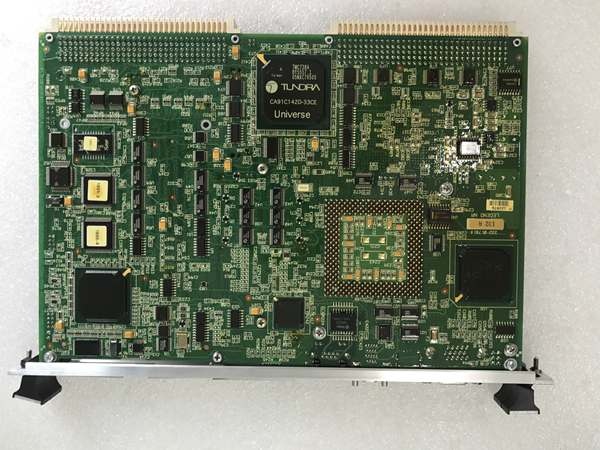
GE VMIVME-7698-345 350-017698-345 B
Field Engineer’s Notes (From the Trenches)
When configuring RS-485 on the VMIVME-7698-345, always enable the termination resistor (jumper or software setting) on the last device in the multidrop chain—I’ve seen comms fail because the line wasn’t terminated, causing signal reflections. Also, use shielded twisted pair cable for RS-422/485 and ground the shield at the module end only; grounding both ends creates ground loops that induce noise, leading to checksum errors. If a port stops responding, check the VMEbus address and IRQ settings in the host controller’s configuration—mismatched settings are a common cause of “no comms” faults.
Real-World Applications
In a Texas power plant, the VMIVME-7698-345 connects a Mark VI turbine controller to 8 remote RTUs via RS-485. The module’s 1500 VDC isolation prevents ground loops from the plant’s multiple grounding zones, while MODBUS RTU support enables the controller to poll RTU data (e.g., transformer temperature, breaker status) every 500 ms. The hot-swap feature allows maintenance during plant outages without interrupting turbine monitoring.
On an offshore oil platform, the VMIVME-7698-345 interfaces a VME-based safety system with 4 RS-232 HMIs (operator stations) and 4 RS-422 smart transmitters (pressure/temperature). The wide operating temperature range (-40°C to +70°C) withstands the platform’s unheated control room, and IEEE 1101.1 compliance ensures reliable mechanical mounting in the vibrating rack.