Description
System Architecture & Operational Principle
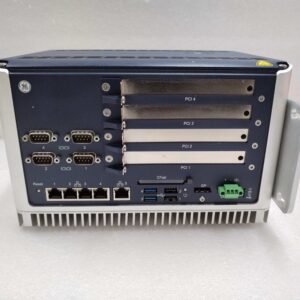
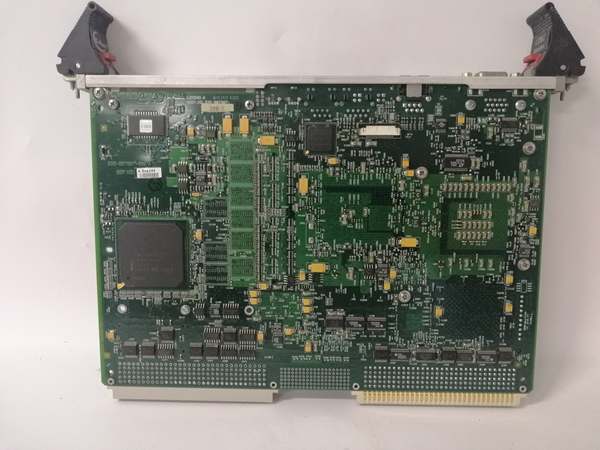
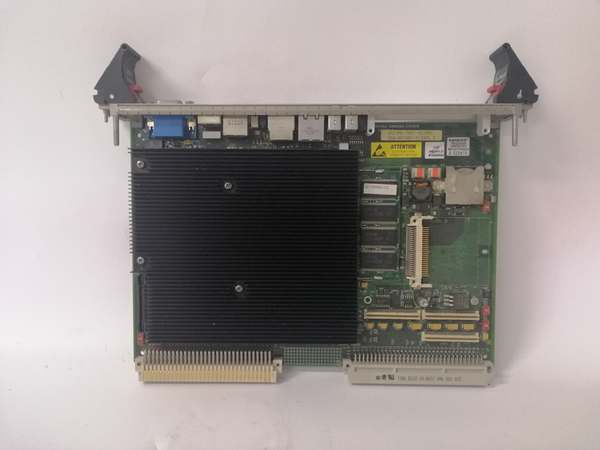
The VMIVME-7807 is a 32-channel analog input module designed for VMEbus-based control systems, typically installed in a VME rack (Purdue Level 1–2 boundary) adjacent to a host controller (e.g., Mark V, Mark VI, or custom VME CPU). It serves as a high-density interface for field instruments that output 4–20 mA current loop signals, representing process variables such as bearing temperature, exhaust pressure, or fuel flow rate.
Each channel contains precision signal conditioning circuitry (250 Ω shunt resistors, anti-aliasing filters) and 1500 VDC optical isolation to eliminate ground loops and protect the VMEbus from field-side transients or faults. The conditioned signals are digitized by a 16-bit sigma-delta ADC and transferred to the host controller via the VME64x backplane using DMA (Direct Memory Access) for high-speed data throughput.
The module supports software-selectable input ranges (4–20 mA, 0–20 mA, ±20 mA) and per-channel calibration via the host controller’s configuration software. It is hot-swappable when installed in a VME rack with proper interlocks, enabling replacement without shutting down the entire system—critical for high-availability process industries (power generation, oil & gas, refining).

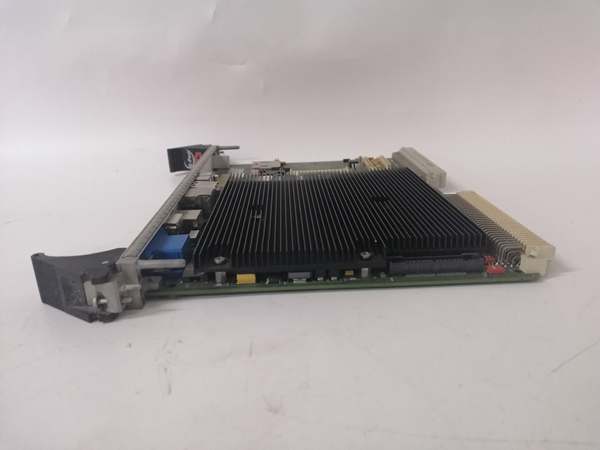
GE VMIVME-7807
Core Technical Specifications
-
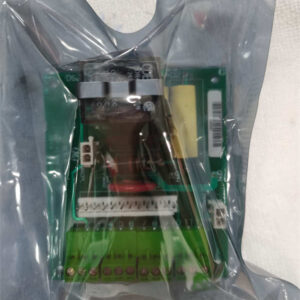
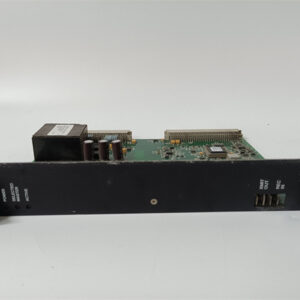
Physical Interface: 4x 20-position terminal blocks (8 channels per block) for field wiring; 96-pin VME64x backplane connector (P1/J1)
-
Input Channels: 32 single-ended analog inputs (4–20 mA default)
-
Input Range: Software-selectable 4–20 mA, 0–20 mA, ±20 mA
-
Resolution: 16 bits (65,536 counts)
-
Accuracy: ±0.05% of span (at 25°C)
-
Isolation: 1500 VDC channel-to-channel, 500 VDC channel-to-VMEbus ground
-
Input Impedance: 250 Ω nominal (converts 4–20 mA to 1–5 VDC internally)
-
Update Rate: 5–20 ms per channel (software-configurable, aggregate throughput up to 1.6 MSPS)
-
Operating Temperature: -40°C to +70°C (-40°F to +158°F)
-
Storage Temperature: -55°C to +85°C (-67°F to +185°F)
-
Humidity: 5–95% RH non-condensing
-
Bus Interface: VME64x (supports A24/D16, A32/D32 addressing)
-
Power Consumption: 10 W typical, 15 W max
-
Dimensions: ~233 mm × 160 mm × 30 mm (9.2 in × 6.3 in × 1.2 in)
-
Weight: ~0.9 kg (2.0 lbs)
-
Certifications: UL/cUL, CE, IEEE 1101.1 (VME mechanical standard)
Customer Value & Operational Benefits
High-Density Signal Acquisition Reduces Rack Space
With 32 channels per module, the VMIVME-7807 minimizes the number of I/O cards required in a VME rack, freeing space for other critical modules (e.g., CPU, communication cards). This is ideal for large-scale turbine or compressor trains where dozens of analog sensors must be monitored.
Robust Isolation for Harsh Industrial Environments
1500 VDC channel-to-channel and channel-to-ground isolation prevents ground loops and protects the VMEbus from voltage spikes caused by lightning, motor startups, or faulty transmitters. This ensures reliable data acquisition in outdoor substations or refinery environments with high electrical noise.
Hot-Swappable Maintenance Without Downtime
The ability to replace a faulty VMIVME-7807 without powering down the VME rack minimizes maintenance impact. Technicians can perform replacements during scheduled outages or routine checks, avoiding costly unplanned shutdowns in 24/7 process plants.
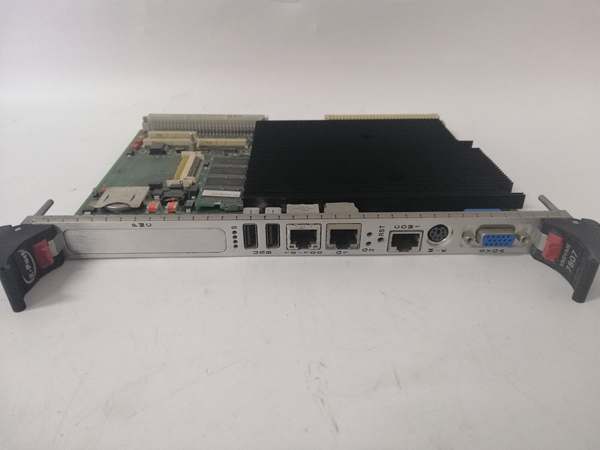
GE VMIVME-7807
Field Engineer’s Notes (From the Trenches)
When wiring 4–20 mA loops to the VMIVME-7807, always use shielded twisted pair cable and terminate the shield at the terminal block end only—grounding both ends creates ground loops that manifest as erratic readings or drift. I once spent hours troubleshooting a pressure transmitter that “drifted” until I realized the shield was bonded to the transmitter housing and the I/O module chassis. Also, verify the loop resistance doesn’t exceed 600 Ω (including cable resistance)—higher resistance drops voltage below the module’s 1 VDC minimum input, causing a 0 mA reading.
Real-World Applications
In a Texas natural gas power plant, the VMIVME-7807 monitors 32 pressure transmitters on a gas turbine’s fuel gas skid. The 16-bit resolution allows the VME-based Mark VI controller to detect pressure fluctuations as small as 0.01 psi, triggering early warnings for filter clogging. The 1500 VDC isolation prevents interference from nearby high-voltage starters, ensuring reliable data for the turbine’s safety system.
On an offshore oil platform, the VMIVME-7807 reads 4–20 mA signals from subsea flowmeters in a gas export line. The module’s wide operating temperature range (-40°C to +70°C) withstands the platform’s unheated control module room, and IEEE 1101.1 compliance ensures reliable mechanical mounting in the vibrating rack. Hot-swapping failed modules during crew changes minimizes impact on production.