Description
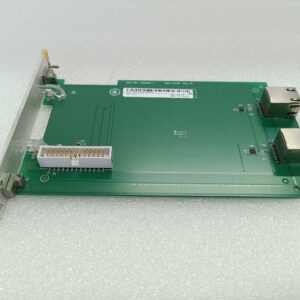
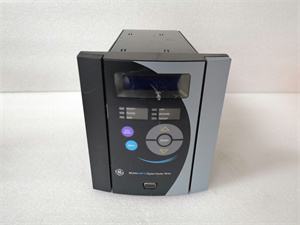
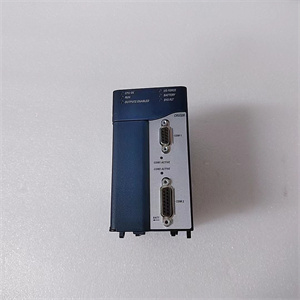
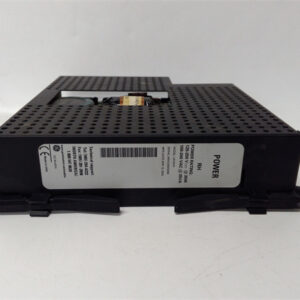
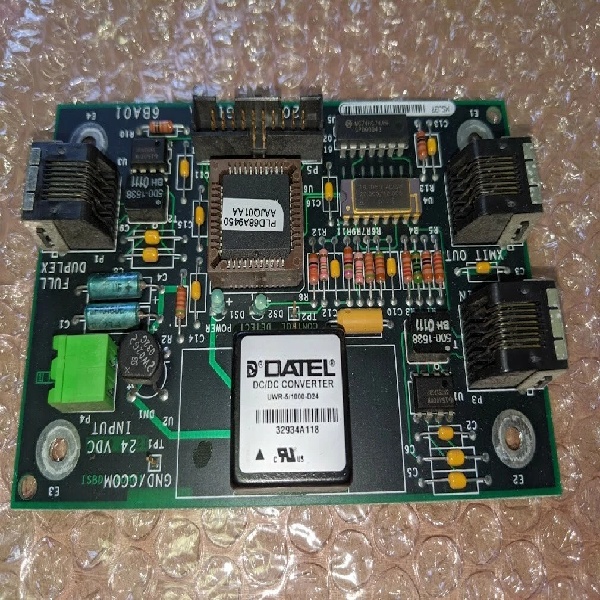
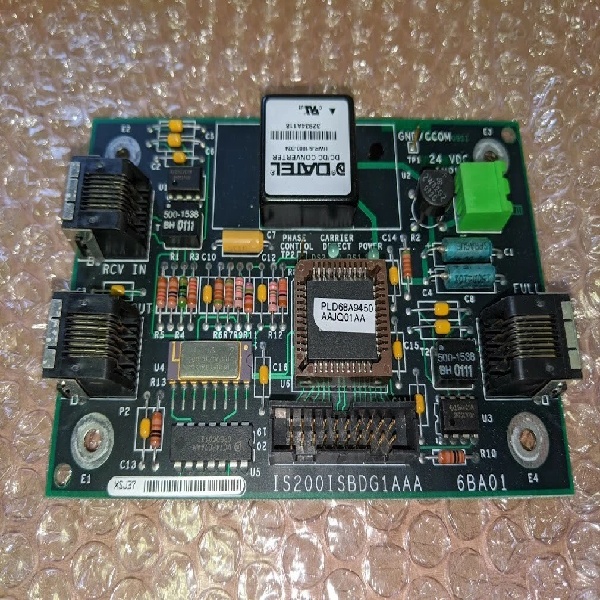
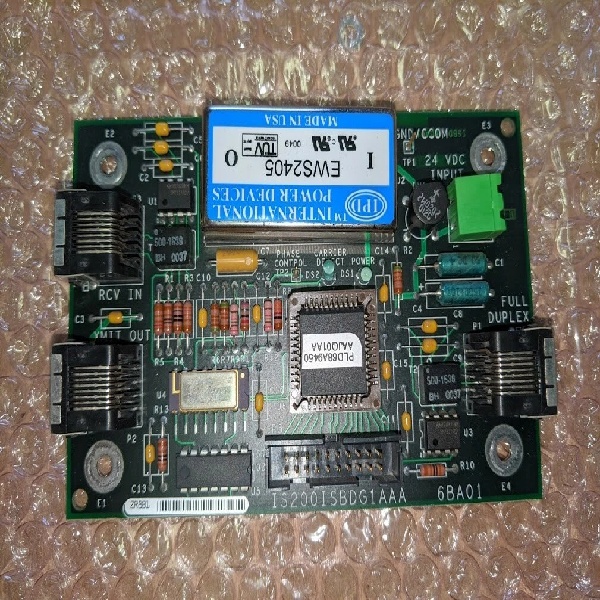
GE IS200ISBDG1AAA Mark VIe Intelligent Signal Conditioning Module
Detailed Parameter Table
Parameter Name | Parameter Value ———|——– Product Model | **IS200ISBDG1AAA** Manufacturer | GE General Electric Product Category | Industrial Intelligent Signal Conditioning Module Series | Mark VIe (Turbine Control System) Signal Processing Type | Analog Signal Isolation, Amplification, Filtering, Conversion Input Signal Types | 4-20mA, 0-10V, mV-Level Signals (Thermocouple/RTD) Output Signal Types | Standard 4-20mA, 0-10V (Isolated) Number of Channels | 8 Input/8 Output (1:1 Correspondence) Isolation Voltage | 2500V AC (Input to Output, Channel to Channel) Accuracy | ±0.05% of Full Scale Linearity Error | ≤±0.02% of Full Scale Filter Bandwidth | Adjustable (1Hz-1kHz) Temperature Drift | ≤5ppm/°C Communication Protocols | GE SRTP, MODBUS RTU Operating Temperature | -20°C to 70°C Storage Temperature | -40°C to 85°C Protection Rating | IP20 (Module), NEMA 12 (Chassis Mount) Physical Dimensions | 145mm × 125mm × 32mm Certifications | UL 508, CE, CSA, IEC 61010-1, IEC 61508 (SIL 2) Power Supply | 24V DC ±10%, 0.8A Max
Product Introduction
The **GE IS200ISBDG1AAA** is a high-precision intelligent signal conditioning module customized for GE’s Mark VIe turbine control system, specializing in the optimization processing of weak and interfering signals from turbine field sensors, as well as reliable isolation and conversion to standard signals. As a key “signal purifier” in the Mark VIe control system signal chain, this module is mainly used to process signals from turbine core sensors such as thermocouples (temperature measurement), RTDs (resistance temperature detectors), pressure transmitters, and vibration sensors. It can effectively eliminate electromagnetic interference, amplify weak signals, and convert non-standard signals into standard 4-20mA or 0-10V signals that the control system can directly identify, ensuring the accuracy and reliability of signal transmission. Its ultra-high processing accuracy, strong isolation capability, and SIL 2 safety certification make it an essential equipment for signal conditioning in thermal power plants, nuclear power auxiliary systems, offshore gas turbines, and other harsh industrial environments.
What distinguishes the **GE IS200ISBDG1AAA** is its integrated signal optimization capability, ultra-high processing precision, and multi-scenario adaptability—advantages that meet the core demand for reliable signal transmission in complex turbine control environments. Leveraging GE’s advanced signal processing technology, the module adopts a dedicated precision operational amplifier and high-resolution ADC chip for each channel, realizing independent processing of 8 channels without mutual interference. The accuracy reaches ±0.05% of full scale, and the temperature drift is controlled within 5ppm/°C, ensuring stable signal processing performance even in large temperature fluctuation environments. It integrates 2500V AC high-voltage isolation between input and output, effectively blocking ground loops and common-mode interference generated by turbine high-voltage equipment. With SIL 2 functional safety certification, it ensures the reliable transmission of safety-related signals (such as turbine bearing temperature signals). By building a “reliable signal bridge” between field sensors and the control system, it provides a solid guarantee for the precise control and safe operation of the turbine.
IS200ISBDG1AAA
Core Advantages and Technical Highlights
Multi-Type Signal Adaptive Processing: The **IS200ISBDG1AAA** supports multi-type input signals, including standard 4-20mA/0-10V signals and weak signals such as thermocouple (K/J/T type) millivolt-level signals and RTD (Pt100/Pt1000) resistance signals. Each channel can be independently configured through the upper system to match different sensor types, eliminating the need for additional signal conversion modules. For example, when processing turbine bearing Pt100 temperature signals, the module automatically provides constant current excitation, converts the resistance change into a standard 4-20mA signal, and transmits it to the Mark VIe control system, with a temperature measurement error of less than ±0.1°C.
High-Precision Isolation and Interference Suppression: The module adopts three-port isolation technology (input-output-power) with an isolation voltage of 2500V AC, which can effectively suppress common-mode interference and differential-mode interference generated by turbine generators, high-voltage switchgear, and variable frequency drives. Each channel is equipped with an adjustable digital filter (bandwidth 1Hz-1kHz), which can be flexibly set according to the signal frequency characteristics to eliminate high-frequency noise. For example, when processing turbine vibration sensor signals (low-frequency), the filter bandwidth is set to 1Hz to filter out high-frequency electromagnetic noise, ensuring the authenticity of vibration amplitude data.
Intelligent Monitoring and Remote Configuration: The **IS200ISBDG1AAA** supports GE SRTP and MODBUS RTU dual communication protocols. Through SRTP, it realizes real-time synchronization of signal processing status and configuration parameters with the Mark VIe control module. Maintenance personnel can remotely monitor the input/output signal values, filter status, and channel fault information of each channel through the upper system. The module supports remote configuration of parameters such as channel signal type, filter bandwidth, and amplification gain, avoiding on-site wiring modifications and improving maintenance efficiency. When a channel fault occurs (such as open circuit or short circuit), the module immediately sends an alarm signal to the upper system and locks the output to a safe value.
Safety Compliance and Harsh Environment Adaptability: The module has passed IEC 61508 SIL 2 functional safety certification, and its hardware and software design meets the requirements of safety-related systems, ensuring the reliable transmission of turbine safety-critical signals (such as main steam temperature, bearing temperature). It adopts a ruggedized structural design, with an operating temperature range of -20°C to 70°C, which can adapt to the harsh environment of turbine control rooms with large temperature changes and high dust. The module integrates overvoltage, overcurrent, and reverse polarity protection functions for input and output, which can effectively avoid module damage caused by sensor wiring errors or abnormal signals, improving the overall reliability of the system.
Typical Application Scenarios
In thermal power plant ultra-supercritical steam turbine temperature monitoring systems, the **IS200ISBDG1AAA** serves as the core signal conditioning unit. It processes signals from 8 thermocouple sensors (K type) installed at the turbine main steam inlet, high-pressure cylinder exhaust, and other key positions. The module provides constant voltage excitation for the thermocouples, amplifies the millivolt-level temperature signals, filters out high-frequency interference from the boiler and high-voltage lines, and converts them into standard 4-20mA signals. Through SRTP protocol, the conditioned signals are transmitted to the Mark VIe control system within 5ms. When the main steam temperature exceeds the set threshold, the control system immediately issues a load reduction command based on the accurate temperature data, preventing turbine over-temperature damage. The module’s isolation function effectively avoids ground loop interference between the thermocouple wiring and the control system, ensuring the temperature measurement error is within ±0.2°C.
In offshore gas turbine pressure monitoring systems, the **IS200ISBDG1AAA** undertakes the signal conditioning task of 8 pressure transmitters (measuring fuel pressure, lubricating oil pressure, and exhaust pressure). The pressure transmitters output 4-20mA signals, which are easily interfered by the offshore platform’s wind power generation equipment and communication signals. The module’s 2500V AC isolation and digital filter functions effectively suppress the interference, and the linearity error of the conditioned signals is ≤±0.02% of full scale. The module communicates with the Mark VIe control system through MODBUS RTU protocol, and maintenance personnel can remotely monitor the pressure data and module status through the on-site HMI. When the fuel pressure is too low, the module immediately sends an alarm signal to the control system, which triggers the fuel supply adjustment mechanism to ensure the stable operation of the gas turbine. The module’s -20°C to 70°C operating temperature range adapts to the large temperature changes on the offshore platform, and its ruggedized design resists salt spray corrosion.
In nuclear power plant auxiliary turbine vibration monitoring systems, the **IS200ISBDG1AAA** (SIL 2 certified) processes signals from 8 vibration sensors (eddy current type) installed on the turbine rotor and bearing. The vibration sensors output weak mV-level signals, which are easily affected by the nuclear power plant’s strong electromagnetic environment. The module’s high-precision operational amplifier amplifies the weak signals by 1000 times, and the adjustable filter (set to 10Hz bandwidth) filters out high-frequency electromagnetic noise. The conditioned signals are converted into standard 4-20mA signals and transmitted to the Mark VIe safety control system. The module’s three-port isolation technology prevents the vibration sensor signals from interfering with the safety control system, ensuring the reliability of vibration amplitude monitoring. When the vibration amplitude exceeds the safety threshold, the module locks the output signal to a safe value and sends an emergency shutdown request to the control system, avoiding rotor damage and ensuring the safe operation of the auxiliary turbine.
Related Model Recommendations
**IS200ISBDG2AAA**: Extended-channel variant of **IS200ISBDG1AAA**, supporting 16 input/16 output channels, suitable for large-scale turbine monitoring systems with multiple sensors.
**IS200MACCH1B**: Redundant Mark VIe control module that receives and processes the conditioned signals from **IS200ISBDG1AAA**, executes turbine control logic, and issues control commands.
**IS200RAPAG1BCA**: Mark VIe dual redundant power adapter module that provides stable 24V DC power for **IS200ISBDG1AAA**, ensuring continuous and reliable signal processing.
**GE 9390 Vibration Sensor**: High-precision eddy current vibration sensor that matches **IS200ISBDG1AAA**, providing reliable weak vibration signals for turbine rotor monitoring.
**IC754VSF12CTD-EX-Pro**: Redundant monitoring HMI that displays the real-time input/output signal values, filter status, and fault information of **IS200ISBDG1AAA**, supporting remote parameter configuration.
**IS200MCCPG3A**: Dual redundant Mark VIe communication module that transmits the signal processing data of **IS200ISBDG1AAA** to the plant-level redundant SCADA system, ensuring uninterrupted data transmission.
**IS200TDBPG1A**: Mark VIe signal terminal block module with surge protection, providing standardized wiring interfaces for **IS200ISBDG1AAA** and field sensors, improving wiring reliability.
IS200ISBDG1AAA
Installation, Commissioning and Maintenance Instructions
Installation preparation: Before installing **IS200ISBDG1AAA**, power off the Mark VIe control cabinet and field sensor circuits, and confirm the mounting slot compatibility (reserve ≥10cm heat dissipation space around the module). The input terminals must be correctly connected to the field sensors (pay attention to the polarity of thermocouples and current signals), and the output terminals to the Mark VIe I/O modules. Use shielded twisted-pair cables for all signal wiring, with the shield grounded at the control cabinet end (single-point grounding) to avoid interference. For nuclear power and offshore applications, use explosion-proof terminal housings meeting site standards. Configure module parameters (channel signal type, filter bandwidth, amplification gain) via Mark VIe Configuration Studio. Perform insulation resistance testing (input/output to ground ≥500MΩ) and loop continuity testing before power-on to ensure wiring correctness.
Maintenance suggestions: Conduct daily remote monitoring of the input/output signal values, channel status, and communication status of **IS200ISBDG1AAA** via the upper system, focusing on checking whether the signal values are consistent with the field sensor status. Perform monthly on-site inspections: clean dust on the module and terminal blocks, check wiring terminal tightness (torque ≥1.2N·m), and measure module surface temperature (normal ≤65°C). Calibrate signal processing accuracy quarterly using a high-precision signal calibrator, ensuring the error is within ±0.05% of full scale. Verify filter effectiveness and isolation performance semi-annually. Conduct annual insulation resistance testing (input to output ≥2500MΩ at 2500V AC) and surge protection performance verification. Update module firmware annually via GE’s secure technical platform, and back up configuration parameters before updating. After maintenance, perform a system joint test to ensure the consistency between the conditioned signals and the actual sensor data.
Service and Guarantee Commitment
GE General Electric provides a 60-month quality guarantee for the **IS200ISBDG1AAA**, covering manufacturing defects, signal processing accuracy degradation, channel failure, communication malfunction, and safety function failure under normal operating conditions. Our professional signal processing technical team offers 24×7 on-site and remote emergency support, including module configuration guidance, signal conditioning system debugging, fault diagnosis, and SIL 2 compliance verification. Customers receive exclusive access to GE’s Mark VIe signal conditioning configuration tools, SIL 2 certification documents, and sensor compatibility lists. Priority service customers enjoy 24-hour emergency replacement of faulty modules, free annual signal conditioning system health checks, and dedicated technical account managers—ensuring the long-term reliable operation of the turbine signal chain. For nuclear power and offshore applications, we provide extended warranty options (up to 84 months) and on-site resident technical support services, as well as regular SIL 2 function verification services.