Description
System Architecture & Operational Principle
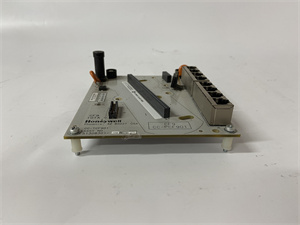
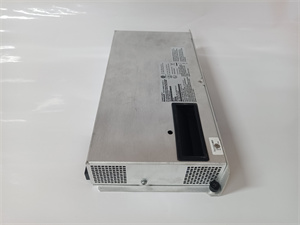
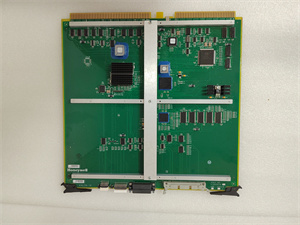
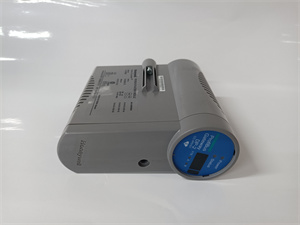
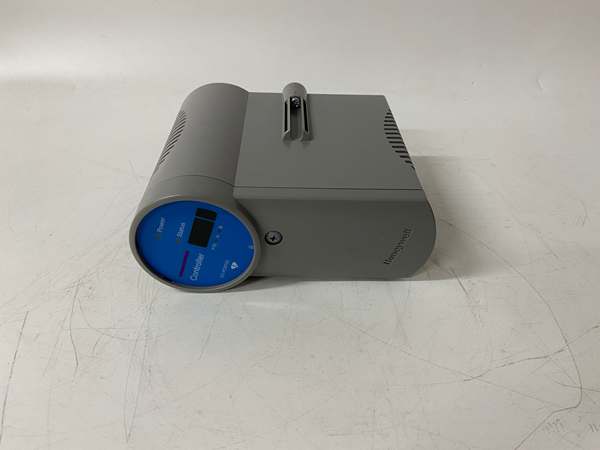
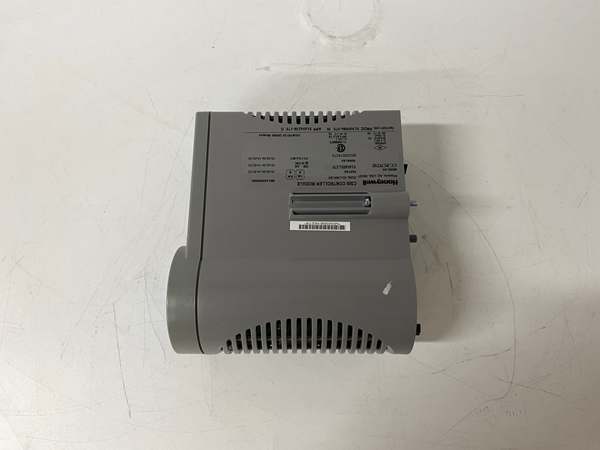
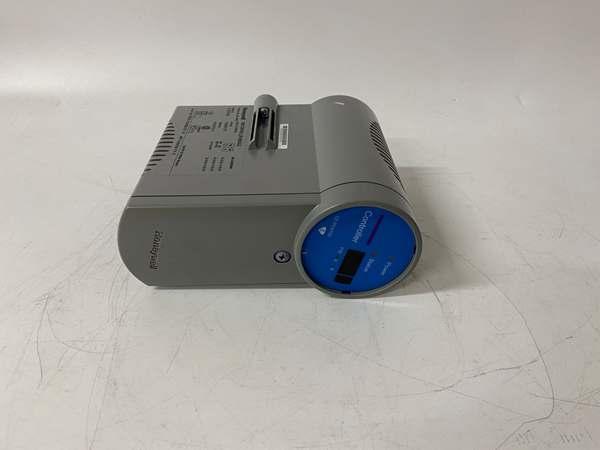
The Honeywell CC-PCNT02 is a C300 Series process controller within the Honeywell Experion PKS ecosystem, designed for Level 2 (Control) of the Purdue Model in industrial automation. It resides in the Experion PKS controller rack (typically in a 19-inch cabinet) and serves as the bridge between field I/O modules (e.g., analog input/output cards) and operator stations (e.g., Honeywell’s C300 Workstation).
Upstream Communication
Receives process data from field I/O modules via the I/O Link (a high-speed serial bus). This data includes analog signals (e.g., temperature, pressure) and digital signals (e.g., valve positions, switch states) from field devices (e.g., transmitters, valves).
Downstream Communication
Transmits control commands to field I/O modules via the I/O Link, adjusting the position of valves, the speed of motors, or the operation of other devices. It also communicates with operator stations via Ethernet (TCP/IP), sending real-time process data (e.g., trends, alarms) for monitoring and visualization.
Operational Advantages
-
Redundancy: Supports dual redundant configurations (two CC-PCNT02 controllers working in sync), ensuring uninterrupted operation if one controller fails.
-
High Performance: 32-bit RISC processor and 64 MB SDRAM enable fast execution of complex control algorithms (e.g., PID, model predictive control).
-
Scalability: Can be expanded to support up to 4,000 I/O points per controller pair, making it suitable for large industrial processes.

Honeywell CC-PCNT02
Core Technical Specifications
|
Attribute
|
Specification
|
|---|---|
|
Processor
|
32-bit RISC (high-performance, industrial-grade)
|
|
Memory
|
64 MB SDRAM (main memory); 32 MB Flash (program storage)
|
|
Redundancy
|
Dual redundant configuration (bumpless failover)
|
|
I/O Capacity
|
Up to 4,000 I/O points per controller pair (with load balancing)
|
|
Communication Protocols
|
Ethernet (TCP/IP), Modbus TCP/IP, OPC (for operator station communication)
|
|
Control Algorithms
|
PID, cascade, ratio, feedforward, model predictive control (MPC)
|
|
Operating Temperature
|
0°C to +60°C (32°F to 140°F)
|
|
Power Consumption
|
15W typical (20W maximum)
|
|
Certifications
|
UL, CE, ATEX (Ex nA IIC T4), SIL 2 (safety integrity level)
|
|
Compatibility
|
Experion PKS R400+; C300 series I/O modules; legacy TDC 3000 systems (via gateway)
|
Customer Value & Operational Benefits
Enhanced Process Reliability
The CC-PCNT02’s dual redundant configuration ensures that if one controller fails, the other takes over within milliseconds, preventing process interruptions. For example, a refinery using the CC-PCNT02 for distillation column control reported a 99.9% uptime, eliminating costly shutdowns.
Improved Control Precision
The 32-bit RISC processor and advanced control algorithms (e.g., MPC) enable precise adjustment of process variables (e.g., temperature, pressure), reducing product defects. A chemical plant using the CC-PCNT02 for reactor temperature control saw a 20% reduction in off-spec products.
Cost-Effective Scalability
The ability to support up to 4,000 I/O points per controller pair reduces the number of controllers needed for large processes, saving cabinet space and installation costs. A power plant using the CC-PCNT02 for turbine control reduced its controller count by 50%, cutting costs by $10,000+.
Compliance with Safety Standards
The SIL 2 certification ensures that the CC-PCNT02 meets the rigorous safety requirements of industries like oil & gas and chemical processing. This compliance is essential for facilities seeking to adhere to regulatory standards (e.g., OSHA, ATEX).
Honeywell CC-PCNT02
Field Engineer’s Notes (From the Trenches)
When installing the CC-PCNT02, always verify the firmware version—the module requires firmware v3.0 or later to support redundant operation. I once saw a site where a contractor used an older firmware version, resulting in a “redundancy mismatch” fault. Updating the firmware fixed the issue immediately.Another gotcha: check the I/O Link cables—the CC-PCNT02 uses shielded twisted-pair (STP) cables for I/O communication. If the cables are unshielded, EMI from nearby power lines can corrupt the data, leading to “I/O timeout” errors. Use STP cables and ground the shield to the rack’s earth ground.If the controller’s “FAULT” LED is red, check the redundant sync cable—the dual controllers use a dedicated Ethernet cable for synchronization. If the cable is loose or disconnected, the controllers will lose sync, triggering a fault. Tighten the cable and reboot the controllers to resolve the issue.
Real-World Applications
-
Oil Refinery: Distillation Column ControlAn oil refinery uses the CC-PCNT02 to control the temperature and pressure of its crude oil distillation columns. The controller receives data from temperature transmitters (via analog input modules) and adjusts the reflux ratio (the amount of condensed liquid returned to the column) to optimize gasoline yield. The dual redundant configuration ensures that if one controller fails, the other takes over, preventing a shutdown of the distillation process.
-
Chemical Plant: Reactor Batch ManagementA chemical plant uses the CC-PCNT02 to manage batch reactions (e.g., polymerization). The controller executes a pre-programmed sequence of steps (e.g., adding reactants, heating, cooling) and adjusts the flow of cooling water based on temperature data from sensors. The SIL 2 certification ensures that the controller meets the safety requirements for handling hazardous chemicals.
-
Power Generation: Turbine Speed ControlA power plant uses the CC-PCNT02 to control the speed of its gas turbines. The controller receives data from speed sensors (via digital input modules) and adjusts the fuel flow to maintain a constant speed, ensuring efficient power generation. The high I/O capacity (up to 4,000 points) allows the controller to manage multiple turbines from a single rack.
High-Frequency Troubleshooting FAQ
Q: What does the “FAULT” LED indicate on the CC-PCNT02?
A: The red “FAULT” LED indicates a critical error, such as:
-
Redundancy Sync Failure: The dual controllers are not synchronized (check the sync cable).
-
I/O Link Timeout: The controller is not receiving data from field I/O modules (check the I/O Link cables).
-
Firmware Error: The firmware is corrupted or outdated (update the firmware).Check the Experion PKS diagnostic software for detailed fault codes and follow the manufacturer’s troubleshooting steps.
Q: Can the CC-PCNT02 be used with non-Experion PKS systems?
A: No, the CC-PCNT02 is designed exclusively for Honeywell Experion PKS systems. It relies on the Experion PKS architecture for I/O communication and operator station integration, so using it with non-Experion systems will result in compatibility issues.
Q: How do I replace a faulty CC-PCNT02?
A: Follow these steps:
-
Power Down: Turn off the power to the controller rack (via the main circuit breaker).
-
Remove Old Controller: Unscrew the controller from the rack (use a Phillips screwdriver) and disconnect the I/O Link and Ethernet cables.
-
Install New Controller: Insert the new CC-PCNT02 into the rack and tighten the screws.
-
Reconnect Cables: Reconnect the I/O Link and Ethernet cables to the new controller.
-
Power Up: Turn on the power to the rack and verify the controller’s operation (check the “OK” LED).
-
Sync Controllers: If using a redundant configuration, sync the new controller with the existing one (follow the manufacturer’s instructions).
Q: Why is the CC-PCNT02 not communicating with the operator station?
A: Check three things first:
-
Ethernet Cable: Ensure the Ethernet cable is connected to the correct port (the controller has two Ethernet ports—use Port 1 for operator station communication).
-
IP Address: Verify that the controller’s IP address is correct (use the Experion PKS software to check the IP configuration).
-
Firewall: Ensure that the firewall is not blocking traffic between the controller and the operator station (allow TCP/IP traffic on port 502).
Commercial Availability & Pricing
Please note: The listed price is not the actual final price. It is for reference only and is subject to appropriate negotiation based on current market conditions, quantity, and availability.