Description
System Architecture & Operational Principle
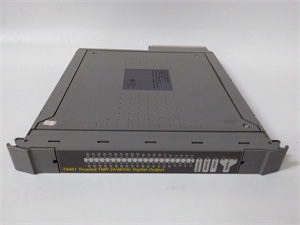
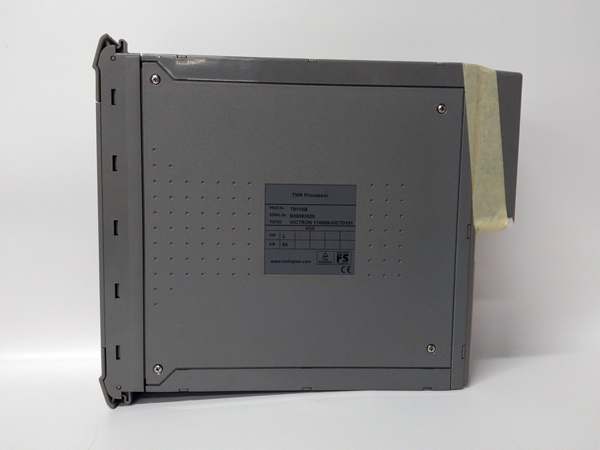
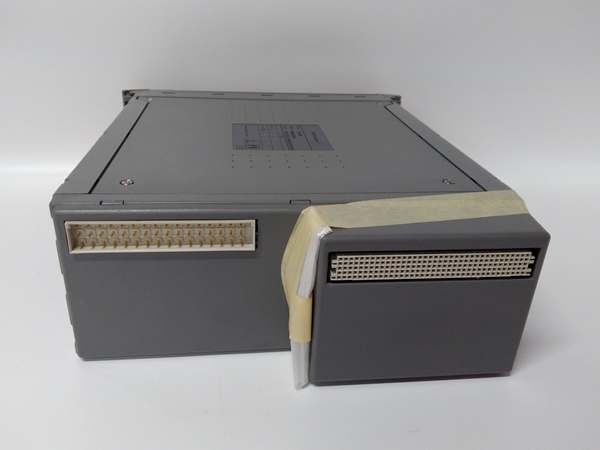
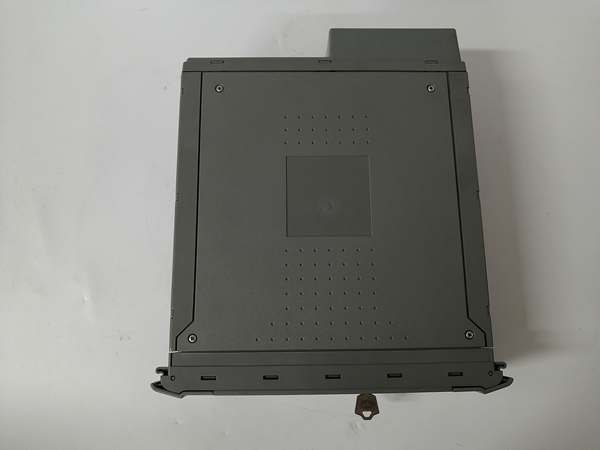
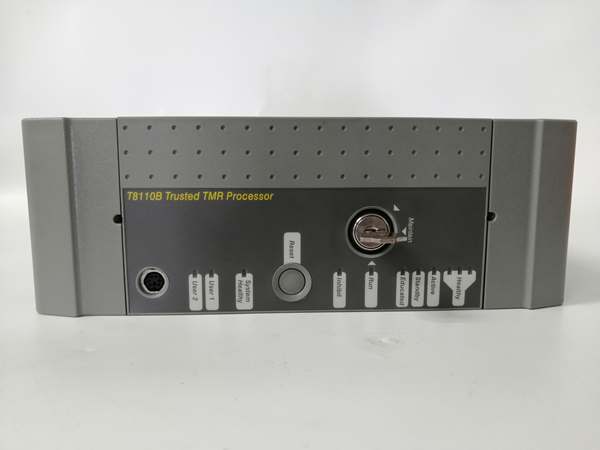
The ICS TRIPLEX T8110B is a Triple Modular Redundant (TMR) processor module designed for the ICS TRIPLEX Trusted 8000 Series safety instrumented system (SIS), deployed at Purdue Model Level 2 (Supervisory Control) or Level 3 (Operations Management) depending on the application. It serves as the computational heart of the SIS, executing safety logic (e.g., emergency shutdown, fire & gas detection) and managing communication with I/O modules (e.g., digital inputs/outputs, analog sensors) via the Trusted backplane.
Core Functional Blocks
The T8110B consists of three identical PowerPC 603e processor cores (1 GHz each), each running an independent instance of the safety application. The module uses a lock-step voting mechanism to compare the output of each processor—if one core deviates from the others (e.g., due to hardware failure or software error), the voting logic overrides the faulty output, ensuring the system remains in a safe state.
Operational Workflow
-
Data Acquisition: The T8110B receives data from field devices (e.g., pressure transmitters, emergency stop buttons) via I/O modules connected to the Trusted backplane.
-
Logic Execution: Each processor core executes the safety application (e.g., “shut down turbine if pressure exceeds 100 bar”) in parallel.
-
Voting & Output: The voting logic compares the three processor outputs. If two or more cores agree, the output is sent to the actuator (e.g., valve, motor starter). If not, a fault is logged, and the system switches to a safe state (e.g., closing a valve).
-
Diagnostics: Continuous self-diagnostics monitor processor health, memory integrity, and communication links. Faults (e.g., processor hang, memory corruption) trigger immediate alerts and switchover to redundant components.
Key Architectural Advantages
-
Fault Tolerance: The TMR architecture eliminates single points of failure—even if one processor core fails, the system continues to operate.
-
Hot-Swap Capability: The module can be replaced without shutting down the system, minimizing downtime in 24/7 operations.
-
Deterministic Performance: The lock-step voting mechanism ensures consistent output, critical for safety-critical applications where timing is essential.

ICS Triplex T8110B
Core Technical Specifications
-
Processor: 3x PowerPC 603e (1 GHz each)
-
Memory: 512 MB–2 GB DDR SDRAM
-
Power Supply: 12 V DC (redundant power modules required)
-
Operating Temperature: -40°C to +70°C (-40°F to +158°F)
-
Storage Temperature: -55°C to +85°C (-67°F to +185°F)
-
Humidity: 5–95% RH non-condensing
-
Communication: Trusted backplane (proprietary; supports hot-swap)
-
Dimensions: 233 mm × 167 mm × 6U (9.2 in × 6.6 in × 1.2 in)
-
Weight: ~2.5 kg (5.5 lbs)
-
Certifications: SIL 3 (IEC 61508), CE, UL/cUL
Customer Value & Operational Benefits
Uncompromised Safety with TMR Architecture
The T8110B’s triple modular redundancy ensures fault-tolerant operation—a single processor failure does not compromise system integrity. This is critical for safety-critical applications (e.g., emergency shutdown systems in oil refineries, fire detection in chemical plants), where a single point of failure could lead to catastrophic consequences.
Reduced Downtime with Hot-Swap Design
The module’s hot-swap capability allows technicians to replace a faulty T8110B without shutting down the entire system. This minimizes downtime in continuous process industries (e.g., power generation, petrochemicals), where even a 1-hour outage can cost millions in lost production.
Simplified Maintenance with Advanced Diagnostics
The T8110B features comprehensive self-diagnostics (e.g., processor health monitoring, memory testing, communication link verification) and fault logging (via the Trusted controller). Maintenance teams can quickly identify faulty components using the controller’s diagnostic interface, reducing mean time to repair (MTTR) from hours to minutes.
Scalability for Growing Systems
The T8110B’s modular design allows easy expansion—additional modules can be added to the Trusted rack to accommodate more I/O points or processing power. This scalability is ideal for industries like chemical processing, where production lines often expand to meet demand.
ICS Triplex T8110B
Field Engineer’s Notes (From the Trenches)
When installing the T8110B, always verify the backplane power supply—the module requires 12 V DC nominal. Use a multimeter to measure the backplane voltage (should be 11.5–12.5 V DC) before powering up the module. Low voltage can cause the module to reset intermittently, leading to false fault signals.Check the processor core synchronization—the T8110B uses a lock-step voting mechanism, so all three cores must run at the same frequency. Use the Trusted Configuration Tool to verify that the cores are synchronized (look for “core sync” status in the diagnostic menu). If the cores are out of sync, the module will not operate correctly.Test the hot-swap feature—after installing the module, perform a hot-swap test (replace the module with a known-good unit) to ensure the system continues to operate. This verifies that the voting logic is working correctly and that the system can tolerate a module failure.
Real-World Applications
Oil Refinery Emergency Shutdown (ESD)
In a Texas oil refinery, the T8110B is used as the core processor for the ESD system. The module monitors pressure, temperature, and flow rates from 100+ field devices. If any parameter exceeds safe limits (e.g., pressure > 100 bar), the T8110B triggers an immediate shutdown, closing valves and stopping pumps. The TMR architecture ensures that the system remains operational even if one processor core fails, preventing a catastrophic release of hydrocarbons.
Chemical Plant Fire & Gas Detection
In a Louisiana chemical plant, the T8110B integrates fire and gas detectors with the SIS. The module processes signals from 50+ detectors (e.g., smoke, hydrocarbon sensors) and sends alerts to the control room. If a fire is detected, the T8110B triggers the fire suppression system and shuts down the affected process line. The hot-swap design allows technicians to replace a faulty module during routine maintenance without shutting down the plant.
Power Generation Turbine Protection
In a California power plant, the T8110B controls a 500 MW gas turbine. The module monitors turbine speed, exhaust temperature, and fuel flow. If the speed exceeds 3000 RPM (overspeed), the T8110B shuts down the turbine, preventing damage to the blades. The TMR architecture ensures that the turbine is protected even if one processor core fails, maximizing energy production uptime.