Description
System Architecture & Operational Principle
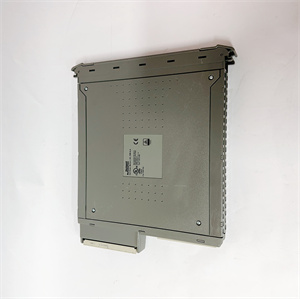
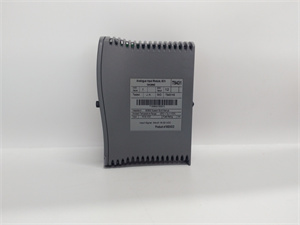
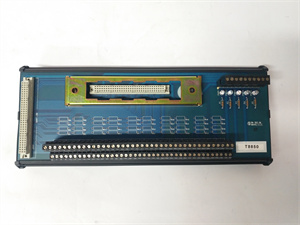
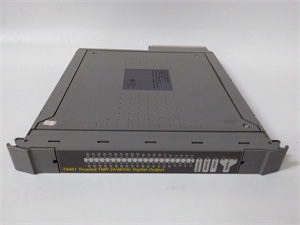
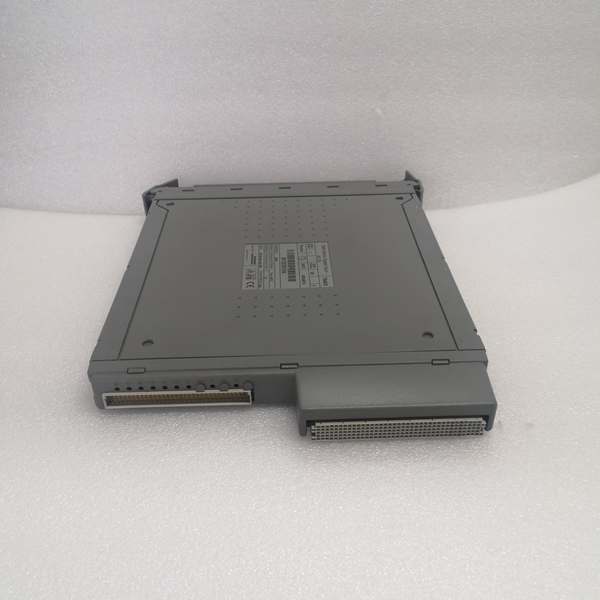
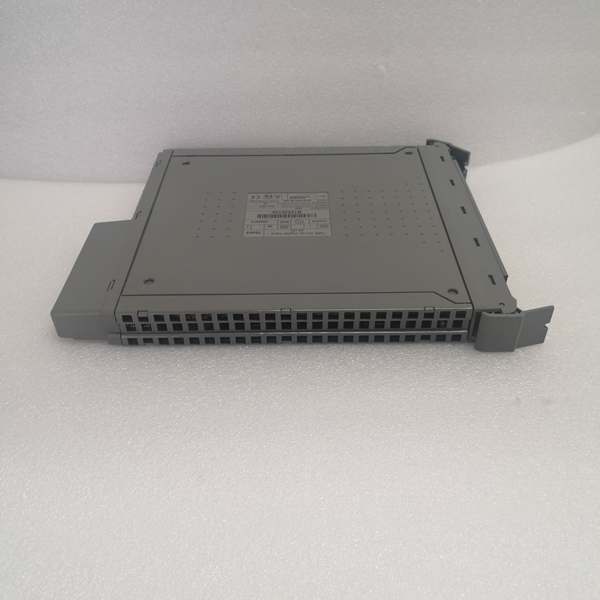
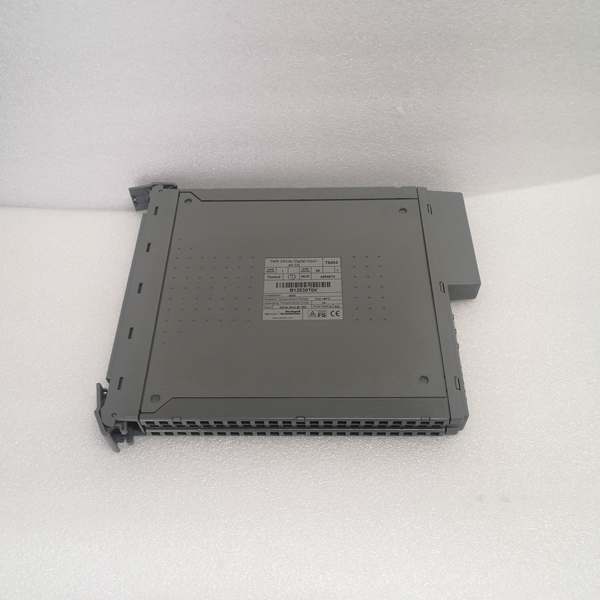
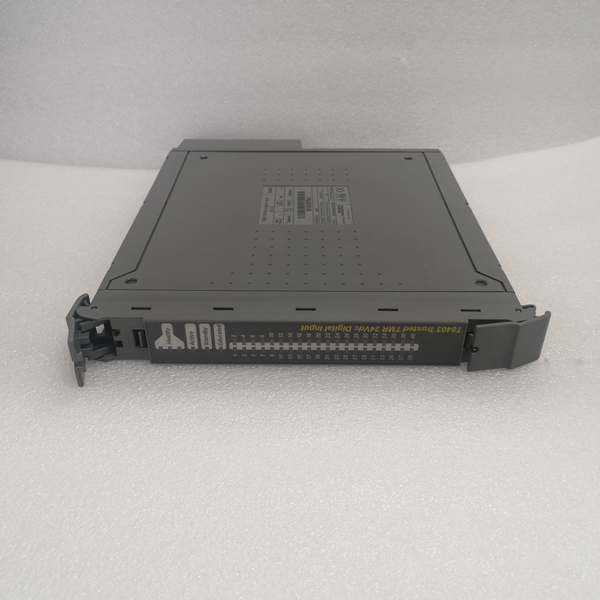
The ICS TRIPLEX T8403 is a 40-channel Trusted TMR 24V DC digital input module designed for safety-critical industrial applications, serving as a critical component in the ICS TRIPLEX Trusted® TMR system. It operates at Purdue Model Level 1–2 (Basic Control/Supervisory Control), acting as the interface between field digital devices (e.g., emergency stop buttons, pressure switches, proximity sensors) and the Trusted® TMR processor (e.g., T8110B).
Architectural Role
The T8403 is installed in a Trusted® chassis (e.g., T8100 series) and interfaces with:
-
Upstream: 40 field digital devices (e.g., 24V DC switches, sensors) via screw terminals or connectorized cables.
-
Downstream: Trusted® TMR processor (e.g., T8110B) via the redundant backplane (IMB), transmitting digital input data and diagnostic information.
Its primary role is to acquire digital signals from field devices and transmit them to the Trusted® TMR processor for safety logic execution (e.g., emergency shutdown, interlock). The module uses Triple Modular Redundancy (TMR)—three independent input channels per point—to ensure fault tolerance: each input signal is processed by three separate circuits, and a voting mechanism (2-out-of-3) eliminates single-point failures.
Operational Principle
The T8403 operates on a fault-tolerant, redundant architecture:
-
Signal Acquisition: Each of the 40 input channels receives a 24V DC digital signal from a field device (e.g., a switch closure).
-
TMR Voting: For each channel, three independent input circuits process the signal. A voting circuit compares the three outputs—if two or more agree, the signal is considered valid and transmitted to the Trusted® TMR processor.
-
Diagnostics: The module performs continuous self-diagnostics (e.g., checking for open/short circuits in field wiring, monitoring input voltage levels) and reports faults to the processor via the backplane.
-
Hot-Swap: The module supports online replacement without system shutdown—technicians can remove a faulty module and install a new one while the system continues to operate, minimizing downtime.
The Trusted® backplane provides redundant power and data paths, ensuring that a backplane fault in one channel does not affect the others. This architecture delivers fault tolerance and data integrity, essential for safety-critical applications like emergency shutdown (ESD) and fire & gas (F&G) systems.

ICS Triplex T8403
Core Technical Specifications
|
Parameter
|
Specification
|
|---|---|
|
Channel Count
|
40 digital input channels
|
|
Input Voltage
|
24V DC (nominal); 18–32 V DC (operational range)
|
|
Input Type
|
Digital (sinking/sourcing, configurable per channel)
|
|
Fault Tolerance
|
Triple Modular Redundancy (TMR) with 2-out-of-3 voting
|
|
Safety Certification
|
IEC 61508 SIL 3 (TÜV Rheinland)
|
|
Sequence of Events (SOE)
|
1 ms resolution, ±10 ms timestamp accuracy
|
|
Hot-Swap
|
Supported (online replacement without system shutdown)
|
|
Isolation
|
2500V pulse-withstand optical/electrical isolation (channel-to-system)
|
|
Operating Temperature
|
0°C to +60°C (ambient)
|
|
Power Supply
|
20–32 V DC (from Trusted® chassis backplane)
|
|
Dimensions
|
266 mm × 31 mm × 303 mm (10.5 in × 1.2 in × 12.0 in) (per module)
|
|
Weight
|
~1.18 kg (2.6 lbs) per module
|
Customer Value & Operational Benefits
1. Fault Tolerance for Safety-Critical Applications
The T8403’s TMR architecture ensures that single-point failures (e.g., a faulty input circuit, a broken wire) do not disrupt system operation. The 2-out-of-3 voting mechanism masks faults, allowing the system to continue monitoring critical signals (e.g., emergency stop buttons) even if one channel fails. This is critical for ESD systems, where a missed signal could lead to catastrophic consequences (e.g., a chemical spill, a turbine overspeed).
2. High-Resolution Event Logging
The module’s 1 ms SOE resolution enables precise tracking of event sequences (e.g., when a switch was pressed, when a fault occurred). This is invaluable for root-cause analysis—engineers can quickly identify the sequence of events leading to a failure, reducing downtime and improving system reliability.
3. Minimized Downtime with Hot-Swap Capability
The T8403’s hot-swap design allows technicians to replace a faulty module without shutting down the system. This is a game-changer for continuous process industries (e.g., power generation, petrochemicals), where even a 1-hour outage can cost millions in lost production. The Trusted® backplane automatically reroutes communication to the replacement module, ensuring seamless operation.
4. Compliance with Safety Standards
With IEC 61508 SIL 3 certification, the T8403 meets the highest standards for functional safety. This certification is required for safety-critical applications (e.g., nuclear power plants, oil refineries) and demonstrates that the module has undergone rigorous testing for fault tolerance and reliability.
Field Engineer’s Notes (From the Trenches)
When installing the T8403, always verify the field wiring—use a multimeter to check for open/short circuits in the input lines. I once spent hours troubleshooting a “no input signal” fault only to find a broken wire in the field wiring.Check the Trusted® chassis backplane power—the module requires 20–32 V DC from the backplane. Use a multimeter to measure the backplane voltage (should be 24 V DC ±10%) before installation. Low voltage can cause the module to reset intermittently.Test the hot-swap feature after installation—power down one module and verify that the remaining modules continue to operate. This ensures that the TMR system works correctly, which is critical for safety.ICS Triplex T8403
Real-World Applications
1. Emergency Shutdown (ESD) Systems
In a refinery, the T8403 is used to monitor emergency stop buttons and pressure switches in the distillation unit. If a button is pressed or a pressure switch trips, the T8403 transmits the signal to the Trusted® TMR processor, which executes the shutdown sequence—closing valves, stopping pumps, and activating alarms. The TMR architecture ensures that the system continues to monitor critical signals even if one module fails.
2. Fire & Gas (F&G) Detection
In an offshore oil platform, the T8403 monitors smoke detectors and gas sensors. If a detector senses smoke or gas, the T8403 sends a signal to the Trusted® TMR processor, which triggers the deluge system and closes fire doors. The 1 ms SOE resolution allows engineers to track the exact time of the detection, helping to identify the source of the fire quickly.
3. Turbine Control
In a power plant, the T8403 monitors turbine vibration switches and bearing temperature sensors. If a switch trips (indicating excessive vibration), the T8403 transmits the signal to the Trusted® TMR processor, which shuts down the turbine to prevent damage. The hot-swap capability allows technicians to replace a faulty module without shutting down the turbine, minimizing downtime.