Description
System Architecture & Operational Principle
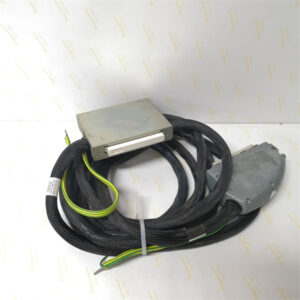
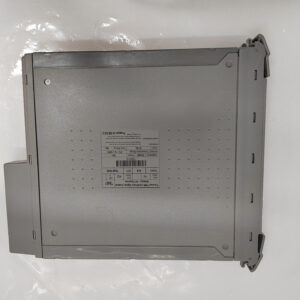
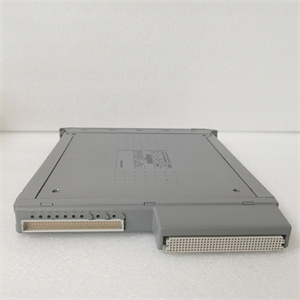
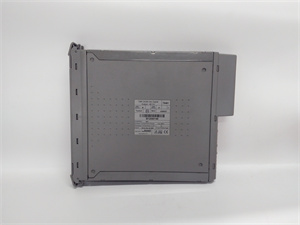
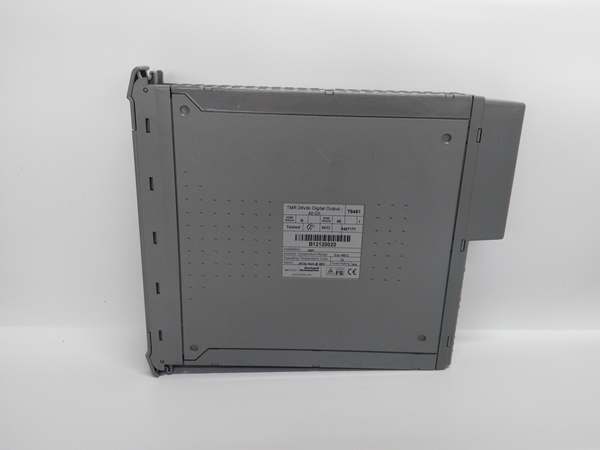
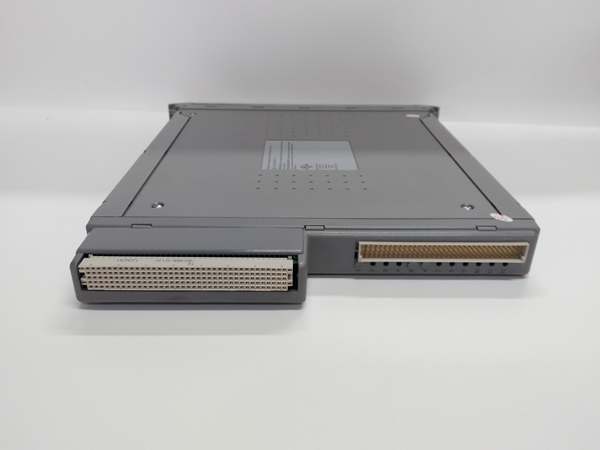
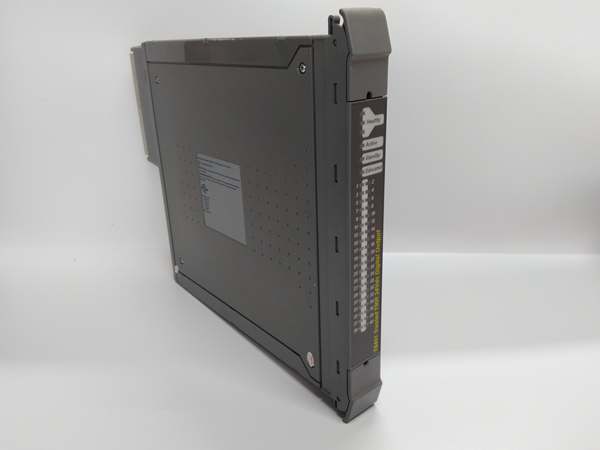
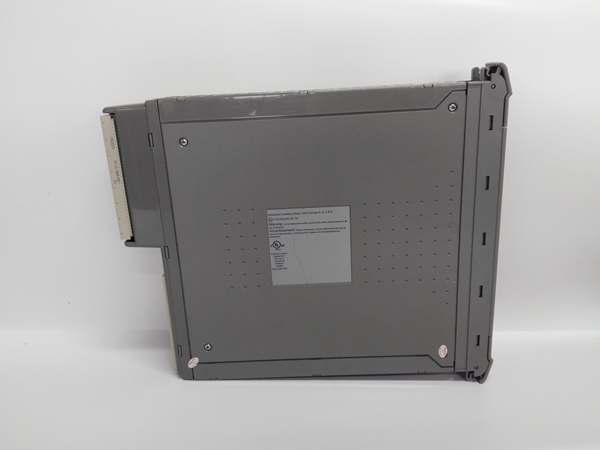
The ICS TRIPLEX T8451 is a 40-channel 24V DC digital output module within the ICS TRIPLEX Trusted® TMR system, designed for Level 1 (Device) or Level 2 (Control) of the Purdue Model in industrial automation. It resides in Trusted T8100 chassis (19-inch rack mount) and serves as the bridge between Trusted TMR controllers (e.g., T8110B) and field devices (e.g., emergency shutdown valves, motor starters).
Upstream Communication
Receives digital control signals from Trusted TMR controllers via the chassis’s backplane. The module uses Triple Modular Redundancy (TMR) architecture, where three independent processing units execute the same logic in lockstep. A majority voting mechanism ensures the correct output is selected, even if one unit fails.
Downstream Communication
Transmits 24V DC digital outputs to field devices via screw terminals or terminal blocks. Each channel is galvanically isolated from others and ground, preventing electrical interference between devices. The module supports hot-swappable replacement without system shutdown, minimizing downtime during maintenance.
Operational Advantages
-
Fault Tolerance: TMR architecture eliminates single points of failure, critical for safety systems (e.g., emergency shutdown (ESD) systems).
-
High Density: 40 channels per module reduce the number of required chassis slots, saving cabinet space.
-
Advanced Diagnostics: Continuous self-testing (e.g., short-circuit detection, open-circuit monitoring) and Sequence of Events (SOE) reporting (1 ms resolution) enable proactive maintenance.
Core Technical Specifications
|
Attribute
|
Specification
|
|---|---|
|
Output Channels
|
40 independent 24V DC channels
|
|
Output Current
|
2A per channel (max 8A per power group)
|
|
Voltage Range
|
20–32 VDC (operating); -1–40 VDC (max withstand)
|
|
Redundancy
|
Triple Modular Redundancy (TMR) with 2-out-of-3 voting
|
|
Isolation
|
Galvanic isolation (channel-to-channel/channel-to-ground)
|
|
Protection Features
|
Short-circuit protection, open-circuit monitoring, overcurrent protection
|
|
Operating Temperature
|
-40°C to +70°C (-40°F to 158°F)
|
|
Storage Temperature
|
-40°C to +85°C (-40°F to 185°F)
|
|
Humidity Tolerance
|
5–95% non-condensing
|
|
Mounting
|
19-inch rack mount (T8100 chassis) or DIN rail (optional)
|
|
Dimensions (W×H×D)
|
~483 mm × 43 mm × 340 mm (19 in × 1.7 in × 13.4 in) (estimated)
|
|
Weight
|
~2.7 kg (5.95 lbs)
|
|
Certifications
|
SIL 3 (IEC 61508/61511), ATEX, IECEx
|
|
Compatibility
|
Trusted T8110B/T8111C controllers; T8100 chassis; T8403/T8461 I/O modules
|
ICS TRIPLEX T8451
Customer Value & Operational Benefits
Enhanced Process Reliability
The T8451’s TMR architecture ensures that safety systems (e.g., ESD, fire & gas detection) remain operational even if one processing unit fails. For example, an oil refinery using the T8451 in its ESD system reported a 99.9% uptime, preventing costly shutdowns.
Reduced Maintenance Costs
The hot-swappable design allows technicians to replace a faulty module without shutting down the system. A chemical plant using the T8451 reduced maintenance downtime by 50% compared to traditional non-redundant systems.
Cost-Effective Scalability
The 40-channel density reduces the number of required chassis slots, saving cabinet space and installation costs. For a power plant, this meant adding 40 new digital outputs using a single module, saving $10,000+ in cabinet and installation costs.
Compliance with Industry Standards
The T8451’s SIL 3 certification ensures it meets the rigorous safety requirements of industries like oil & gas and chemical processing, making it suitable for export-oriented manufacturers.
Field Engineer’s Notes (From the Trenches)
When installing the T8451, always verify the TMR configuration—the module must be configured for TMR operation in the Trusted system software. I once saw a site where a contractor forgot to enable TMR, resulting in a “redundancy mismatch” fault that took 3 hours to diagnose.Another gotcha: use shielded twisted-pair (STP) cables for field device connections—unshielded cables can pick up electromagnetic interference (EMI) from nearby power lines, leading to intermittent output faults. Switching to STP cables eliminated the problem immediately.If the T8451’s “FAULT” LED is red, check the SOE logs—the module will log faults (e.g., “short circuit” or “open circuit”) with 1 ms resolution. Use the Trusted system diagnostic software to retrieve the fault code and follow the manufacturer’s troubleshooting steps.
Real-World Applications
-
Oil Refinery: Emergency Shutdown (ESD) SystemAn oil refinery uses the T8451 to drive 40 emergency shutdown valves in its crude oil distillation columns. The TMR architecture ensures that if one processing unit fails, the remaining two continue to drive the valves, maintaining ESD system operation.
-
Chemical Plant: Reactor Temperature ControlA chemical plant uses the T8451 to control 40 solenoid valves for reactor cooling water. The module’s advanced diagnostics detect short circuits in the valves, allowing technicians to replace them before they fail.
-
Power Generation: Turbine ControlA power plant uses the T8451 to drive 40 motor starters for turbine auxiliary systems. The hot-swappable design allows technicians to replace a faulty module during operation, minimizing downtime.

ICS TRIPLEX T8451
High-Frequency Troubleshooting FAQ
Q: What does the “FAULT” LED indicate on the T8451?
A: The red “FAULT” LED indicates a critical error, such as:
-
Short Circuit: A field device is drawing too much current (check the SOE logs for the faulty channel);
-
Open Circuit: A field device is disconnected (verify the wiring);
-
TMR Mismatch: The module is not configured for TMR operation (check the Trusted system software).
Q: Can the T8451 be used with non-Trusted systems?
A: No, the T8451 is designed exclusively for ICS TRIPLEX Trusted systems. It relies on the Trusted architecture for TMR processing and communication, so using it with non-Trusted systems will result in compatibility issues.
Q: How do I replace a faulty T8451?
A: Follow these steps:
-
Power Down: Turn off the T8100 chassis power supply;
-
Remove Old Module: Unscrew the module from the chassis (use a Phillips screwdriver) and disconnect the field wiring;
-
Install New Module: Insert the new T8451 into the chassis and tighten the screws;
-
Reconnect Wiring: Reconnect the field wiring to the new module;
-
Power Up: Turn on the power supply and verify the module’s operation (check the “OK” LED).
Q: Why is the T8451 not driving a field device?
A: Check three things first:
-
Power Supply: Ensure the 24V DC power supply is delivering the correct voltage (24V DC ±10%);
-
Wiring: Verify the field wiring is connected correctly (no loose connections);
-
Field Device: Ensure the field device (e.g., solenoid valve) is powered on and functioning correctly.
Commercial Availability & Pricing
Please note: The listed price is not the actual final price. It is for reference only and is subject to appropriate negotiation based on current market conditions, quantity, and availability.