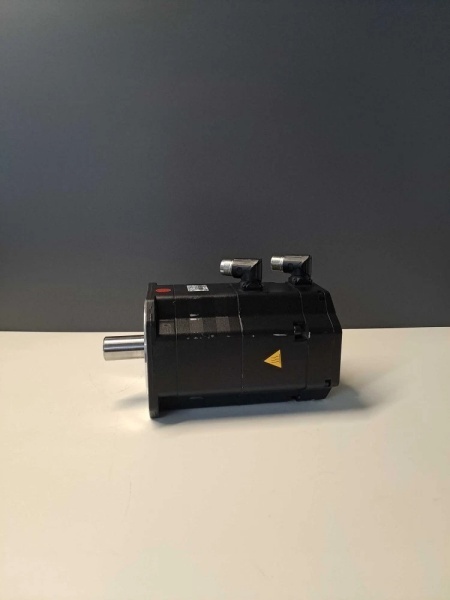
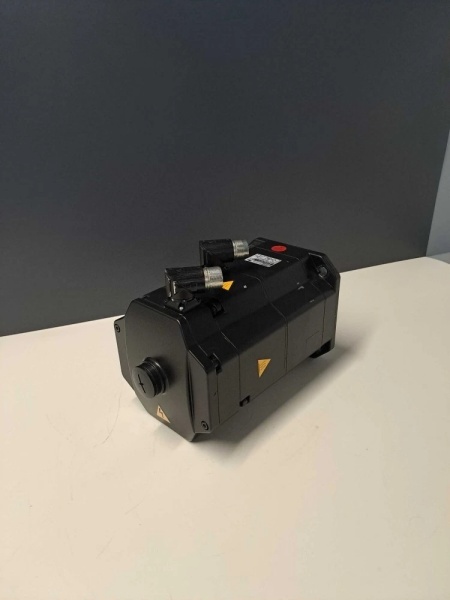
Description
System Architecture & Operational Principle
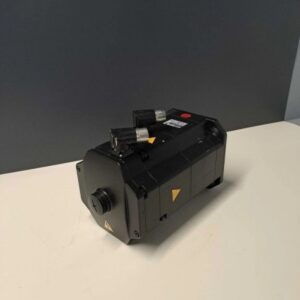
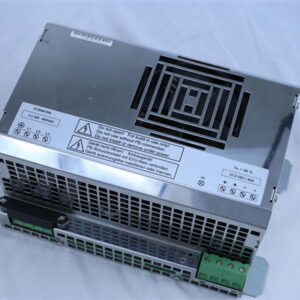
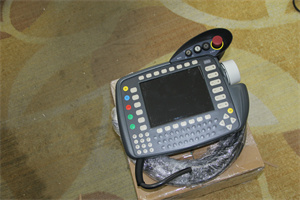
The KUKA KK67Y-YYYY-050-8.5-3000-B14 is an industrial robot controller designed for precision motion control in industrial automation. It resides at Purdue Model Level 2 (Basic Control), acting as the intermediary between upstream control systems (e.g., PLCs, HMIs) and downstream servo motors/actuators.
Core Functional Blocks
-
Power Conversion: Converts AC input (e.g., 3-phase 400V AC) to stabilized DC bus voltage using high-efficiency rectifiers and filters.
-
Control Circuitry: Employs a high-speed digital signal processor (DSP) to execute advanced control algorithms (e.g., PID, field-oriented control) for precise speed, torque, and position regulation.
-
Communication Interface: Supports multiple industrial communication protocols (e.g., EtherCAT, Profibus, CANopen) to connect with peripheral devices (e.g., servo drives, sensors).
-
Protection Mechanisms: Includes overcurrent, overvoltage, short-circuit, and thermal overload protection to safeguard the controller and connected devices.
Operational Workflow
-
Command Reception: Receives motion commands (e.g., target position, speed) from upstream systems via fieldbuses or analog/digital I/O.
-
Algorithm Execution: The DSP calculates optimal voltage/current outputs using closed-loop control, adjusting for load variations and dynamic conditions (e.g., sudden stops).
-
Actuator Control: Sends commands to downstream servo drives, which adjust the motor current to achieve the desired motion (e.g., moving a robot arm to a target position).
-
Feedback Loop: Receives real-time feedback from servo motors (e.g., encoder signals) and sends it back to the controller for closed-loop correction.
-
Status Monitoring: Transmits operational data (e.g., motor speed, temperature) to upstream systems for diagnostics and logging.
The KK67Y-YYYY-050-8.5-3000-B14 is designed to provide high-precision motion control and reliable communication in industrial environments, making it suitable for applications like arc welding, material handling, and assembly.

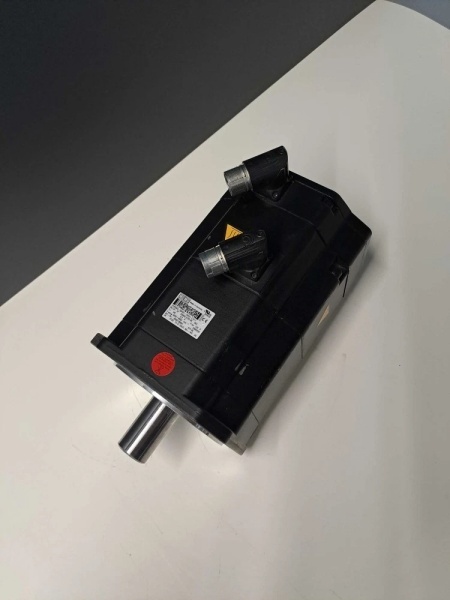
1FK7101-5AY81-1SH3-Z
Core Technical Specifications
|
Parameter
|
Specification
|
|---|---|
|
Rated Power
|
8.5 kW
|
|
Rated Speed
|
3000 rpm
|
|
Payload Capacity
|
50 kg
|
|
Input Voltage
|
3-phase 400V AC (±10%)
|
|
Output Current
|
20 A (estimated from 8.5 kW power)
|
|
Protection Level
|
IP65 (dust-tight, water-jet resistant)
|
|
Operating Temperature
|
-20°C to +45°C (ambient)
|
|
Communication
|
EtherCAT, Profibus, CANopen
|
|
Dimensions
|
Compact design (fits in standard control cabinet)
|
|
Weight
|
~10 kg (estimated)
|
Customer Value & Operational Benefits
1. High Precision for Critical Applications
The controller’s advanced control algorithms and high-resolution encoder feedback enable micrometer-level positioning accuracy, critical for applications like arc welding (ensuring consistent weld seams) and assembly (placing components with ±0.05 mm accuracy). This precision reduces defect rates and improves product quality.
2. Reliable Communication
Support for EtherCAT (real-time Ethernet) ensures fast and reliable communication between the control cabinet and servo drives, minimizing latency and ensuring synchronized motion in multi-axis systems. This is essential for high-speed applications like pick-and-place robots.
3. Easy Integration
The controller is designed to be plug-and-play with KUKA’s existing systems, reducing installation time and effort. Its compatibility with third-party devices (e.g., Siemens PLCs) makes it a cost-effective solution for upgrading or expanding robot cells.
4. Reduced Downtime
Built-in fault diagnosis features (e.g., overcurrent protection, encoder error detection) help identify issues early, reducing unplanned downtime. For example, a welding cell using the controller can avoid prolonged stoppages by alerting operators to motor faults before they escalate.
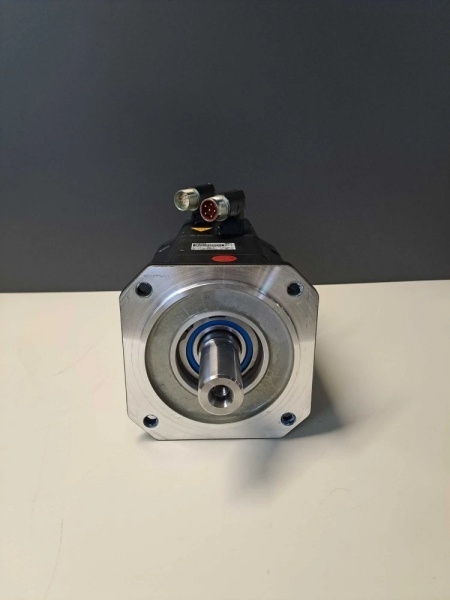
1FK7101-5AY81-1SH3-Z
Field Engineer’s Notes (From the Trenches)
When installing the KK67Y-YYYY-050-8.5-3000-B14, always verify the 3-phase input voltage (400V AC ±10%) with a True-RMS multimeter—low voltage can cause the controller to malfunction. I once saw a site use a 380V AC supply without correction, leading to intermittent servo errors.Route communication cables separately from power cables—parallel runs can induce EMI, causing communication errors. Use shielded twisted-pair (STP) cables for EtherCAT/Profibus connections.Update the firmware regularly (via KUKA WorkVisual software) to fix bugs and improve compatibility with new servo drives. Annual firmware updates are recommended to keep the controller up-to-date.
Real-World Applications
1. Arc Welding Robots
A automotive manufacturer uses the KK67Y-YYYY-050-8.5-3000-B14 to control a 6-axis arc welding robot. The controller’s precise motion control ensures that the welding torch follows the programmed path accurately, resulting in consistent weld quality (defect rate reduced by 20%).
2. Material Handling Robots
A logistics company uses the controller in its pick-and-place robots to control the gripper’s movement. The EtherCAT communication protocol enables fast synchronization between the robot and the conveyor belt, increasing throughput by 15%.