Description
System Architecture & Operational Principle
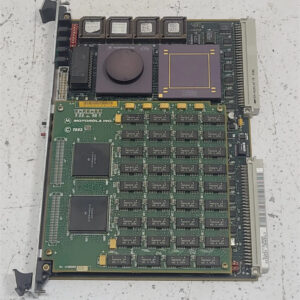
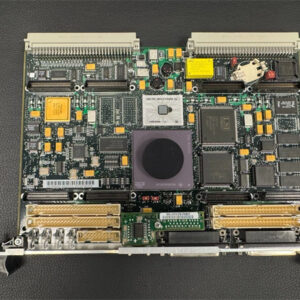
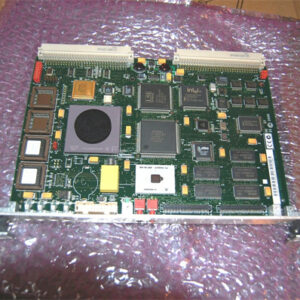
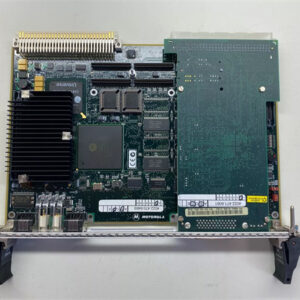
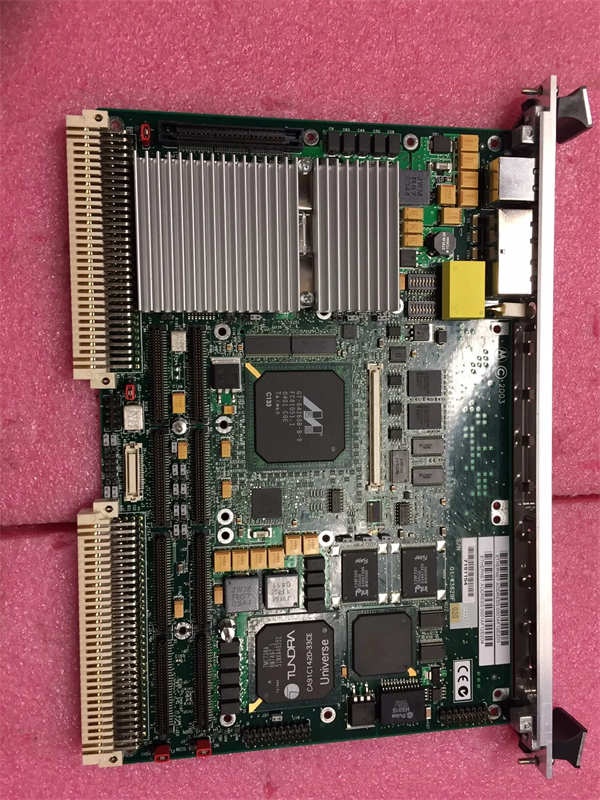
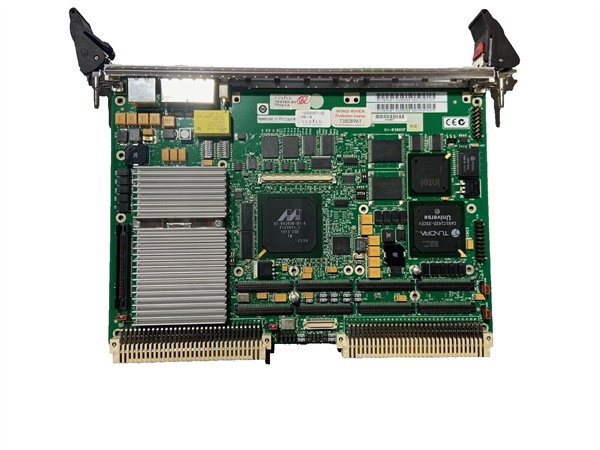
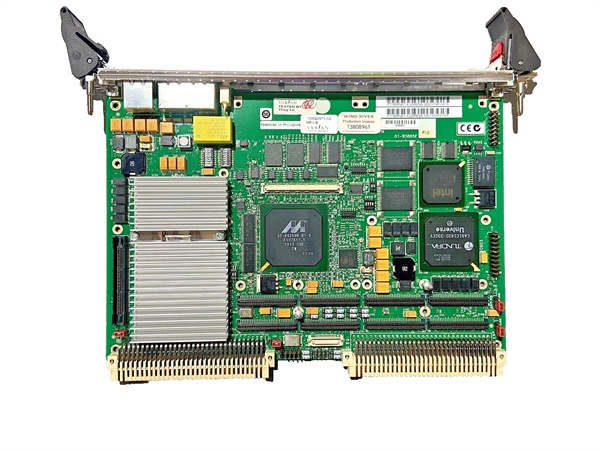
The Motorola MVME5500-0161 is a 6U VMEbus-compliant single board computer (SBC) designed for industrial and embedded applications requiring high performance and reliability. It serves as the computational core in VME-based systems, interfacing with field devices (sensors, actuators) and external networks (SCADA, DCS) via a combination of VME64 backplane communication and high-speed I/O ports.
Core Functional Blocks
The SBC is composed of four primary functional blocks, each optimized for industrial/embedded use:
-
Processing Unit:
-
CPU: 1 GHz PowerPC 7457 processor (32-bit RISC), featuring 512 KB of on-chip L2 cache and 2 MB of L3 cache for reduced memory latency.
-
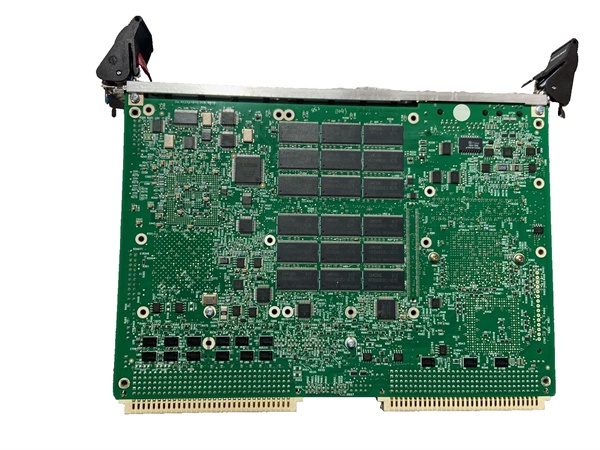
Memory: 512 MB of ECC SDRAM (error-correcting code) for reliable data storage and retrieval, plus 40 MB of Flash memory (32 MB welded, 8 MB socketed) for firmware and configuration storage.
-
-
Bus Interface:
-
VME64: Supports 32/64-bit addressing, 32-bit data paths, and DMA transfers for high-speed communication with VME backplanes.
-
PCI: Dual 64-bit PCI buses (33/66 MHz) for connecting mezzanine cards (PMC) and onboard peripherals (e.g., Ethernet, SCSI).
-
-
I/O Subsystem:
-
Ethernet: 10/100BaseTX Ethernet port for high-speed network connectivity.
-
Serial: Two EIA-232-D (RS-232) ports for legacy device integration.
-
PMC Expansion: 64-bit PCI expansion夹层连接器 for adding specialized functionality (e.g., A/D conversion, communication modules).
-
-
Power & Cooling:
-
Power Consumption: ~15–20 W typical (depends on configuration).
-
Cooling: Conduction-cooled (no fans) for reliable operation in harsh environments (-40°C to +85°C); ideal for vacuum, high-vibration, or sealed enclosures.
-
Operational Workflow
-
Power-Up: The SBC draws power from the VME backplane (+5V DC) and initializes the BIOS/UEFI firmware.
-
Boot Process: The firmware configures the CPU, memory, and I/O interfaces, then boots the operating system (e.g., VxWorks, Linux).
-
Task Execution: The PowerPC 7457 processor executes real-time control programs (e.g., signal processing, PID loops) and communicates with field devices via VME64 or Ethernet.
-
Data Transfer: High-speed DMA transfers move data between the SBC and VME backplane, while the Ethernet port handles network communication (e.g., SCADA data upload).

Motorola MVME5500-0161
Core Technical Specifications
|
Parameter
|
Specification
|
|---|---|
|
Processor
|
1 GHz PowerPC 7457 (32-bit RISC)
|
|
Cache
|
512 KB L2 (on-chip), 2 MB L3 (on-chip)
|
|
Memory
|
512 MB ECC SDRAM, 40 MB Flash (32 MB welded + 8 MB socketed)
|
|
VMEbus Interface
|
VME64 (32/64-bit addressing, 32-bit data, DMA)
|
|
PCI Buses
|
Dual 64-bit (33/66 MHz)
|
|
I/O Ports
|
10/100BaseTX Ethernet, 2x RS-232, PMC expansion夹层连接器
|
|
Operating Temperature
|
-40°C to +85°C (conduction-cooled)
|
|
Power Consumption
|
~15–20 W typical
|
|
Form Factor
|
6U VME (160 mm × 233 mm × 41 mm)
|
|
Weight
|
~1.2 kg (2.6 lbs) (estimated)
|
|
Certifications
|
CE, UL, RoHS
|
Customer Value & Operational Benefits
1. High Performance for Real-Time Applications
The 1 GHz PowerPC 7457 processor and 512 MB ECC SDRAM enable the MVME5500-0161 to handle complex control algorithms (e.g., PID loops, motion control) and large datasets (e.g., from 100+ I/O channels). This is critical for applications like power generation (turbine control) or industrial automation (robotic control).
2. Rugged Reliability for Harsh Environments
The conduction-cooled design (no moving parts) and wide operating temperature range (-40°C to +85°C) make the SBC suitable for:
-
Aerospace: Avionics systems (e.g., flight control computers).
-
Defense: Naval sonar processing, armored vehicle control.
-
Industrial: Oil & gas refineries, power generation (turbine control).
3. Flexible Expansion for Custom Applications
The PMC expansion夹层连接器 allows users to add custom functionality (e.g., FPGA-based signal processing, GPU-accelerated analytics) without modifying the core SBC. This flexibility is ideal for prototype development and system upgrades.
4. Long-Term Availability & Lifecycle Support
Motorola’s commitment to long-life embedded systems ensures the MVME5500-0161 is available for 10+ years, with spare parts and firmware updates provided by NXP Semiconductors. This reduces the risk of obsolescence for critical infrastructure (e.g., power grids, transportation systems).
Motorola MVME5500-0161
Field Engineer’s Notes (From the Trenches)
When installing the MVME5500-0161, always use a torque wrench to tighten the VME backplane connectors—over-tightening can damage the pins, while under-tightening causes intermittent communication. I once saw a technician strip the VMEbus pins because he used a pipe wrench instead of the recommended tool.Verify the conduction-cooling interface (thermal pad/heat sink) before powering up—poor contact can lead to overheating and premature failure. Use a thermal imager to check for hot spots if the SBC shuts down unexpectedly.Test the Ethernet ports (ping the device’s IP address) after installation—use a crossover cable if connecting directly to a laptop. I’ve spent hours troubleshooting “no comms” faults only to find a bad Ethernet cable.
Real-World Applications
1. Aerospace: Flight Control Computer
A commercial aircraft manufacturer uses the MVME5500-0161 as the core of its fly-by-wire flight control system. The SBC’s VME64 interface connects to flight sensors (e.g., accelerometers, gyroscopes), while the Ethernet port streams data to the cockpit display. The -40°C to +85°C operating range ensures reliable operation in extreme climates.
2. Defense: Naval Sonar Processing
A European navy uses the MVME5500-0161 to replace aging MVME2600 boards in its anti-submarine warfare (ASW) system. The PowerPC 7457’s 1 GHz processor accelerates FFT-based acoustic analysis, reducing system latency by 65%. The conduction-cooled design allows installation in sealed sonar racks without airflow modifications.
3. Industrial: Power Generation Turbine Control
A U.S. power plant uses the MVME5500-0161 to control a 500 MW gas turbine. The SBC executes PID loops to adjust fuel flow and turbine speed, maintaining grid frequency (50/60 Hz) within strict limits. The dual Ethernet ports enable remote monitoring via the plant’s SCADA system.