Description
System Architecture & Operational Principle
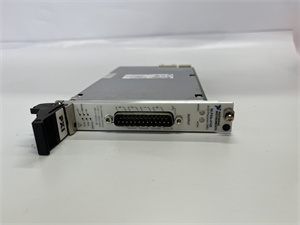
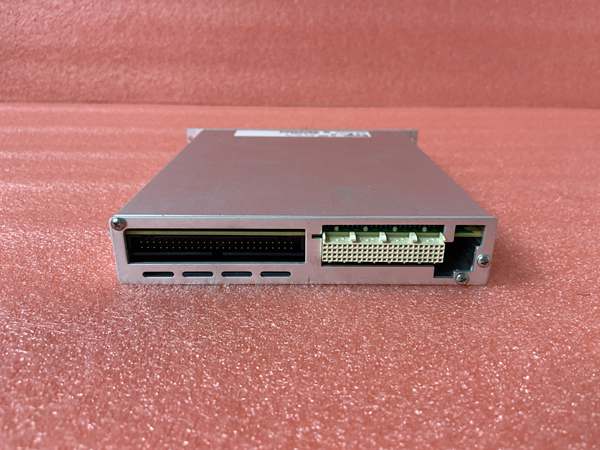
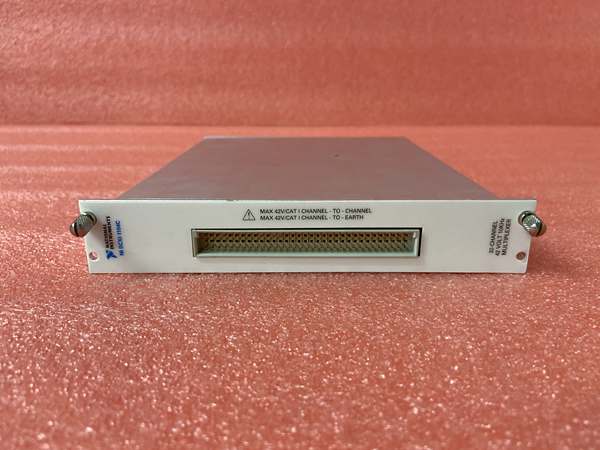
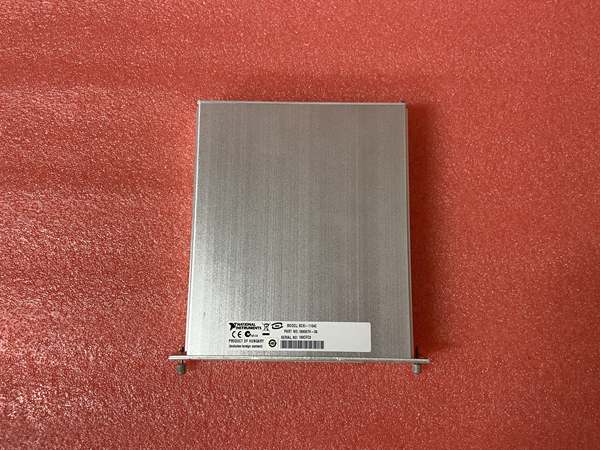
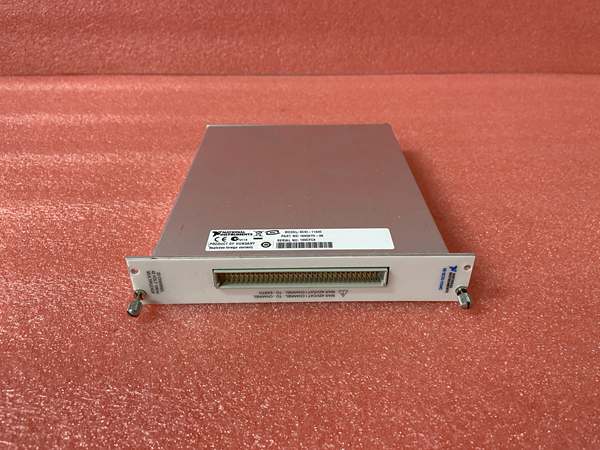
The NI SCXI-1104C is a 32-channel high-voltage analog input module belonging to NI’s SCXI family, designed for Purdue Model Level 1 (Process Control) in industrial automation. It serves as the critical interface between high-voltage field devices (e.g., power sensors, motor drives) and upstream data acquisition systems (e.g., NI E Series DAQ cards, PXI controllers).
Core Functional Blocks
-
Signal Conditioning Circuitry:
-
32 Differential Input Channels: Each channel accepts ±60 VDC signals, with a 10 kHz low-pass filter to suppress high-frequency noise (e.g., from power lines, motors).
-
Programmable Gain Amplifiers (PGAs): Adjustable gain (1x to 1000x) to accommodate weak signals (e.g., mV-level sensor outputs) without saturation.
-
Multiplexing Unit: Combines 32 input channels into a single output, allowing connection to a single DAQ device (e.g., NI PCI-6220) and expanding the system’s channel count.
-
-
Digital Control & Communication:
-
SCXI Bus Interface: Connects to the SCXI chassis (e.g., SCXI-1000) via a 50-pin ribbon cable, providing power and communication links to the module.
-
Calibration Circuitry: Stores factory-calibrated constants in non-volatile memory, with on-board circuitry to adjust offset/gain errors during calibration.
-
-
Protection Mechanisms:
-
Overvoltage Protection: Withstands ±60 VDC input without damage (no external fuses required).
-
Short-Circuit Protection: Prevents damage to the module if the output is shorted to ground.
-
Operational Workflow
-
Field Device Connection: High-voltage sensors (e.g., current transformers, voltage dividers) are connected to the SCXI-1104C’s differential input channels via shielded cables.
-
Signal Conditioning: The module filters (10 kHz low-pass) and amplifies (via PGAs) the input signals to match the DAQ device’s input range (e.g., ±10 V).
-
Multiplexing: The 32 channels are sequentially sampled (multiplexed) and transmitted to the DAQ device as a single stream of digital data.
-
Data Acquisition: The DAQ device converts the analog signals to digital values (24-bit resolution) and sends them to the host computer for processing (e.g., FFT analysis, trend monitoring).

NI SCXI-1104C
Core Technical Specifications
|
Parameter
|
Specification
|
|---|---|
|
Number of Channels
|
32 differential analog input channels
|
|
Input Voltage Range
|
±60 VDC (max), ±42 VACpeak, 30 VACrms
|
|
Resolution
|
24-bit (analog-to-digital conversion)
|
|
Filter
|
10 kHz low-pass (Butterworth, 3rd order)
|
|
Input Impedance
|
1 MΩ (differential)
|
|
Sampling Rate
|
Dependent on DAQ device (e.g., 250 kS/s for NI PCI-6220)
|
|
Output
|
Multiplexed to a single channel (50-pin ribbon cable)
|
|
Power Supply
|
From SCXI chassis (±15 VDC, 5 VDC)
|
|
Operating Temperature
|
0°C to +50°C (ambient, non-condensing)
|
|
Dimensions
|
11.5 cm × 27.3 cm × 4.5 cm (H×W×D) (approx.)
|
|
Weight
|
~0.5 kg (1.1 lbs)
|
Customer Value & Operational Benefits
1. High-Channel-Count Signal Conditioning
The 32 differential channels allow users to connect multiple high-voltage sensors (e.g., 16 current transformers + 16 voltage sensors) to a single module, reducing the need for multiple DAQ devices. This is cost-effective for power system monitoring (e.g., substations, renewable energy plants) where hundreds of sensors need to be monitored.
2. Precision Measurement for Critical Applications
The 24-bit resolution and 10 kHz filter enable accurate measurement of high-voltage signals (e.g., 0.1% accuracy for ±60 VDC inputs). This is critical for motor control (e.g., adjusting motor speed based on voltage feedback) and power quality analysis (e.g., detecting voltage sags/swells).
3. Rugged Reliability for Harsh Environments
The SCXI-1104C’s industrial-grade design (0°C to +50°C operating temperature, shock-resistant chassis) makes it suitable for factory floors and outdoor installations (e.g., wind turbines). The overvoltage protection ensures reliable operation even if sensors are exposed to transient voltage spikes (e.g., lightning strikes).
4. Easy Integration with Existing Systems
The module is compatible with NI’s SCXI ecosystem (e.g., SCXI-1000 chassis, NI-DAQ driver software), allowing seamless integration with legacy systems. Users can leverage existing LabVIEW code to acquire data from the SCXI-1104C, reducing development time.
NI SCXI-1104C
Field Engineer’s Notes (From the Trenches)
When installing the SCXI-1104C, always use shielded twisted-pair (STP) cables for input connections—unshielded cables can pick up EMI from nearby power lines, leading to noisy data. I once saw a site lose 8 hours of power quality data because they used unshielded cables, resulting in invalid voltage sag detection.Calibrate the module annually using a high-precision voltage source (e.g., Fluke 5700A) and a 5.5-digit DMM (e.g., NI 4060). A 2024 calibration of a power transformer monitoring system revealed a 0.3% gain error, which was corrected to maintain measurement accuracy.Check the SCXI chassis power supply—a faulty power supply can cause the module to reset intermittently. Use a multimeter to verify the ±15 VDC and 5 VDC outputs from the chassis before installing the module.Update the NI-DAQ driver (via NI’s website) to the latest version—older drivers may not support the SCXI-1104C’s 24-bit resolution, leading to data truncation.
Real-World Applications
1. Power Transformer Monitoring
A utility company uses the SCXI-1104C to monitor power transformers in substations. The module connects to 32 current transformers (CTs) and voltage dividers, acquiring data on transformer current, voltage, and temperature. The 24-bit resolution enables detection of small changes in transformer performance (e.g., 0.1% increase in current), allowing predictive maintenance and reducing unplanned outages.
2. Motor Control in Industrial Automation
A manufacturing plant uses the SCXI-1104C to control AC motors in a production line. The module connects to motor voltage sensors and current transducers, providing feedback to a PLC (via a DAQ device). The 10 kHz filter suppresses noise from the motor’s commutator, ensuring accurate speed control (±0.5% tolerance).
3. Renewable Energy System Monitoring
A wind farm uses the SCXI-1104C to monitor wind turbine generators. The module connects to 32 voltage sensors (measuring generator output) and current sensors (measuring turbine current). The high-channel-count allows the farm to monitor multiple turbines with a single DAQ system, reducing costs and improving efficiency.