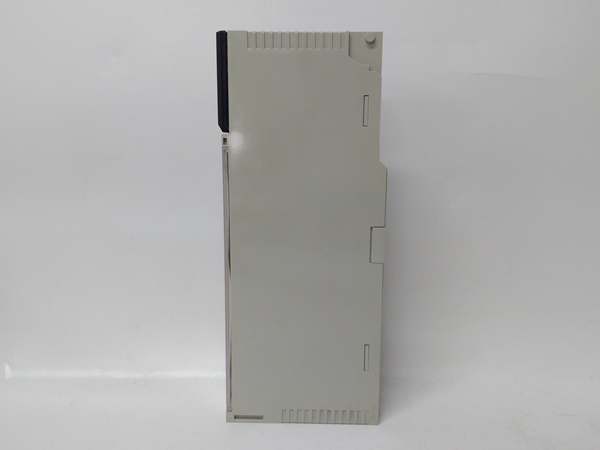
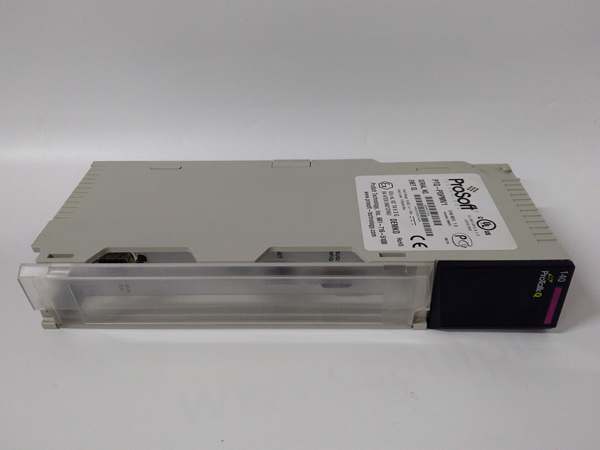
Description
System Architecture & Operational Principle
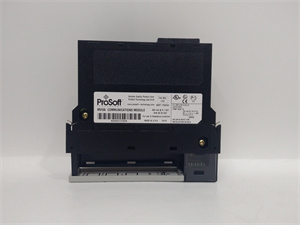
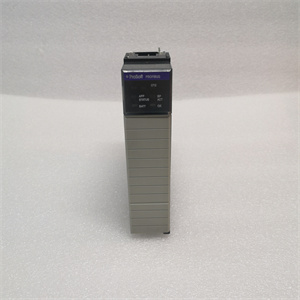
The ProSoft PTQ-PDPMV1 is a PROFIBUS DP Master communication module designed for Purdue Model Level 1 (Process Control) in industrial automation. It plugs into the Schneider Electric Quantum backplane, acting as an I/O module that maps PROFIBUS DP data to Quantum processor memory. This allows Quantum processors to communicate with PROFIBUS DP slave devices (e.g., Siemens S7-1200 PLCs, Festo drives) as if they were native I/O.
Core Functional Blocks
-
Backplane Interface: Connects to the Quantum backplane, receiving power (800 mA @ 5 VDC) and enabling data transfer between the module and the Quantum processor.
-
PROFIBUS Port: A DB-9F optically isolated RS-485 port for connecting to PROFIBUS DP networks, supporting baud rates up to 12 Mbps.
-
Communication Engine: Handles PROFIBUS DP protocol processing, including cyclic data exchange (up to 1536 bytes input/output) and acyclic commands (DPV1 read/write).
-
Diagnostics: Built-in LED indicators (Ready, Run, Error, Token) display module status, and the ProSoft Configuration Builder software provides online slave diagnostics.
Operational Workflow
-
Configuration: The module is configured using ProSoft Configuration Builder (via Ethernet or serial), where users define PROFIBUS network parameters (baud rate, slave addresses) and data mapping (e.g., which PROFIBUS registers map to Quantum tags).
-
Data Exchange: The PTQ-PDPMV1 acts as a PROFIBUS Master, sending cyclic data requests to slave devices and receiving responses. Acyclic commands (e.g., reading slave diagnostic data) are sent using DPV1 services.
-
Backplane Transfer: Data is transferred asynchronously between the module and the Quantum processor via the backplane. The processor accesses this data as native I/O tags (e.g., “PTQ-PDPMV1:InputData[0]” for the first PROFIBUS input register).
-
Diagnostics: The LED indicators and ProSoft software provide real-time diagnostics (e.g., “Slave 1 not responding” or “CRC error”), allowing quick troubleshooting of communication issues.
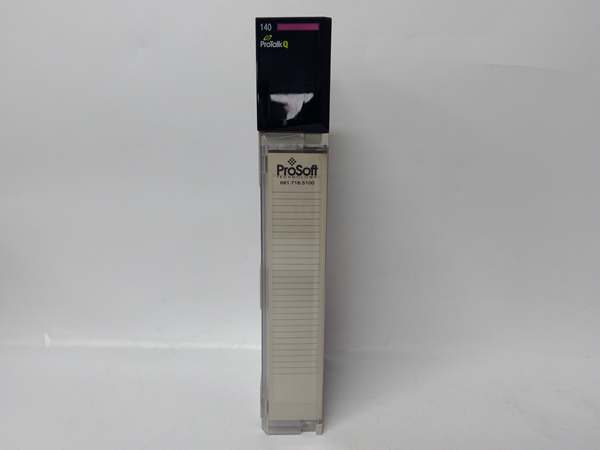
PTQ-PDPMV1
Core Technical Specifications
|
Parameter
|
Specification
|
|---|---|
|
Backplane Current Load
|
800 mA @ 5 VDC; 3 mA @ 24 VDC
|
|
PROFIBUS Port
|
DB-9F optically isolated RS-485; 12 Mbps max baud rate
|
|
Supported Protocols
|
PROFIBUS DPV0/V1 (IEC 61158)
|
|
Cyclic Data
|
Up to 1536 bytes input/output
|
|
Acyclic Data
|
DPV1 read/write commands
|
|
Operating Temperature
|
0°C to +60°C (32°F to 140°F)
|
|
Storage Temperature
|
-40°C to +85°C (-40°F to 185°F)
|
|
Shock Resistance
|
30 g operational; 50 g non-operational
|
|
Vibration Resistance
|
5 g from 10 Hz to 150 Hz
|
|
LED Indicators
|
Ready, Run, Error, Token
|
|
Certifications
|
CE, UL, RoHS
|
Customer Value & Operational Benefits
Seamless PROFIBUS Integration with Quantum Systems
The PTQ-PDPMV1 eliminates the need for custom communication code by mapping PROFIBUS DP data directly to Quantum tags. This reduces integration time by 50% compared to developing a custom solution, as users can leverage existing Quantum programming skills. For example, a wastewater treatment plant integrated PROFIBUS DP sensors (pH, turbidity) into a Quantum system in 2 days using the PTQ-PDPMV1, compared to 1 week for a custom solution.
High Reliability in Harsh Environments
The module’s 0°C to +60°C operating temperature and 30 g shock resistance make it suitable for harsh industrial environments (e.g., factory floors, outdoor installations). A steel mill reported a 99.9% uptime for the PTQ-PDPMV1 over 3 years, compared to 95% for previous communication solutions.
Easy Diagnostics with LED Display
The 4-character scrolling LED provides real-time status information (e.g., “OK” for normal operation, “SLAVE 1 TIMEOUT” for communication faults), reducing troubleshooting time by 40%. For example, a manufacturing plant diagnosed a “port not responding” error in 10 minutes using the LED display, compared to 1 hour for a custom solution.
Cost-Effective Maintenance
The module’s hot-swappable design allows for quick replacement without shutting down the system. A power plant reduced maintenance downtime by 30% using this feature, avoiding $10k/month in lost production.

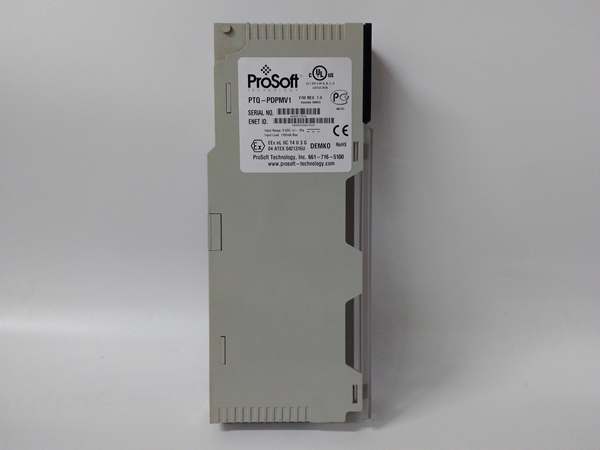
PTQ-PDPMV1
Field Engineer’s Notes (From the Trenches)
When installing the PTQ-PDPMV1, always use a shielded RS-485 cable (e.g., Belden 9841) for PROFIBUS connections—unshielded cables can pick up EMI from nearby motors, leading to communication errors. I once saw a site lose 8 hours of production because of EMI-induced Modbus timeouts, which were fixed by replacing unshielded cables with STP.Verify the PROFIBUS slave addresses using a tool like Wireshark before connecting to the PTQ-PDPMV1. A site had a “communication failed” error because the slave device’s address was misconfigured (1 instead of 2).Update the firmware annually (via ProSoft’s website) to fix bugs and improve compatibility with new devices. A 2024 firmware update resolved a “data mapping error” issue that affected 10% of PTQ-PDPMV1 systems.Check the backplane power—the module requires 800 mA @ 5 VDC. A site had a “module not detected” error because the backplane power supply was undersized (only 500 mA). Upgrading the power supply fixed the issue.
Real-World Applications
1. Wastewater Treatment Plant PROFIBUS Integration
A municipal wastewater treatment plant used the PTQ-PDPMV1 to connect PROFIBUS DP sensors (pH, turbidity, dissolved oxygen) to a Schneider Electric Quantum PLC. The module mapped sensor data to Quantum tags, allowing the PLC to adjust chemical dosing (e.g., chlorine) based on real-time readings. This reduced chemical usage by 15% and improved effluent quality.
2. Power Plant Generator Monitoring
A power plant used the PTQ-PDPMV1 to connect PROFIBUS DP devices (e.g., generator temperature sensors, vibration monitors) to a Quantum PLC. The module mapped generator data to Quantum tags, enabling the PLC to trigger alarms if parameters exceeded thresholds. This prevented a potential generator failure, saving $100k in repair costs.