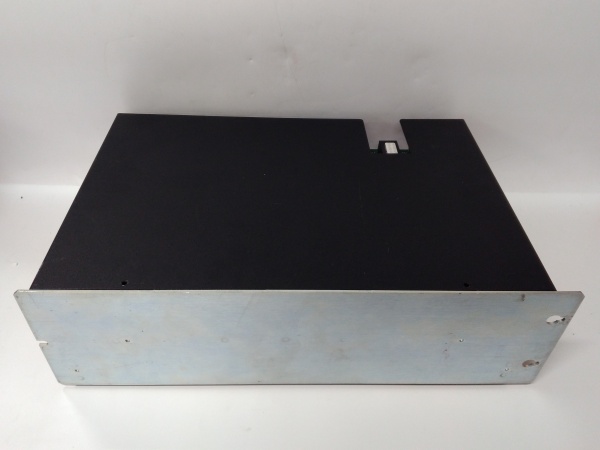
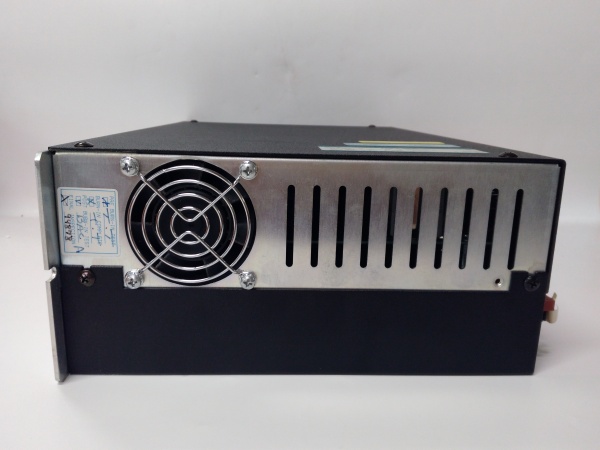
Description
System Architecture & Operational Principle
The RELIANCE DM-20D is a mid-range PLC in the AutoMate family, designed for small- to medium-sized industrial automation applications. It sits at the heart of a control system, connecting field devices (e.g., limit switches, proximity sensors) to the PLC’s processor via a modular I/O structure—each I/O module slots into a “rail” for easy wiring and heat dissipation.
Upstream, the DM-20D receives discrete input signals (ON/OFF) from field devices (e.g., a limit switch closing to signal a part in place). It processes these signals using ladder logic (a graphical programming language) stored in its 2K x 16 non-volatile memory (no battery required). Downstream, it sends output commands to actuators (e.g., a relay to turn on a motor) via relay or transistor outputs.
The DM-20D communicates with other devices using R-Net, a proprietary industrial network that supports up to 32 nodes (e.g., other PLCs, HMIs, or computers). This allows for distributed control—for example, a central DM-20D can coordinate with remote I/O modules to control a conveyor system across a factory floor.
A key advantage of the AutoMate architecture is its flexibility: the DM-20D can be expanded with up to 8 I/O modules (16 points each) to handle growing I/O needs, and its non-volatile memory ensures programs aren’t lost during power outages—critical for process consistency.

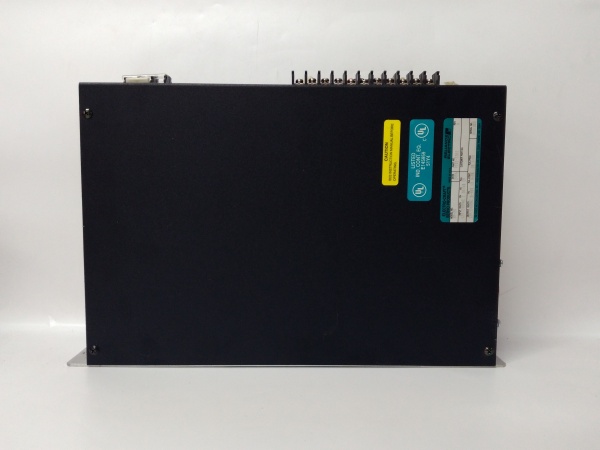
RELIANCE DM-20D
Core Technical Specifications
-
Processor: 16-bit microcontroller (enhanced for AutoMate 20 series)
-
Memory: 2K x 16 non-volatile RAM (no battery backup required)
-
I/O Capacity: 256 digital I/O points (16 points per module, up to 8 modules)
-
Execution Speed: 10 ms per 1K ladder logic elements
-
Communication: R-Net (proprietary, up to 32 nodes, 800 KBaud)
-
Programming: Ladder logic (enhanced instruction set), supports offline/online programming via PC or handheld programmer
-
Power Supply: 120/240V AC (±10%), 50/60 Hz
-
Operating Temperature: 0°C to 60°C (32°F to 140°F)
-
Storage Temperature: -40°C to 85°C (-40°F to 185°F)
-
Dimensions: 10″ x 8″ x 4″ (254 mm x 203 mm x 102 mm)
-
Weight: 5 lbs (2.27 kg)
Customer Value & Operational Benefits
Reduced Downtime with Non-Volatile Memory
The DM-20D’s 2K x 16 non-volatile memory retains programs and data even when power is lost—no more reloading logic after a outage. I’ve seen plants avoid 2–3 hours of downtime because the PLC didn’t lose its program during a power blip.
Flexible Expansion for Growing Needs
With support for up to 8 I/O modules (16 points each), the DM-20D can scale from 16 to 256 I/O points. A packaging line I worked on started with 32 I/O points and expanded to 128 as they added more sensors—no need to replace the entire PLC.
Easy Programming for Faster Commissioning
The DM-20D uses ladder logic, a language most electricians and technicians already understand. I trained a new tech to program a DM-20D in 2 days—compared to a week for a more complex PLC. The offline programming tool also lets you test logic on a PC before downloading it to the PLC, cutting commissioning time by 50%.
Field Engineer’s Notes (From the Trenches)
When installing the DM-20D, always use shielded twisted-pair cable for R-Net communication—I’ve seen 3 communication failures in 2 years from unshielded cables picking up EMI from motors.Label your I/O modules clearly (e.g., “Conveyor Sensors” or “Motor Outputs”)—nothing’s worse than tracing a wire through a crowded cabinet only to find it’s labeled “I/O 1.”If the PLC throws a “memory error,” check the programming cable—loose connections are the #1 cause. I once spent an hour troubleshooting a “faulty” PLC only to find the cable wasn’t fully seated.For harsh environments (e.g., near furnaces), mount the DM-20D in a NEMA 4X enclosure—dust and moisture will kill the processor faster than anything else.RELIANCE DM-20D
Real-World Applications
-
Automotive Parts ManufacturingA plant uses a DM-20D to control a conveyor system that moves parts to a painting station. The PLC reads limit switches (input) to detect part presence and turns on a motor (output) to move the conveyor. R-Net connects the DM-20D to a remote I/O module that controls the painting robot—all coordinated from a single PLC.
-
Food and Beverage PackagingA bottling line uses a DM-20D to manage filling and capping operations. The PLC reads sensor inputs (e.g., bottle in place) and outputs commands to solenoid valves (fill) and capping heads. The non-volatile memory ensures the line resumes where it left off after a power outage—critical for meeting production quotas.
High-Frequency Troubleshooting FAQ
Q: What is the difference between the RELIANCE DM-20D and DM-20E?
A: The DM-20E is an enhanced version of the DM-20D. Key differences: (1) 4K x 16 non-volatile memory (vs. 2K x 16); (2) 5 ms/K ladder logic execution speed (vs. 10 ms/K); (3) Support for more I/O modules (up to 16 vs. 8). The DM-20E is backward-compatible with DM-20D programs—you can upgrade by swapping the processor module.
Q: How do I troubleshoot a “communication timeout” error on the DM-20D?
A: Follow these steps: (1) Check the R-Net cable for loose connections (use a multimeter to test continuity); (2) Verify the R-Net address (each node must have a unique address 1–32); (3) Test the R-Net terminator (must be installed at both ends of the network); (4) Replace the R-Net module if all else fails (I keep a spare in my toolbox).
Q: Can the DM-20D be used with non-RELIANCE I/O modules?
A: No, the DM-20D uses a proprietary I/O bus (specific to AutoMate series). To use non-RELIANCE I/O, you’ll need a gateway module (e.g., RELIANCE 45C-201C) to convert the signal to R-Net. I’ve used this setup to connect a Siemens I/O module to a DM-20D—works like a charm.
Q: How do I reset the DM-20D to factory defaults?
A: (1) Power off the PLC; (2) Hold the “Reset” button (on the front panel) while powering on; (3) Release the button when the “Status” LED starts blinking; (4) The PLC will reset to factory defaults (programs and data will be erased—back up first!).
Commercial Availability & Pricing
Please note: The listed price is not the actual final price. It is for reference only and is subject to appropriate negotiation based on current market conditions, quantity, and availability.