Description
System Architecture & Operational Principle
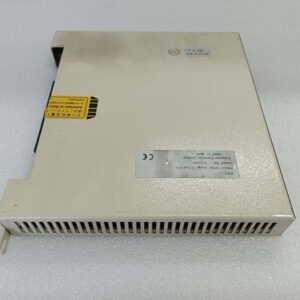
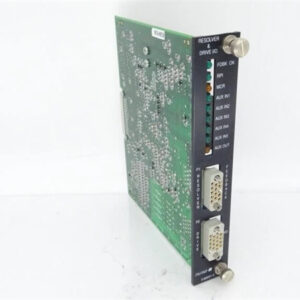
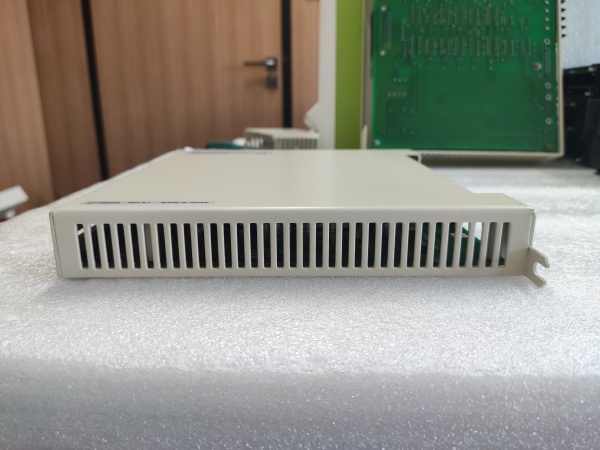
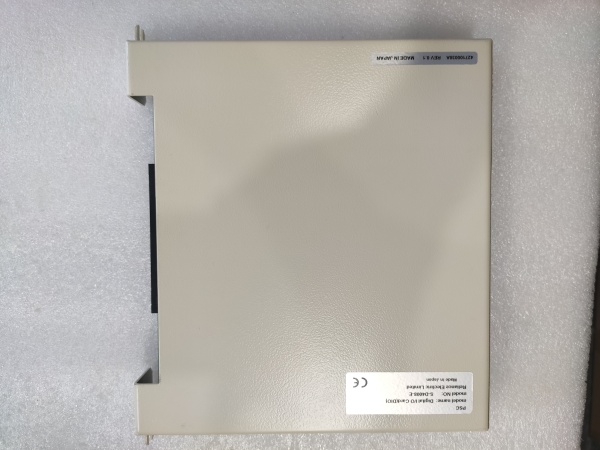
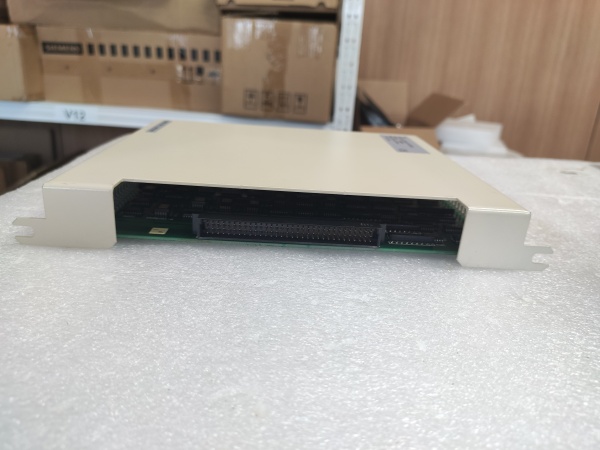
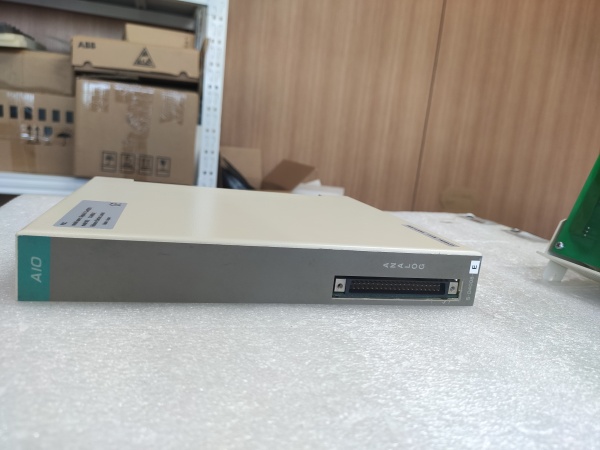
The RELIANCE S-D4008-A is a core component of the PSC5000 Programmable Servo Controller System, designed to bridge the gap between the controller’s digital logic and field devices. It resides in a 19-inch rack-mounted chassis, connecting to the PSC5000 via a proprietary backplane bus.
Upstream Communication: Receives 24V DC control signals from the PSC5000 controller. The controller sends logic commands (e.g., “start motor” or “open valve”) to the S-D4008-A via the backplane, which translates them into electrical signals for field devices.
Downstream Operation: The module’s 16 channels (8 input/8 output) interface with field devices:
-
Input Channels: Accept 24V DC signals from sensors (e.g., limit switches, proximity sensors) to indicate device status (e.g., “part in place” or “emergency stop activated”).
-
Output Channels: Send 24V DC signals to actuators (e.g., relays, solenoids) to control device operation (e.g., “start conveyor” or “close valve”).
Inherent Advantages:
-
Galvanic Isolation: 1500V AC channel-to-channel isolation prevents voltage spikes from field devices from damaging the controller.
-
Hot-Swap Capability: The module can be replaced without shutting down the system, reducing downtime during maintenance.
-
Compact Design: Fits in a 1U rack space, ideal for space-constrained control cabinets.

RELIANCE S-D4008-A
Core Technical Specifications
-
Physical Interface: Screw terminal block (accepts 16-22 AWG wire)
-
Signal Type: Digital (24V DC sinking/sourcing)
-
Channel Density: 16 channels (8 input/8 output)
-
Communication Bus: Proprietary PSC5000 backplane
-
Input Voltage Range: 18-30V DC (operational), 0-5V DC (logic low), 18-30V DC (logic high)
-
Output Current: 500mA per channel (resistive load)
-
Response Time: ≤1ms (signal detection)
-
Isolation Rating: 1500V AC channel-to-channel, 2500V AC channel-to-ground
-
Power Draw: 2W (max, at 24V DC)
-
Operating Temperature: 0°C to 60°C (32°F to 140°F)
-
Storage Temperature: -40°C to 85°C (-40°F to 185°F)
-
Weight: 0.5 kg (1.1 lbs)
Customer Value & Operational Benefits
Reduced Downtime with Hot-Swap Design
The S-D4008-A’s plug-in base allows technicians to replace a faulty module without shutting down the PSC5000 system. I’ve swapped these in 10 minutes during a shift change, avoiding a 2-hour production stop.
Prevent Unplanned Outages via Isolation
Galvanic isolation protects the PSC5000 controller from field-side voltage spikes—something I’ve seen save thousands of dollars in damaged hardware. In a steel mill, this feature prevented a lightning strike from frying the controller.
Fast Root-Cause Analysis with Diagnostic Tools
The module includes built-in diagnostic LEDs (one per channel) that indicate signal status (on/off) and fault conditions (e.g., “open circuit” or “short circuit”). For deeper diagnostics, technicians can use the PSC5000’s software to view register values and error logs—reducing troubleshooting time from hours to minutes.
Field Engineer’s Notes (From the Trenches)
When installing the S-D4008-A, always verify the 24V DC power supply with a multimeter before connecting it to the PSC5000. I once assumed a 24V supply but found it was 120V AC—fried the module in 5 seconds.Use ferrules on the wire ends (16-22 AWG) to prevent fraying. Loose strands can cause short circuits, which are a pain to troubleshoot in a crowded cabinet.Label the terminals! “IN” (from PSC5000) and “OUT” (to field device) get mixed up fast. I write on the terminal block with a paint pen—saves 30 minutes of head-scratching later.If a channel isn’t responding, check the fuse (usually a 1A slow-blow) on the input side. I’ve seen 3 failures in 2 years from blown fuses due to power surges.RELIANCE S-D4008-A
Real-World Applications
-
Steel Mill Roller Conveyor ControlThe S-D4008-A receives 24V DC signals from limit switches (input) to detect roller position and sends signals to motor starters (output) to start/stop the conveyor. The isolation feature prevents damage to the PSC5000 if the motor shorts out.
-
Automotive Assembly Line Robotic Arm ControlUsed to interface with proximity sensors (input) that detect part presence and send signals to robotic arm actuators (output) to pick/drop parts. The fast response time (1ms) ensures precise synchronization with the assembly line.
High-Frequency Troubleshooting FAQ
Q: What is the correct migration path for a legacy RELIANCE S-D4006 to S-D4008-A?
A: The S-D4008-A is a drop-in replacement for the older S-D4006. Key differences include: (1) Higher isolation rating (1500V AC vs. 1000V AC); (2) Faster response time (1ms vs. 5ms); (3) More diagnostic LEDs (16 vs. 8). To migrate: (1) Power down the PSC5000; (2) Remove the S-D4006; (3) Install the S-D4008-A; (4) Reconnect the wiring; (5) Power up the system. No changes to the PSC5000 configuration are required.
Q: How do I diagnose a “no input signal” fault on the S-D4008-A?
A: Follow these steps: (1) Check the field sensor (e.g., limit switch) with a multimeter to ensure it’s sending a 24V DC signal; (2) Verify the S-D4008-A’s input terminal is connected to the sensor; (3) Check the module’s diagnostic LED for the channel—if it’s off, the signal isn’t reaching the module; (4) Swap the module with a known-good one (distributors like Xiamen Xingruijia have spares).
Q: Can the S-D4008-A be used with non-PSC5000 controllers?
A: No, the S-D4008-A uses a proprietary backplane bus specific to the PSC5000 system. To use it with another controller (e.g., Allen-Bradley ControlLogix), you’ll need a gateway module (e.g., RELIANCE 45C-201C) to convert the signal to Ethernet/IP.
Q: What’s the correct torque for the S-D4008-A terminal screws?
A: 0.8-1.2 N·m (7-10 in-lbs). Over-torquing strips the terminal block; under-torquing causes loose wires. Use a calibrated screwdriver—cheap ones vary by 30%.
Commercial Availability & Pricing
Please note: The listed price is not the actual final price. It is for reference only and is subject to appropriate negotiation based on current market conditions, quantity, and availability.