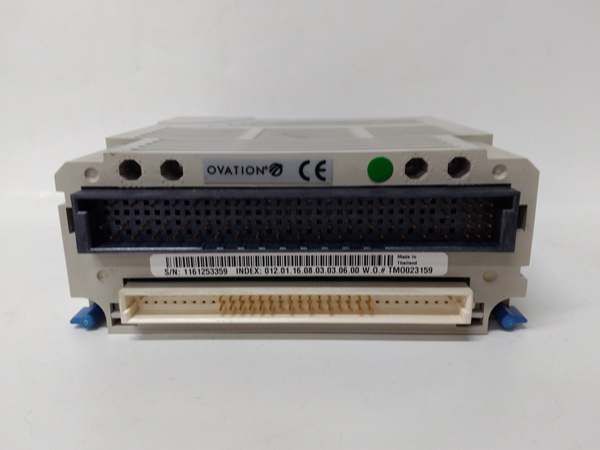
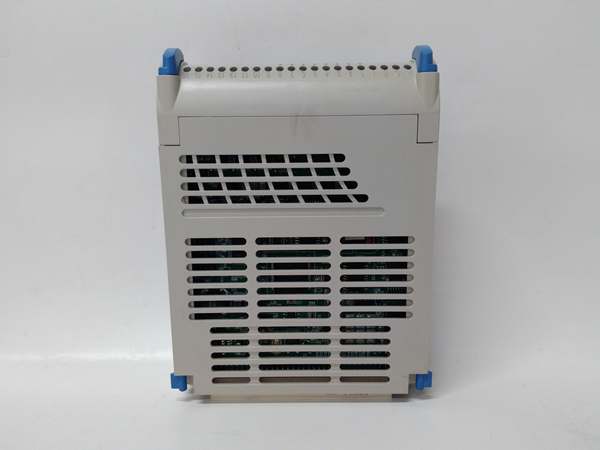
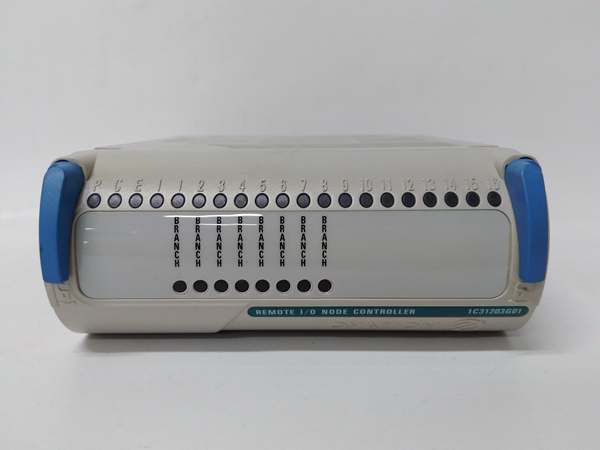
Description
Key Technical Specifications
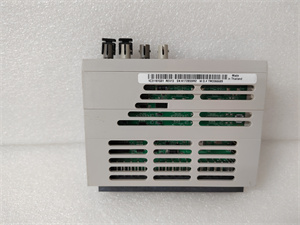
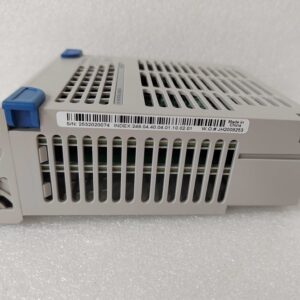
The 1C31129G04 is an 8-channel analog output module designed for Emerson’s Ovation Distributed Control System (DCS). Its technical specifications are tailored for industrial automation applications requiring precise analog signal output:
-
Number of Channels: 8 independent analog output channels.
-
Output Signal Range: Configurable 4–20 mA (current loop) or 0–10 VDC (voltage) per channel.
-
Resolution: 12-bit digital-to-analog conversion (DAC), ensuring precise signal output for fine-tuned control.
-
Accuracy: ±0.1% of full scale (typical at 25°C ambient), critical for maintaining process stability.
-
Power Supply: 24 VDC (nominal), compatible with Ovation system power requirements.
-
Operating Temperature: –20°C to +70°C (IEC 60068-2 compliant), suitable for harsh industrial environments.
-
Storage Temperature: –40°C to +85°C, withstanding extreme storage conditions.
-
Humidity Range: 5–95% RH (non-condensing), resistant to moisture in humid environments.
-
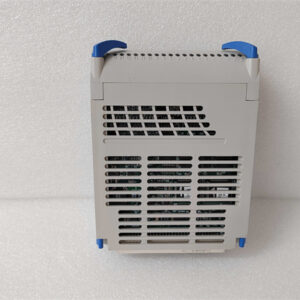
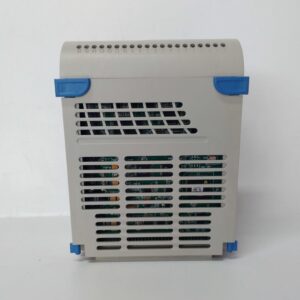
Dimensions: ~12.1 cm × 2.5 cm × 7.0 cm (4.8 in × 1.0 in × 2.8 in), compact for cabinet installation.
-
Weight: ~0.8 kg (1.76 lbs), lightweight for easy handling.

1C31203G01
Field Application & Problem Solved
In industrial automation—from power plants to chemical refineries—control systems rely on analog output signals to regulate field devices like control valves, variable-speed pumps, and motor drives. The biggest challenge with legacy systems is finding an analog output module that delivers high precision (for accurate process control) and reliability (to withstand harsh environments). Solid-state modules often fall short: they lack the resolution for fine-tuned adjustments, and their susceptibility to noise can corrupt signals—leading to process inefficiencies or equipment damage.
The 1C31129G04 solves this by providing 8 isolated analog output channels with 12-bit resolution. You’ll find it in:
-
Power generation: Controlling boiler feedwater valves, turbine governor systems, and generator excitation circuits.
-
Chemical/petrochemical: Regulating process valves (e.g., control valves in distillation columns) and variable-speed compressors.
-
Manufacturing: Adjusting conveyor belt speeds, robotic arm movements, and assembly line equipment.
Its core value is precision and reliability in mission-critical applications. The 12-bit resolution allows for incremental adjustments (e.g., 0.01% of full scale), which is essential for processes like chemical blending where small changes affect product quality. The module’s rugged design (–20°C to +70°C operating temperature) also ensures stable operation in high-EMI environments like power plants.
Installation & Maintenance Pitfalls (Expert Tips)
1. Incorrect Wiring of Current Loops
A common rookie mistake is reversing the polarity of the 4-20mA current loop. Always connect the positive terminal (+) of the module to the positive terminal of the field device (e.g., valve positioner) and the negative terminal (–) to the negative terminal. Reversing polarity will cause the device to misinterpret the signal—we once had a client burn out a valve positioner because of this error.
2. Ignoring Output Range Configuration
The 1C31129G04 supports both 4-20mA and 0-10V outputs. Always verify the field device’s requirements (e.g., a valve positioner may require 4-20mA) and configure the module accordingly. Using the wrong output range can lead to incorrect device operation—we fixed a recurring valve malfunction in a refinery by switching from 0-10V to 4-20mA.
3. Poor Shielding of Field Cables
Analog signals are susceptible to electromagnetic interference (EMI) from nearby power cables or motors. Always use shielded twisted-pair cables for field wiring, and ground the shield at one end (preferably the module end). Un-shielded cables can pick up noise, causing the output signal to fluctuate—we fixed a recurring valve oscillation in a paper mill by replacing un-shielded cables with shielded ones.
4. Skipping Calibration Checks
Even though the 1C31129G04 has high accuracy, it’s important to calibrate it annually using a precision multimeter. Check the output signal (4-20mA) against the module’s display in Ovation Explorer. If the signal deviates by more than ±0.1%, recalibrate the module using Emerson’s calibration tool. We once found a module with a 0.2% error that was causing a 5% variation in product quality—calibration fixed the issue.
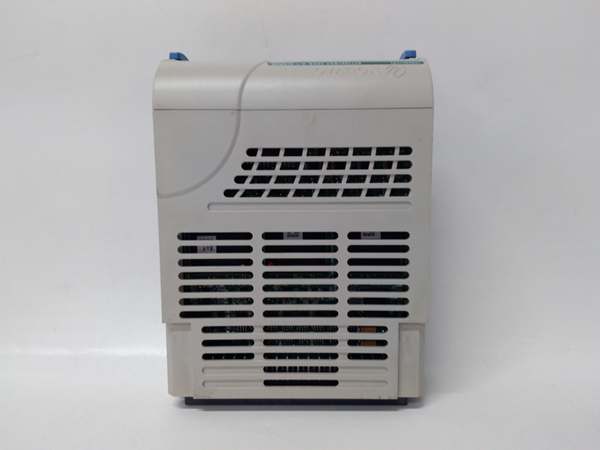
1C31203G01
Technical Deep Dive & Overview
The 1C31129G04 is an 8-channel analog output module designed exclusively for Emerson’s Ovation DCS. It acts as a bridge between the DCS’s digital control signals (generated by the controller) and the analog signals required by field devices. Here’s how it works:
-
Signal Reception: The Ovation controller sends a digital command (e.g., “open valve 50%”) to the 1C31129G04 via the backplane.
-
Digital-to-Analog Conversion (DAC): The module’s internal 12-bit DAC converts the digital command into a proportional analog signal (4-20mA or 0-10V).
-
Output to Field Device: The analog signal is sent to the field device (e.g., valve positioner), which adjusts its position accordingly.
-
Feedback to DCS: The module sends a status signal back to the DCS indicating whether the output is active—critical for diagnostic purposes.
What sets the 1C31129G04 apart is its compatibility and ruggedness. It works with all Ovation DCS controllers and supports all major industrial signal types(4-20mA, 0-10V), eliminating the need for multiple specialized modules. The module’s housing is made of flame-retardant polycarbonate (UL 94 V-0) to withstand harsh environments (e.g., high temperatures in power plants). It also supports hot-swapping, meaning you can replace a faulty module without shutting down the system—critical for 24/7 operations like power plants.
Final Notes
The 1C31129G04 is a workhorse module for industrial automation. Its combination of 8 isolated channels, 12-bit resolution, and universal input support makes it ideal for mission-critical applications where reliability is non-negotiable. Whether you’re upgrading a legacy system or building a new one, this module will deliver the accurate, reliable analog output you need—just remember to follow the installation tips to avoid common pitfalls.