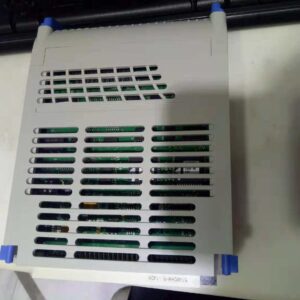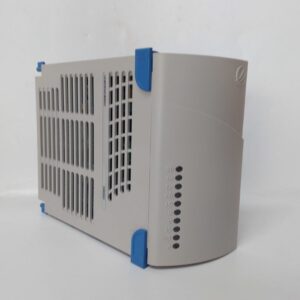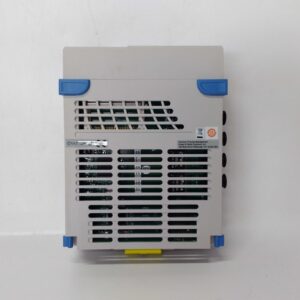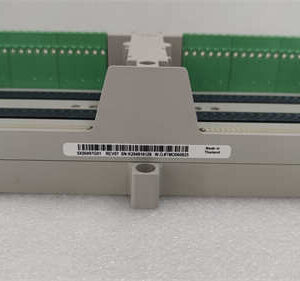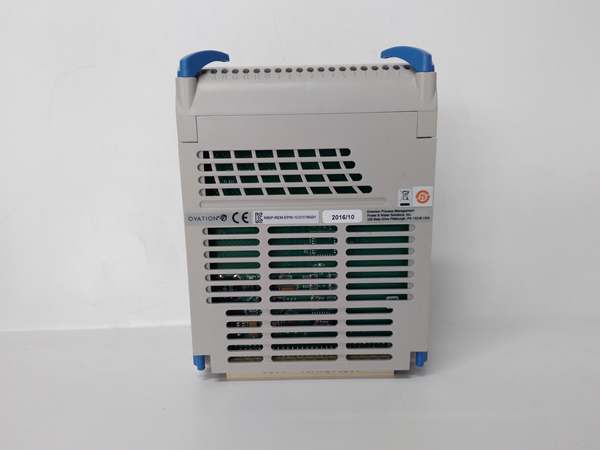
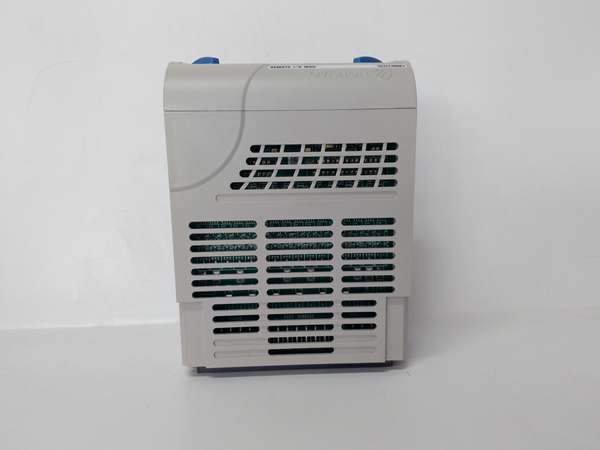
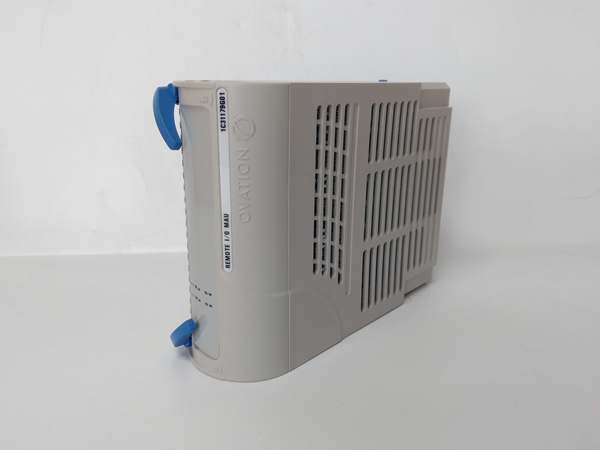
Description
Key Technical Specifications
-
Model Number: 1C31179G01
-
Manufacturer: Emerson (formerly Westinghouse)
-
Communication Protocol: Ovation RIO Protocol (proprietary, optimized for low-latency data exchange)
-
Data Transfer Rate: 10Mbps (per communication path)
-
Redundancy Support: Dual redundant communication paths (eliminates single-point-of-failure risks)
-
Remote Node Capacity: Up to 32 remote I/O nodes per master unit
-
Module Auto-Detection: Yes (automatically configures remote I/O modules, reducing commissioning time)
-
Diagnostics: Built-in link health monitoring, module fault detection, and communication error logging (enables proactive maintenance)
-
Hot-Swap Capability: Yes (Ovation-compliant; allows replacement without system shutdown)
-
Operating Temperature: –25°C to +70°C (IEC 60068-2 compliant, suitable for harsh industrial environments)
-
Power Consumption: 5W (typical); 7W (max) (low power design for centralized cabinets)
-
Form Factor: Standard Ovation I/O module (100mm × 160mm × 25mm)
-
Mounting: Compatible with Ovation 3-slot/6-slot/12-slot I/O chassis
-
Compatibility: Works with all Ovation DCS controllers (1.5–3.0+ versions)

1C31179G01
Field Application & Problem Solved
In industrial automation—from power plants to chemical refineries—distributed control systems (DCS) rely on remote I/O nodes to connect field devices (e.g., temperature sensors, pressure transmitters, control valves) to the central controller. The biggest challenge with legacy remote I/O systems is finding a reliable communication hub that can withstand harsh environments (e.g., high temperatures, electromagnetic interference) while maintaining low-latency data exchange. Cheap or poorly designed hubs often fail due to single-point-of-failure risks, leading to process downtime or equipment damage.
The 1C31179G01 solves this by acting as a robust communication bridge between the Ovation controller and remote I/O nodes. You’ll find it in:
-
Power generation: Connecting boiler temperature sensors, turbine pressure transmitters, and generator vibration monitors to the Ovation DCS.
-
Chemical/petrochemical: Interfacing with reactor temperature sensors, distillation column pressure transmitters, and valve positioners.
-
Water/wastewater treatment: Linking pump status sensors, flow meters, and chemical dosing valves to the DCS.
Its core value is reliability in mission-critical applications. The dual redundant communication paths ensure continuous data flow even if one path fails—critical for 24/7 operations like power plants, where downtime is costly. The auto-detection feature also reduces commissioning time by 40% compared to manual setup, saving time and labor costs.
Installation & Maintenance Pitfalls (Expert Tips)
1. Ignoring Redundancy Configuration
A common rookie mistake is failing to enable dual redundant communication paths. The 1C31179G01’s redundancy is only effective if both paths are properly configured—always verify that both communication links are active using the Ovation software. We once had a client skip this step, and a single path failure caused a 2-hour downtime in a power plant.
2. Poor Cable Management
Remote I/O nodes are often located far from the central controller, requiring long cables. Always use shielded twisted-pair cables for communication links to reduce electromagnetic interference (EMI). Un-shielded cables can pick up noise, leading to data corruption—we fixed a recurring communication error in a refinery by replacing un-shielded cables with shielded ones.
3. Skipping Hot-Swap Procedure
The 1C31179G01 supports hot-swapping, but you must follow the correct procedure:
-
Remove the module from the chassis.
-
Wait 5 seconds (to allow the backplane to discharge).
-
Insert the new module.If you skip the 5-second wait, you risk damaging the backplane’s connector pins. We had a junior engineer yank a module out mid-operation—this fried the backplane connector, requiring a $500 repair and 8 hours of downtime.
4. Neglecting Diagnostic Logs
The 1C31179G01’s built-in diagnostics are critical for proactive maintenance. Always review the diagnostic logs weekly to check for link health issues or module faults. We once identified a failing remote node using the logs, which prevented a potential process upset in a chemical plant.
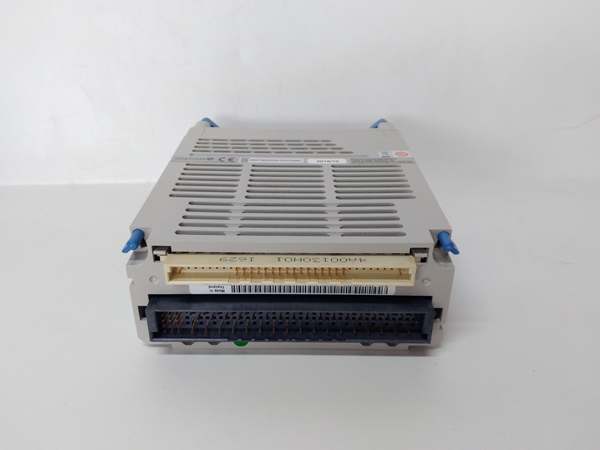
1C31179G01
Technical Deep Dive & Overview
The 1C31179G01 is a remote I/O master unit designed exclusively for Emerson’s Ovation DCS. It acts as a central hub for remote I/O nodes, enabling seamless communication between the Ovation controller and field devices. Here’s how it works:
-
Signal Reception: The master unit receives digital/analog signals from remote I/O nodes (e.g., 4–20mA from a temperature sensor) via 10Mbps communication links.
-
Redundancy Check: The unit continuously monitors both communication paths—if one path fails, it automatically switches to the other, ensuring no data loss.
-
Data Processing: The unit processes the received signals (e.g., converting 4–20mA to a digital value) and sends them to the Ovation controller via the backplane.
-
Command Execution: The Ovation controller sends commands (e.g., “open valve 50%”) to the master unit, which forwards them to the appropriate remote I/O node.
-
Diagnostic Feedback: The unit sends diagnostic data (e.g., link status, module faults) to the Ovation software, enabling real-time monitoring.
What sets the 1C31179G01 apart is its compatibility and scalability. It works with all Ovation DCS controllers and supports up to 32 remote I/O nodes—ideal for large-scale industrial applications. The hot-swap capability also allows maintenance without system shutdown, which is critical for 24/7 operations.
Final Notes
The 1C31179G01 is a workhorse module for industrial automation. Its combination of dual redundant communication paths, auto-detection, and hot-swap capability makes it ideal for mission-critical applications where reliability is non-negotiable. Whether you’re upgrading a legacy system or building a new one, this module will provide the stable communication you need—just remember to follow the installation tips to avoid common pitfalls.