Description
Key Technical Specifications
-
Model Number: 5X00119G01
-
Manufacturer: Emerson (formerly Westinghouse)
-
Number of Channels: 8 independent RTD inputs
-
RTD Types Supported: Pt100, Pt1000, Ni120, Cu10 (2-wire, 3-wire, 4-wire configurations)
-
Measurement Range: -200°C to +850°C (-328°F to +1562°F) (sensor-dependent)
-
Accuracy: ±0.1% of reading (typical at 25°C ambient)
-
Resolution: 16-bit A/D conversion (superior signal fidelity)
-
Isolation: Channel-to-channel (200V AC/DC) and channel-to-backplane (1000V AC/DC) isolation
-
Update Rate: Configurable scan rates up to 10 Hz per channel
-
Power Supply: 24V DC (±10% tolerance) via Ovation backplane
-
Power Consumption: 3.6W (typical), 4.2W (max)
-
Operating Temperature: 0°C to +60°C (32°F to 140°F)
-
Storage Temperature: -40°C to +85°C (-40°F to +185°F)
-
Humidity Range: 0–95% RH (non-condensing)
-
Dimensions: ~144 mm × 60 mm × 30 mm (5.67 in × 2.36 in × 1.18 in) (estimated from similar Ovation modules)
-
Weight: ~0.35 kg (0.77 lbs)

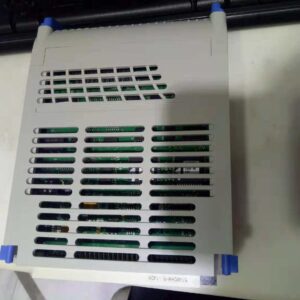
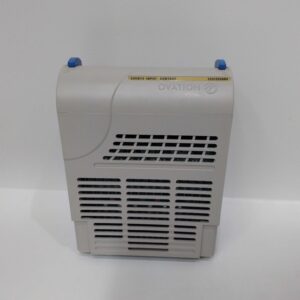
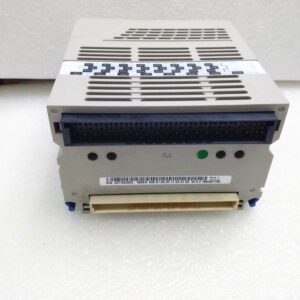
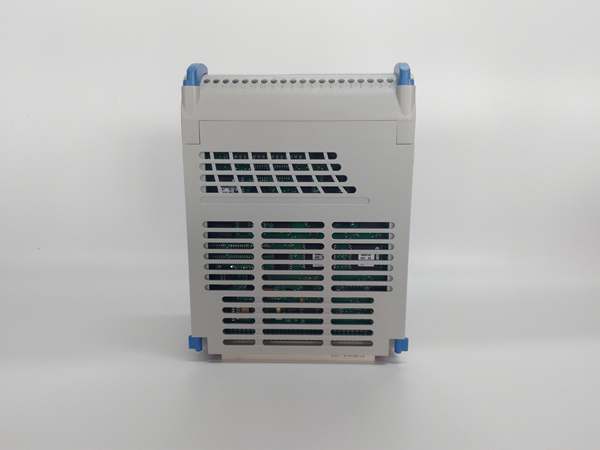
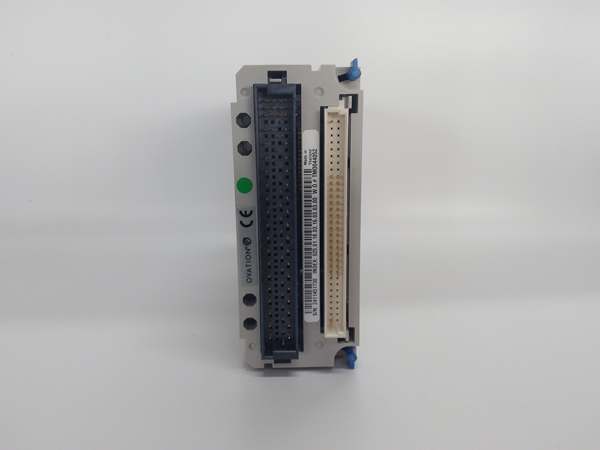
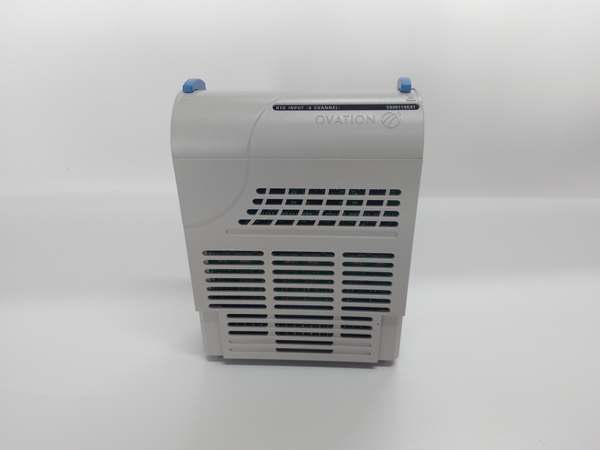
WESTINGHOUSE 5X00119G01
Field Application & Problem Solved
In industrial automation—from power plants to chemical refineries—temperature monitoring is critical for process stability, safety, and product quality. The biggest challenge with legacy temperature input modules is finding a solution that balances high precision (for accurate readings) with reliability (to withstand harsh environments). Solid-state modules often fall short: they lack the resolution for fine-tuned adjustments, and their susceptibility to noise can corrupt signals—leading to process inefficiencies or equipment damage.
The 5X00119G01 solves this by providing 8 isolated RTD input channels (each with 16-bit resolution) in a compact form factor. You’ll find it in:
-
Power generation: Monitoring turbine bearing temperatures, boiler feedwater heaters, and generator stator windings.
-
Chemical/petrochemical: Tracking reactor vessel temperatures, distillation column profiles, and heat exchanger efficiency.
-
Pharmaceutical manufacturing: Ensuring GMP compliance with validated temperature monitoring in sterilization cycles and fermentation tanks.
Its core value is precision and reliability in mission-critical applications. The 16-bit resolution allows for incremental temperature adjustments (e.g., 0.01°C), which is essential for processes like chemical blending where small changes can affect product quality. The galvanic isolation also prevents field-induced noise (e.g., from nearby motors) from corrupting DCS signals—something we learned the hard way in a refinery where unisolated inputs caused intermittent temperature spikes.
Installation & Maintenance Pitfalls (Expert Tips)
1. Forgetting the Personality Module
A common rookie mistake is installing the 5X00119G01 without the 5X00121G01 personality module. The personality module contains critical configuration data (e.g., RTD type, wiring mode) required for the module to function. Without it, the module will not communicate with the DCS—we once had a client spend hours troubleshooting a “faulty” module only to realize the personality module was missing.
2. Incorrect Wiring of RTD Sensors
Always follow the wiring diagram in the Ovation documentation for 2-wire, 3-wire, or 4-wire RTD configurations. Using the wrong wiring mode (e.g., 2-wire instead of 3-wire) will introduce lead resistance errors, leading to inaccurate temperature readings. We fixed a recurring temperature discrepancy in a power plant by switching from 2-wire to 3-wire wiring for RTD sensors.
3. Ignoring Lead Resistance Compensation
For 3-wire or 4-wire RTD installations, the 5X00119G01 automatically compensates for lead resistance—but only if the wiring is correct. If the leads are too long or have high resistance, the compensation may not be sufficient. Always use low-resistance cables (e.g., copper) for RTD wiring, and keep lead lengths as short as possible.
4. Skipping Self-Calibration
The 5X00119G01 has a built-in self-calibration function that should be triggered periodically (e.g., every 6 months). Self-calibration verifies the module’s accuracy and compensates for any drift over time. We once found a module with a 0.5% error that was causing a 2% variation in product quality—self-calibration fixed the issue.
Technical Deep Dive & Overview
The 5X00119G01 is an 8-channel RTD input module designed exclusively for Emerson’s Ovation Distributed Control System (DCS). It acts as a bridge between the DCS’s digital control signals and the analog signals from RTD sensors. Here’s how it works:
-
Signal Reception: The module receives resistance signals from RTD sensors (e.g., Pt100) via 2-wire, 3-wire, or 4-wire connections.
-
Lead Resistance Compensation: For 3-wire or 4-wire configurations, the module measures the resistance of the leads and subtracts it from the total resistance to eliminate errors.
-
Analog-to-Digital Conversion (ADC): The module’s 16-bit ADC converts the resistance signal into a digital value (e.g., 0–65535 counts) proportional to the temperature.
-
Linearization: The module applies a linearization curve (specific to the RTD type) to convert the digital value into a temperature reading (e.g., °C or °F).
-
Communication: The digital temperature reading is sent to the Ovation controller via the backplane for processing and display.
What sets the 5X00119G01 apart is its rugged design and compatibility. The module’s housing is made of flame-retardant polycarbonate (UL 94 V-0) to withstand harsh environments (e.g., high temperatures in power plants). It also works with all Ovation EMOD (Electronic Module) bases, so you can mix and match RTD inputs with other I/O modules (e.g., analog outputs, digital inputs) in the same cabinet—reducing inventory costs and simplifying maintenance.
Another key feature is hot-swapping. The module can be replaced without shutting down the system, which is critical for 24/7 operations like power plants. The built-in self-diagnostics (e.g., sensor break detection, out-of-range alarms) also help identify issues before they cause process upsets.
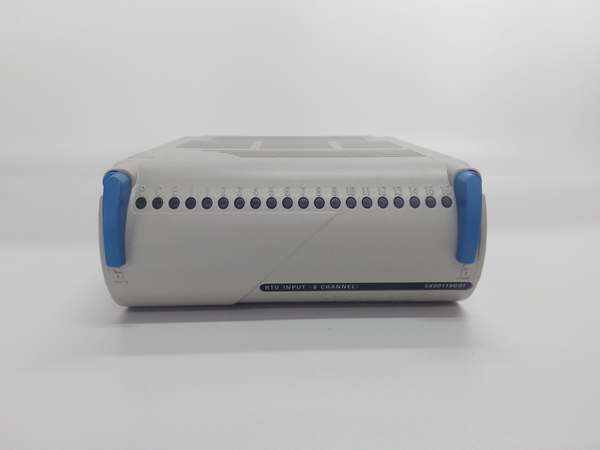
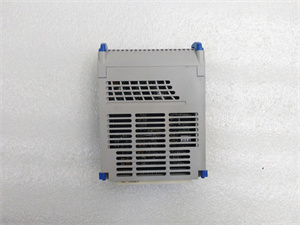
WESTINGHOUSE 5X00119G01
Final Notes
The 5X00119G01 is a workhorse module for industrial temperature monitoring. Its combination of 8 isolated channels, 16-bit resolution, and rugged design makes it ideal for mission-critical applications where reliability is non-negotiable. Whether you’re upgrading a legacy system or building a new one, this module will deliver the accurate, reliable temperature readings you need—just remember to follow the installation tips to avoid common pitfalls.