Description
Product Overview
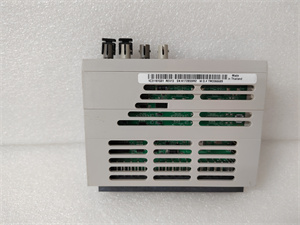
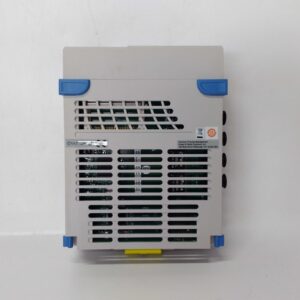
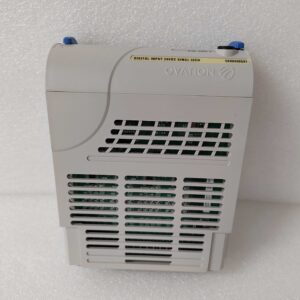
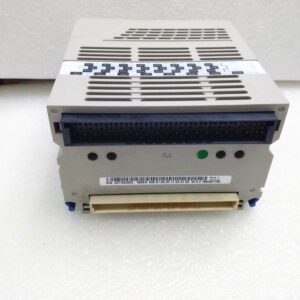
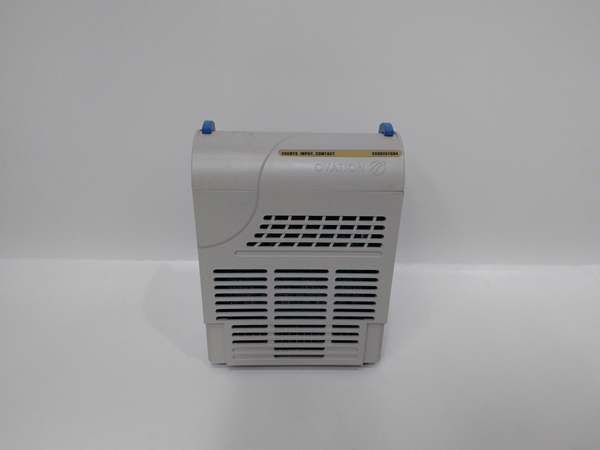
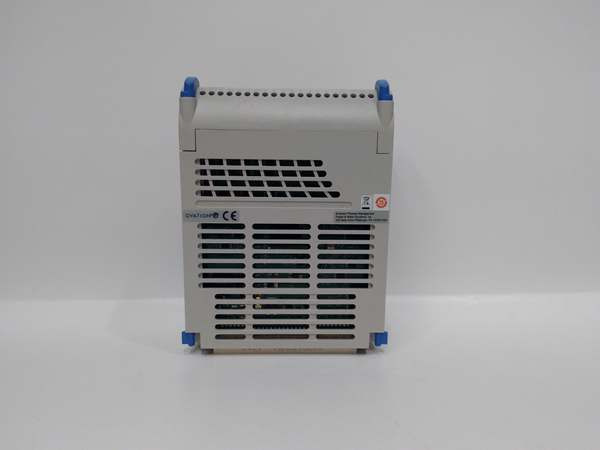
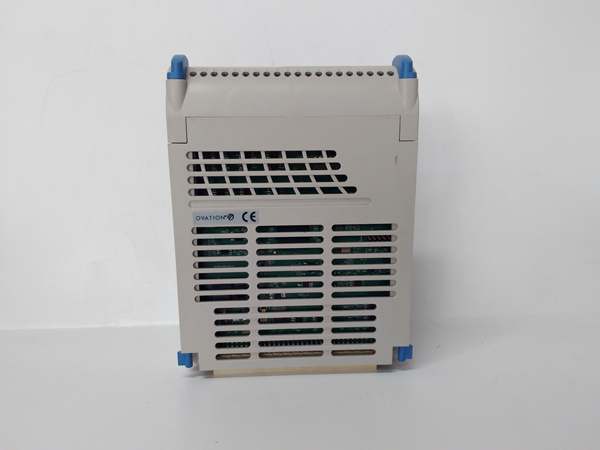
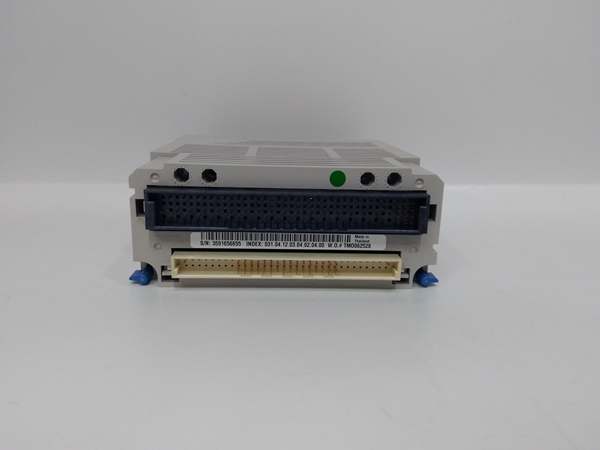
The Emerson Ovation 5X00357G04 is a 16-channel events input contact module designed exclusively for Emerson’s Ovation Distributed Control System (DCS). It serves as a critical component for Sequence of Events (SOE) recording, capturing digital signals from field devices (e.g., pushbuttons, limit switches, sensors) with millisecond-level precision. This module is widely used in industries where reliable event monitoring is essential, such as power generation, chemical processing, and water treatment, enabling fault diagnosis, process optimization, and compliance reporting.
The 5X00357G04’s primary role is to convert dry contact signals (from field devices) into digital data with precise timestamps, which is transmitted to the Ovation controller for real-time analysis. Its robust design (operating temperature range: –40°C to +70°C) and compatibility with Ovation DCS make it suitable for harsh industrial environments.
Key Technical Specifications
The 5X00357G04’s technical specifications are tailored for high-reliability event monitoring in industrial settings, with a focus on precision, isolation, and compatibility:
-
Number of Channels: 16 independent dry contact input channels.
-
Input Type: Dry contact (NO/NC configurable) with 48VDC sensing voltage (no external power required).
-
Isolation: Optical isolation (channel-to-channel and input-to-system) for noise immunity and safety.
-
Time Resolution: Millisecond-level time-stamping (ensures accurate SOE logs for fault diagnosis).
-
Response Time: <10ms (typical, ensures real-time signal acquisition for critical control applications).
-
Input Voltage: 48VDC (nominal, compatible with standard industrial discrete signals).
-
Power Consumption: Low power design (reduces heat dissipation in cabinets).
-
Operating Temperature: –40°C to +70°C (IEC 60068-2 compliant, suitable for extreme environments).
-
Storage Temperature: –40°C to +85°C (withstanding extreme storage conditions).
-
Humidity Range: 0–95% RH (non-condensing, resistant to moisture in humid environments).
-
Dimensions: Standard Ovation module size (compact for cabinet installation).
-
Weight: ~0.8 kg (1.76 lbs, lightweight for easy handling during maintenance).
-
Certifications: CE, UL (compliant with international safety standards).

5X00357G04
Field Application & Problem Solved
In industrial automation, Sequence of Events (SOE) recording is critical for:
-
Fault Diagnosis: Identifying the root cause of process upsets (e.g., a turbine trip) by analyzing the order of events.
-
Compliance Reporting: Meeting regulatory requirements (e.g., NERC CIP) for event logging in power plants.
-
Process Optimization: Improving efficiency by analyzing event sequences (e.g., reducing cycle times in manufacturing).
The biggest challenge with legacy SOE systems is inaccurate timing (due to poor signal conditioning) and limited channel density (requiring multiple modules for large systems). The 5X00357G04 solves this by:
-
Providing High-Resolution Timing: The module captures event times with millisecond-level precision, ensuring accurate SOE logs.
-
Supporting High Channel Density: 16 channels in a compact design reduce the number of modules needed, saving cabinet space and installation time.
-
Ensuring Isolation: Optical isolation prevents cross-talk and surge damage, ensuring reliable operation in high-EMI environments (e.g., power plants).
Typical Applications:
-
Power Generation: Monitoring circuit breaker trips, turbine shutdown signals, and generator fault conditions (e.g., over-speed, over-temperature).
-
Chemical Processing: Detecting emergency stop button presses, pressure switch activations, and valve position changes (e.g., in distillation columns).
-
Water Treatment: Recording pump start/stop events, filter backwash cycles, and chemical dosing activations.
Installation & Maintenance Pitfalls (Expert Tips)
To ensure optimal performance and reliability, follow these best practices for installing and maintaining the 5X00357G04:
-
Verify Isolation Requirements:
-
Always use a megger (insulation tester) to verify the module’s isolation (optical) before installation. Poor isolation can lead to cross-talk between channels, corrupting SOE logs.
-
Example: A client once experienced false event triggers due to inadequate isolation—testing with a megger revealed a faulty module.
-
-
Correct Wiring of Dry Contacts:
-
Ensure dry contacts are wired correctly (NO/NC) to avoid floating inputs. Floating inputs can cause false event triggers—always connect the contact’s common terminal to the module’s COM pin.
-
Tip: Use shielded twisted-pair cables for field wiring to reduce EMI.
-
-
Configure Time Stamping:
-
Set the module’s time-stamping resolution (millisecond-level) according to the application’s requirements. For critical events (e.g., turbine trips), use the highest precision setting.
-
Common Mistake: Using a low-precision setting can lead to inaccurate SOE logs, making fault diagnosis difficult.
-
-
Regular Diagnostic Checks:
-
Use the Ovation software to monitor the module’s status (e.g., channel health, power supply) regularly. Address any faults (e.g., overcurrent, open circuit) immediately to prevent downtime.
-
Case Study: A refinery avoided a process upset by detecting a faulty channel using the module’s diagnostic tools.
5X00357G04
-
Technical Deep Dive & Overview
The 5X00357G04 operates as part of the Ovation DCS architecture, which consists of:
-
Ovation Controller: Located in the central control room, it processes SOE data from the 5X00357G04 and displays it in the HMI (Human-Machine Interface).
-
5X00357G04 Module: Installed in a remote I/O node or control cabinet, it receives dry contact signals from field devices.
-
Field Devices: Pushbuttons, limit switches, and sensors connected to the 5X00357G04.
How It Works:
-
Signal Reception: The 5X00357G04 receives dry contact signals (e.g., a limit switch closing) from field devices.
-
Signal Conditioning: The module filters out noise (via a low-pass filter) and amplifies the signal to ensure accurate detection.
-
Time Stamping: A built-in real-time clock (RTC) assigns a millisecond-level timestamp to each event (e.g., “valve 1 opened at 10:00:00.123”).
-
Data Transmission: The module sends the event data (timestamp, channel number, event type) to the Ovation controller via the Ovation network.
-
SOE Logging: The Ovation controller stores the event data in a log file, which can be accessed for fault diagnosis or compliance reporting.
Key Advantages:
-
Compatibility: Works with all Ovation DCS controllers and field devices.
-
Ruggedness: The module’s housing is made of flame-retardant polycarbonate (UL 94 V-0) to withstand harsh environments (e.g., high temperatures in power plants).
-
Ease of Use: The removable terminal block and DIN rail mounting simplify installation and maintenance.
Final Notes
The Emerson Ovation 5X00357G04 is a reliable and essential component of the Ovation DCS, enabling precise sequence of events recording for industrial automation. Its high channel density, millisecond-level timing, and robust design make it ideal for mission-critical applications where event monitoring is non-negotiable. Whether you’re upgrading a legacy system or building a new one, the 5X00357G04 will provide the accurate event data you need—just remember to follow the installation tips to avoid common pitfalls.