Description
Product Overview
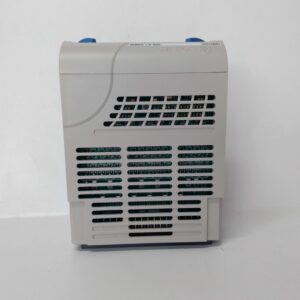
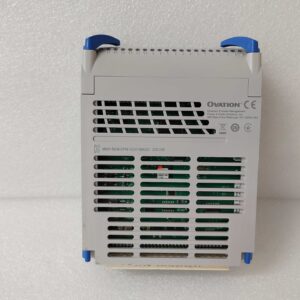
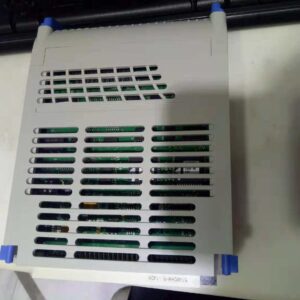
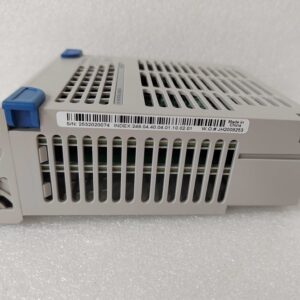
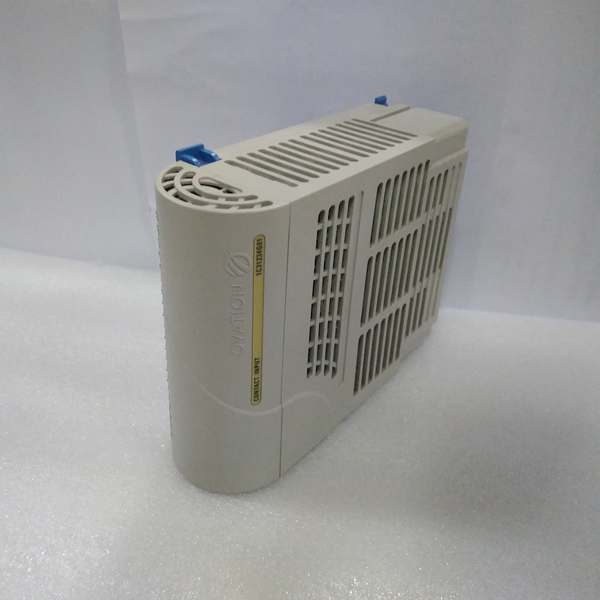
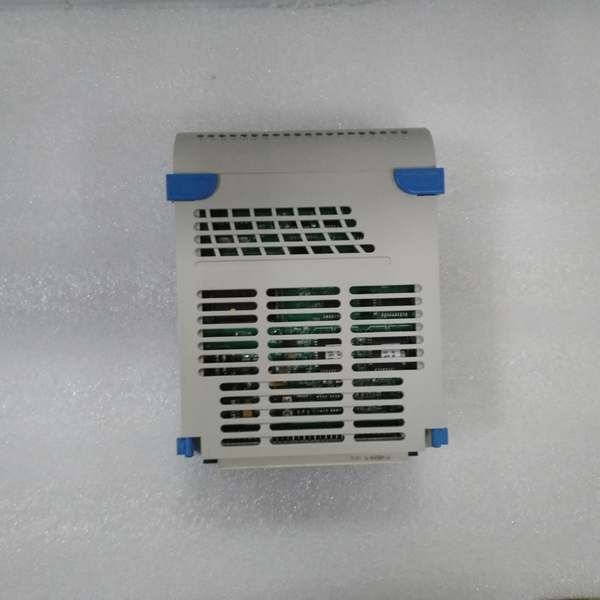
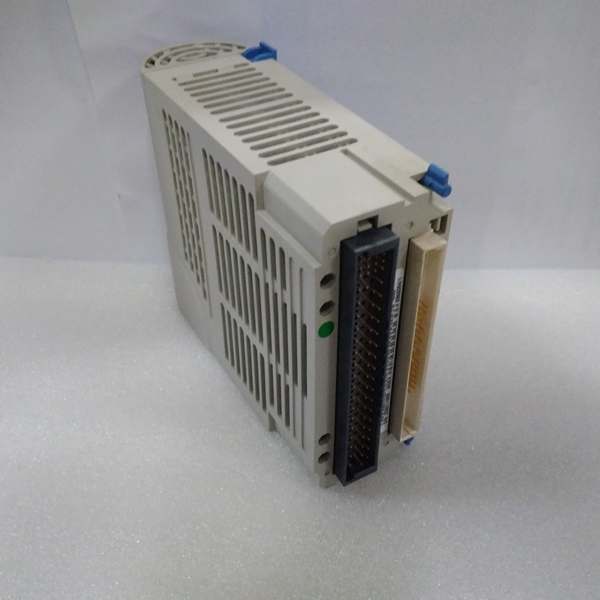
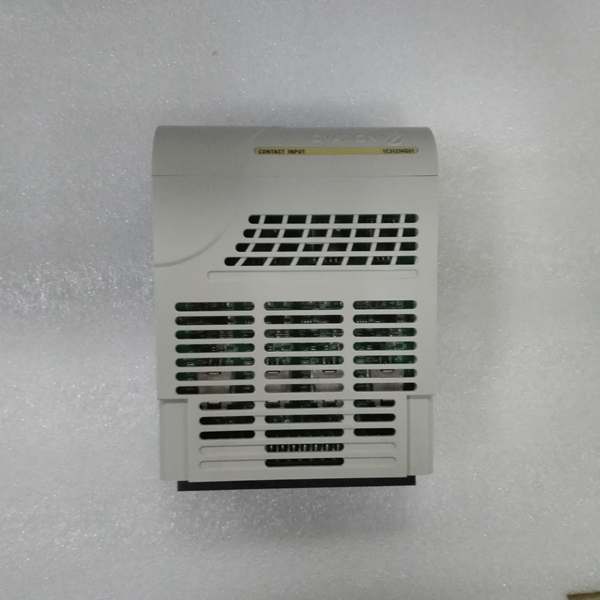
The Emerson Westinghouse 5X00501G01 is a universal I/O module designed exclusively for Emerson’s Ovation Distributed Control System (DCS). It serves as a critical interface between the Ovation controller and field devices (e.g., temperature sensors, pressure transmitters, control valves), enabling seamless data acquisition and control in industrial automation. As part of the Ovation ecosystem, the 5X00501G01 is widely used in industries where reliable I/O connectivity is essential, such as power generation, chemical processing, and water treatment.
The 5X00501G01’s primary role is to convert field signals (analog/digital) to digital data for the Ovation controller and transmit control commands from the controller to field actuators. Its universal design (supporting multiple I/O types) and high isolation (1500V) make it suitable for harsh industrial

WESTINGHOUSE 1C31234G01
environments.
Key Technical Specifications
The 5X00501G01’s technical specifications are tailored for flexibility and reliability in industrial applications:
-
Number of Channels: 16 (configurable for input/output)
-
Input Types: Voltage (0-5V, 0-10V), current (0-20mA, 4-20mA)
-
Output Types: Relay (Form A, Form C)
-
Isolation: 1500V channel-to-channel and channel-to-ground (prevents cross-talk and surge damage)
-
Power Supply: +24V DC (nominal, compatible with Ovation system power)
-
Operating Temperature: 0°C to 60°C (IEC 60068-2 compliant)
-
Storage Temperature: -40°C to +85°C
-
Humidity Range: 5–95% RH (non-condensing)
-
Dimensions: Standard Ovation module size (compact for cabinet installation)
-
Weight: ~1.5 kg (3.3 lbs)
-
Certifications: CE, UL listed, RoHS compliant
Field Application & Problem Solved
The 5X00501G01 is primarily used in distributed control systems (DCS) where field devices are located far from the central controller. Traditional centralized I/O systems require extensive cabling, which is costly and prone to noise interference. The 5X00501G01 solves this by:
-
Enabling Remote I/O Connectivity: It allows field devices to be connected to the Ovation DCS via remote I/O nodes, reducing the need for long copper cables.
-
Improving Noise Immunity: The 1500V isolation prevents electromagnetic interference (EMI) from nearby power lines or motors, ensuring reliable data transmission.
-
Simplifying System Expansion: Adding new field devices is straightforward—simply configure the 5X00501G01’s channels to match the device’s signal type.
Typical Applications:
-
Power Generation: Connecting temperature sensors (RTDs) and pressure transmitters to the Ovation DCS for turbine control.
-
Chemical Processing: Interfacing with flow meters and valve positioners for process optimization.
-
Water Treatment: Linking pH sensors and pump actuators to the DCS for water quality control.
Installation & Maintenance Pitfalls (Expert Tips)
To ensure optimal performance and reliability, follow these best practices for installing and maintaining the 5X00501G01:
-
Verify Channel Configuration:
-
Always confirm the field device’s signal type (e.g., 4-20mA current) and configure the 5X00501G01’s channels accordingly. Mismatched configurations can lead to incorrect data or device damage.
-
Example: A client once burned out a temperature sensor by configuring the module for voltage input instead of current.
-
-
Ensure Proper Isolation:
-
The 5X00501G01’s 1500V isolation is critical for protecting the DCS from field transients. Use a megger (insulation tester) to verify isolation before installation—if the reading is below 1500V, the module may be damaged.
-
-
Use Shielded Cables:
-
Analog signals (e.g., 4-20mA) are susceptible to EMI. Use shielded twisted-pair cables for field connections and ground the shield at one end (preferably the module end). Un-shielded cables can pick up noise, causing incorrect readings.
-
-
Perform Regular Calibration:
-
Even though the 5X00501G01 has high accuracy, calibrate it annually using a precision multimeter. Check the input/output signals against the module’s display in Ovation Explorer—if the deviation exceeds the specified tolerance (e.g., ±0.1% for analog inputs), recalibrate using Emerson’s calibration tool.
WESTINGHOUSE 1C31234G01
-
Technical Deep Dive & Overview
The 5X00501G01 operates as part of the Ovation DCS architecture, which consists of:
-
Ovation Controller: Located in the central control room, it processes data from the 5X00501G01 and sends commands to field devices.
-
5X00501G01 Module: Installed in a remote I/O node, it receives signals from field devices and transmits them to the controller.
-
Field Devices: Sensors (e.g., temperature, pressure) and actuators (e.g., valves, pumps) connected to the 5X00501G01.
How It Works:
-
Signal Reception: The 5X00501G01 receives analog/digital signals from field devices via its input channels.
-
Signal Conditioning: The module filters out noise (via a low-pass filter) and amplifies the signal (if necessary) to ensure accurate conversion.
-
Isolation: Galvanic isolation (via optocouplers) separates the field wiring from the DCS backplane, preventing surge damage and cross-talk.
-
Data Transmission: The module converts the conditioned signal to a digital value and sends it to the Ovation controller via the Ovation network.
-
Command Execution: The controller sends commands (e.g., “open valve 50%”) to the 5X00501G01, which converts them to analog/digital signals and transmits them to the field actuator.
Key Advantages:
-
Compatibility: Works with all Ovation DCS controllers and field devices.
-
Flexibility: Configurable channels eliminate the need for multiple specialized I/O modules.
-
Ruggedness: Designed to withstand vibration, temperature extremes, and EMI.
Final Notes
The Emerson Westinghouse 5X00501G01 is a reliable and essential component of the Ovation DCS, enabling universal I/O connectivity for industrial automation. Its high isolation, flexible configuration, and rugged design make it ideal for mission-critical applications where reliability is non-negotiable. Whether you’re upgrading a legacy system or building a new one, the 5X00501G01 will provide the stable I/O interface you need—just remember to follow the installation tips to avoid common pitfalls.