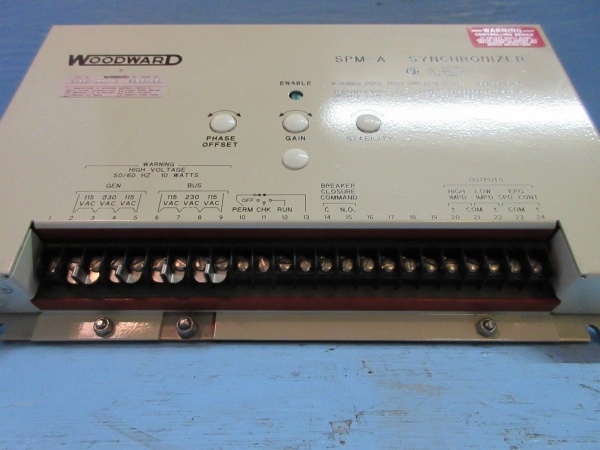
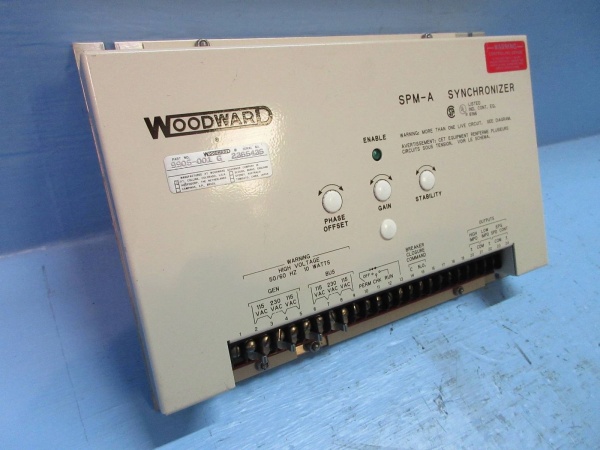
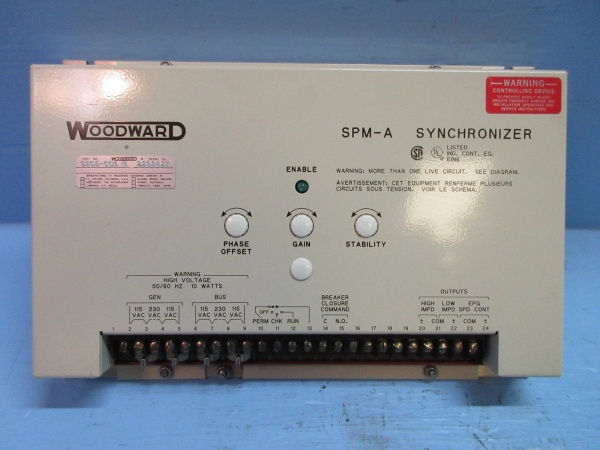
Description
Product Overview
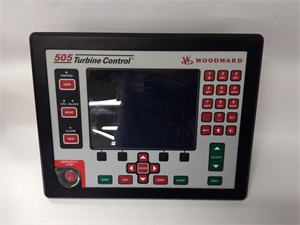
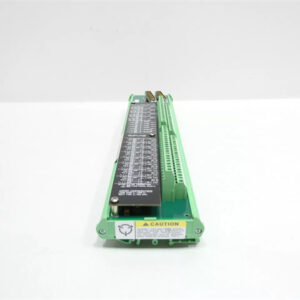
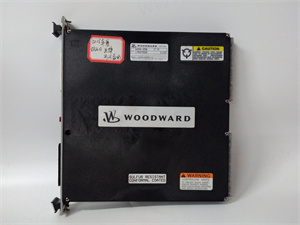
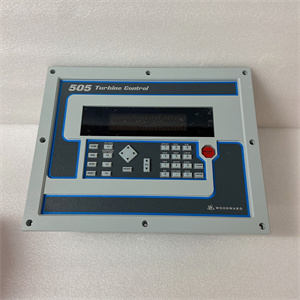
The Woodward 9905-092 is an advanced variant of the 2301A series electronic load sharing and speed control module, designed for industrial prime movers (e.g., diesel engines, gas turbines, steam turbines, generators). It builds on the 2301A platform’s core functionality—precision speed regulation and load sharing—while adding enhancements for flexible voltage compatibility and improved diagnostics, making it suitable for diverse industrial environments.
As part of Woodward’s 2301A ecosystem, the 9905-092 is optimized for parallel power generation systems, where stable speed control (critical for grid compliance) and balanced load distribution (to maximize efficiency) are paramount. Its “advanced” designation reflects upgrades such as a wider input voltage range (12–48 Vdc vs. standard 10–40 Vdc) and onboard diagnostic indicators, distinguishing it from base models like the 9905-003 or 9905-068.
The 9905-092’s primary role is to maintain constant speed (isochronous mode) or adjust speed based on load (droop mode) while distributing electrical load evenly across paralleled generators—ensuring grid stability, reducing equipment wear, and minimizing fuel consumption.
Key Technical Specifications
Insights from Woodward 2301A series documentation and industrial supplier listings (e.g., Allied Electronics, Emerson’s legacy catalogs) reveal the following parameters for the 9905-092:
-
Input Voltage: 12–48 Vdc (nominal 24 Vdc) – wider range than standard 2301A models, supporting both low- and high-voltage industrial systems.
-
Control Modes:
-
Isochronous Mode: Maintains constant prime mover speed (±0.1% tolerance) for standalone/isolated bus operation.
-
Droop Mode: Adjusts speed based on load (adjustable droop percentage, 0–15%) for parallel operation with other generators (wider droop range than base models).
-
-
Actuator Compatibility: Works with Woodward proportional actuators (e.g., EG-3P, EG-6P, PG-PL) for fuel/steam valve positioning.
-
Operating Temperature: -30°C to +75°C (-22°F to +167°F) – extended range for semi-harsh environments (better than standard 9905-068’s -25°C to +60°C).
-
Certifications: CE, UL, CSA – compliant with international industrial safety standards.
-
Dimensions: Compact form factor (~280 mm × 210 mm × 90 mm) – fits standard industrial cabinets.
-
Weight: ~4.1 kg (9.0 lbs) – lightweight yet rugged for industrial use.
-
Diagnostic Features: 8 onboard LEDs for real-time status (power, sync, fault, etc.) and non-volatile fault log (stores last 10 errors).
-
Output Signal: 0–200 mA (sink) – drives actuators for real-time fuel/steam flow adjustment.

WOODWARD 9905-001-G
Field Application & Problem Solved
In industrial power systems with variable voltage supplies (e.g., mobile power units, remote sites) or demanding diagnostic needs, the 9905-092 addresses:
-
Voltage Incompatibility: Standard 2301A modules (10–40 Vdc) may fail in systems with 12 Vdc (vehicles) or 48 Vdc (telecom backup). The 9905-092’s 12–48 Vdc range ensures compatibility.
-
Limited Diagnostics: Base models lack fault logging, making troubleshooting time-consuming. The 9905-092’s LED indicators and error log simplify issue resolution.
-
Unstable Speed/Load: As with all 2301A modules, it mitigates grid frequency deviations (±0.1% speed accuracy) and uneven load distribution (±1% accuracy in droop mode).
Typical Applications:
-
Remote Power Units: Mobile diesel generators for construction sites or disaster relief (12 Vdc battery compatibility).
-
Telecom Backup Systems: 48 Vdc-powered generators for cell tower backup (wide voltage support).
-
Marine Auxiliary Power: Shipboard generators with variable DC bus voltages (24/32 Vdc common).
Installation & Maintenance Pitfalls (Expert Tips)
To optimize the 9905-092’s performance:
-
Voltage Range Validation:
-
Confirm the input voltage (12–48 Vdc) matches the system’s DC bus. Use a multimeter to check for voltage spikes (e.g., during engine cranking) that could exceed 48 Vdc.
-
-
Droop Mode Calibration:
-
For parallel systems, set the droop percentage (0–15%) based on the number of generators. Example: 3 generators = 5% droop each for balanced sharing.
-
-
Diagnostic Log Review:
-
After installation, trigger a simulated fault (e.g., disconnect speed sensor) to verify the error log records the event. Use Woodward’s handheld programmer to read logs.
-
-
Semi-Harsh Environment Care:
-
In high-dust or high-humidity sites, install the module in a NEMA 4X cabinet. Clean vents quarterly to prevent overheating.
WOODWARD 9905-001-G
-
Technical Deep Dive & Overview
The 9905-092 operates on Woodward’s 2301A advanced analog control platform, with upgrades for flexibility and diagnostics:
-
Signal Reception:
-
Accepts inputs from:
-
Speed sensor (magnetic pickup/encoder) for prime mover RPM.
-
Load sensor (current transformer) for generator output current.
-
Operator inputs (potentiometers) for speed setpoint, droop, and diagnostics access.
-
-
-
Processing & Control:
-
Analog circuitry with enhanced PID algorithms (wider droop adjustment) calculates fuel/steam flow. Isochronous mode locks speed; droop mode adjusts for load.
-
-
Diagnostics:
-
8 LEDs indicate power, run, sync, fault, and mode status. A non-volatile memory stores the last 10 faults (e.g., overspeed, sensor loss).
-
-
Output & Actuation:
-
Sends 0–200 mA sink signals to actuators (e.g., EG-3P) to regulate speed/load. Isolates actuator faults to prevent system-wide impact.
-
Distinction from Other 2301A Variants:
-
Wider Voltage Range: 12–48 Vdc vs. 9905-068’s 20–40 Vdc and 9905-003’s 10–40 Vdc.
-
Enhanced Diagnostics: Onboard LEDs and fault log vs. basic status indicators in base models.
-
Extended Droop Range: 0–15% vs. 0–10% in standard 2301A modules.
Final Notes
The Woodward 9905-092 is an advanced 2301A series module designed for industrial prime mover control in variable-voltage environments with stringent diagnostic requirements. Its wide input voltage range, enhanced droop flexibility, and onboard fault logging make it ideal for mobile, remote, or marine applications where standard 2301A models fall short.
-
Choose 9905-092 if: You need 12–48 Vdc compatibility, detailed diagnostics, or a wider droop range.
-
Consider Alternatives: For extreme temperatures, use 9905-003-L; for reverse-acting designs, use 9905-068C.
Always refer to Woodward’s 2301A Series Advanced Module Manual (Document # 2301A-ADV-001) for installation guidelines. For fault logging access, use Woodward’s Handheld Programmer (Model 8923-xxxx).