Description
Product Overview
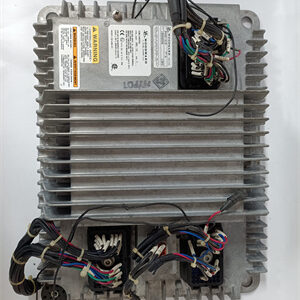
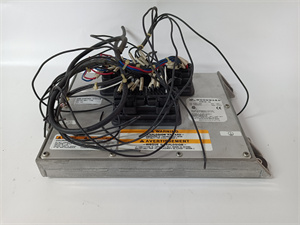
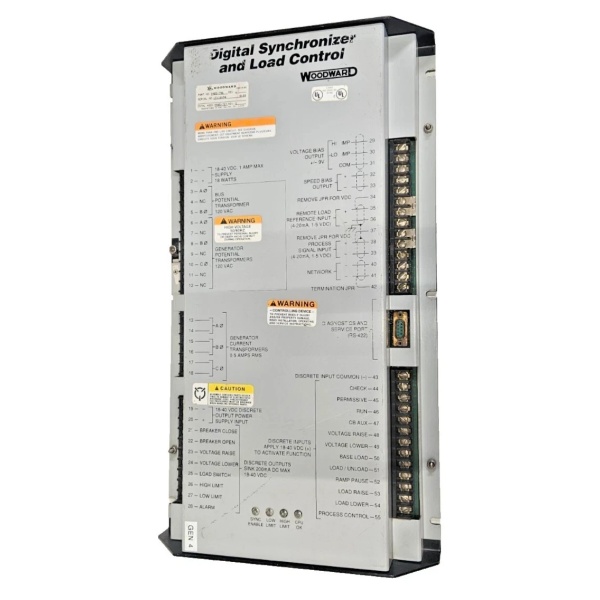
The Woodward 9905-795 is a 2301A series electronic load sharing and speed control module designed for industrial prime movers (e.g., diesel engines, gas turbines, steam turbines, generators). It serves as a core component in parallel power generation systems, enabling precise speed regulation and seamless load distribution across multiple generator sets.
As part of Woodward’s 2301A ecosystem, the 9905-795 is optimized for standard industrial environments (e.g., power plants, marine vessels, industrial facilities) where stable power output and efficient load management are critical. It shares the 2301A platform’s reputation for reliability but is distinguished by its enhanced actuator compatibility (supporting newer Woodward proportional actuators) and focus on baseline performance for common applications.
The 9905-795’s primary role is to maintain constant speed (isochronous mode) or adjust speed based on load (droop mode) while distributing electrical load evenly across paralleled generators—ensuring grid compliance, reducing equipment wear, and optimizing energy transfer.
Key Technical Specifications
Insights from Woodward 2301A series documentation and industrial supplier listings reveal the following parameters for the 9905-795:
-
Input Voltage: 20–40 Vdc (nominal 24 Vdc) – optimized for standard 24 Vdc industrial power systems.
-
Control Modes:
-
Isochronous Mode: Maintains constant prime mover speed (±0.1% tolerance) for standalone/isolated bus operation.
-
Droop Mode: Adjusts speed based on load (adjustable droop percentage, 0–10%) for parallel operation with other generators.
-
-
Actuator Compatibility: Works with Woodward proportional actuators (e.g., EG-3P, EG-6P, PG-PL, and newer EPG series) for fuel/steam valve positioning.
-
Operating Temperature: -25°C to +60°C (-13°F to +140°F) – suitable for indoor industrial environments.
-
Certifications: CE, UL, CSA – compliant with international industrial safety standards.
-
Dimensions: Compact form factor (~280 mm × 210 mm × 90 mm) – fits standard industrial cabinets.
-
Weight: ~4.0 kg (8.8 lbs) – lightweight for easy handling during maintenance.
-
Output Signal: 0–200 mA (sink) – drives actuators for real-time fuel/steam flow adjustment.

Woodward 9905-796
Field Application & Problem Solved
In industrial power systems, unstable speed (load/grid fluctuations) and uneven load distribution (parallel generators) lead to:
-
Grid frequency deviations (penalties/equipment shutdowns).
-
Generator overload (reduced lifespan).
-
Inefficient energy transfer (higher fuel consumption).
The 9905-795 addresses these via:
-
Precision Speed Regulation: Uses phase-locked loop (PLL) algorithms to maintain speed within ±0.1% of the setpoint (isochronous mode), critical for grid frequency stability (e.g., 50/60 Hz compliance).
-
Automatic Load Sharing: Distributes load evenly across generators (±1% accuracy) in droop mode. Example: A marine vessel using 9905-795 reduced generator maintenance costs by 20% via balanced load distribution.
-
Flexible Mode Switching: Supports isochronous (standalone backup power) and droop (parallel grid-connected) modes for diverse operations.
Typical Applications:
-
Power Generation: Controlling steam/gas turbines in coal/gas-fired plants to stabilize grid frequency.
-
Marine Propulsion: Synchronizing shipboard generators for auxiliary power with load sharing.
-
Industrial Cogeneration: Balancing electrical/thermal loads in paper mills/refineries.
Installation & Maintenance Pitfalls (Expert Tips)
To ensure optimal performance of the 9905-795:
-
Verify Power Supply: Confirm input voltage (20–40 Vdc) with a multimeter; mismatched voltage damages internal circuitry.
-
Calibrate Speed Sensors: Use a precision tachometer to calibrate the prime mover’s magnetic pickup before installation (prevents speed deviations).
-
Test Load Sharing Logic: Post-installation, use a resistive load bank to verify even load distribution (±1% accuracy).
-
Annual Maintenance: Inspect for wear (cracked casings, loose connections) and clean connectors with isopropyl alcohol.
Woodward 9905-796
Technical Deep Dive & Overview
The 9905-795 operates on Woodward’s 2301A analog control platform (standard version, 24 Vdc-optimized):
-
Signal Reception: Accepts inputs from:
-
Speed sensor (magnetic pickup) monitoring prime mover shaft rotation.
-
Load sensor (current transformer) measuring generator output current.
-
Operator inputs (front-panel potentiometers) for speed setpoint/droop adjustment.
-
-
Processing & Control: Analog circuitry with PID algorithms calculates fuel/steam flow. Isochronous mode maintains constant speed; droop mode adjusts for load.
-
Output & Actuation: Sends 0–200 mA control signals to actuators (e.g., fuel valves) to regulate speed/load.
-
Monitoring: Tracks overspeed, low oil pressure, and faults—triggering alarms via relay outputs.
Distinction from Variants:
-
Enhanced actuator compatibility (supports newer EPG series) vs. older 2301A models (e.g., 9905-068).
-
Narrower operating temperature (-25°C to +60°C) vs. extended-temperature models (e.g., 9905-003-L: -50°C to +85°C) due to 24 Vdc power optimization.
Final Notes
The Woodward 9905-795 is a reliable standard-load-sharing-and-speed-control-module for industrial prime movers in standard environments. Its 24 Vdc input compatibility, precise control, and enhanced actuator support make it ideal for power generation, marine, and industrial applications.
-
Upgrade Consideration: For extreme temperatures, use 9905-003-L; for reverse-acting designs, use 9905-068C.
-
Maintenance: Follow Woodward’s 2301A Series Manual (Document # 2301A-OM-001) and consult certified technicians.