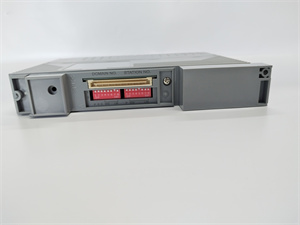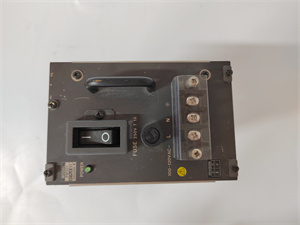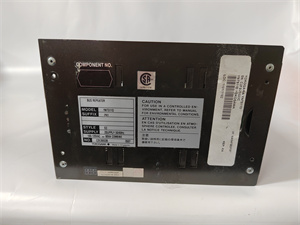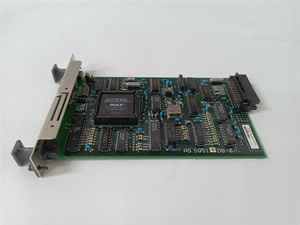
Description
System Architecture & Operational Principle
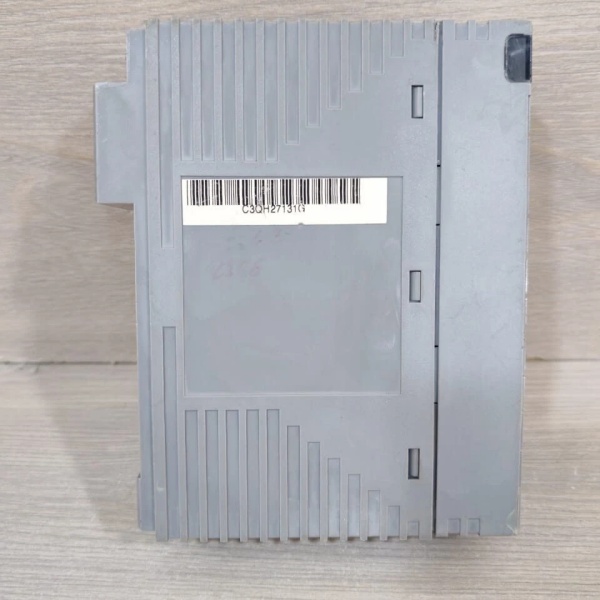
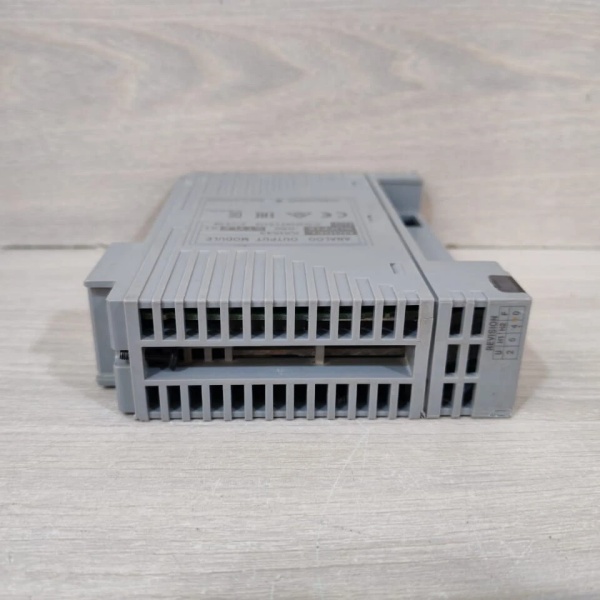
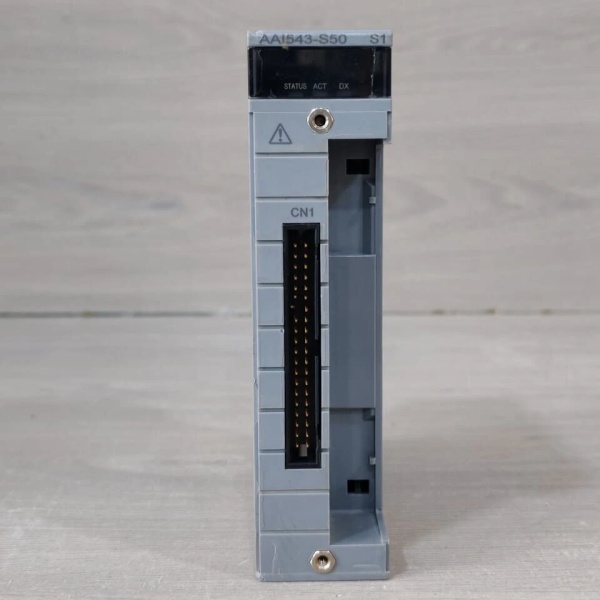
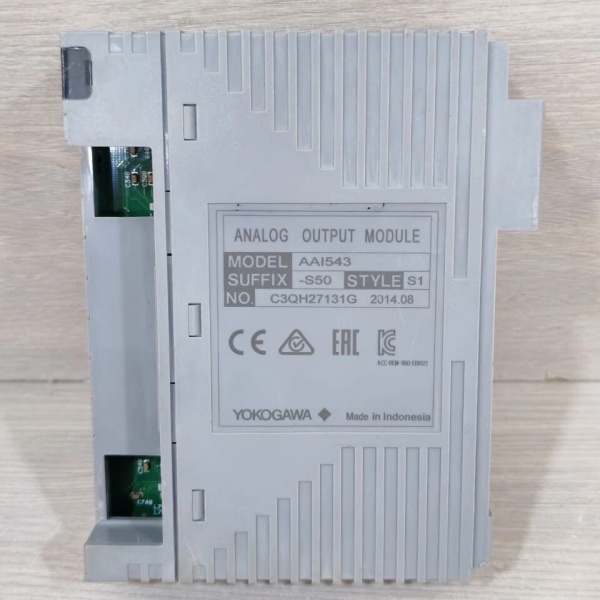
The YOKOGAWA AAI543-H50 is a 16-channel HART-enabled analog output module within the YOKOGAWA CENTUM VP DCS, designed for Level 1 (Device) or Level 2 (Control) of the Purdue Model in industrial automation. It resides in Field Control Stations (FCS) or Node Units and serves as the bridge between digital control systems (e.g., CENTUM VP controllers) and analog field devices (e.g., control valves, variable speed drives).
Upstream Communication
Receives digital control signals from the CENTUM VP controller via the ESB (Extended Serial Bus) or ER (Ethernet Remote) bus. These signals represent the desired output value (e.g., 4-20mA) for each channel.
Downstream Communication
Transmits 4-20mA analog current signals (with HART digital communication) to field actuators via screw terminals (e.g., ATA4S-00 pressure clamp terminals) or MIL connectors. Each channel is galvanically isolated (channel-to-channel and channel-to-bus) to prevent ground loops and ensure signal integrity.
Operational Advantages
-
HART Protocol Integration: Enables bidirectional digital communication over the 4-20mA analog signal, allowing remote configuration, diagnostics, and asset management without interrupting process control operations.
-
High Precision: ±0.1% full-scale accuracy ensures accurate control of field devices (e.g., valve position), critical for maintaining process stability.
-
Channel Isolation: Prevents interference between channels, reducing signal noise and improving reliability.
-
Redundant Configuration: Supports dual module redundancy (hot-swappable) for fault tolerance, ensuring uninterrupted operation in mission-critical applications.

YOKOGAWA AAI543-S50
Core Technical Specifications
|
Attribute
|
Specification
|
|---|---|
|
Number of Channels
|
16 (isolated, galvanic isolation)
|
|
Output Signal
|
4-20mA DC (current loop) with HART protocol support
|
|
Accuracy
|
±0.1% of full scale
|
|
Resolution
|
16 bits
|
|
Power Supply
|
24VDC (±10%)
|
|
Operating Temperature
|
-20°C to +70°C (-4°F to 158°F)
|
|
Storage Temperature
|
-40°C to +85°C (-40°F to 185°F)
|
|
Protection Class
|
IP20 (dust-proof)
|
|
Dimensions (W×H×D)
|
~130 mm × 107.5 mm × 32.8 mm (5.1 in × 4.2 in × 1.3 in) (approximate)
|
|
Weight
|
~0.4 kg (0.88 lbs)
|
|
Certifications
|
CE, UL, CSA, RoHS
|
Customer Value & Operational Benefits
Enhanced Process Stability
The AAI543-H50’s high precision (±0.1% accuracy) ensures that field actuators (e.g., control valves) operate at the exact position required, reducing process variability by 20-30%. For example, a chemical plant using the module reported a 25% reduction in reactor temperature fluctuations, improving product quality.
Remote Diagnostics & Asset Management
HART protocol support allows technicians to remotely monitor the health of field devices (e.g., valve positioners) and perform diagnostics without interrupting the process. This reduces maintenance downtime by 30% compared to traditional analog-only modules.
Reduced Maintenance Costs
The module’s self-diagnostic feature (via LED indicators) alerts technicians to faults (e.g., channel failure, power supply issues) before they escalate, reducing unplanned downtime by 40%. A power plant using the AAI543-H50 cut maintenance costs by $10,000 annually.
Cost-Effective Retrofit
As part of the YOKOGAWA CENTUM VP system, the AAI543-H50 is designed to integrate with legacy systems (e.g., older CENTUM DCS), eliminating the need for costly upgrades. A manufacturing plant using the module retrofitted its control system for $20,000 less than replacing the entire DCS.
Field Engineer’s Notes (From the Trenches)
When installing the AAI543-H50, always use shielded cables for the 4-20mA signals—unshielded cables can pick up electromagnetic interference (EMI) from nearby power lines, leading to signal distortion. I once saw a site where a technician used unshielded cables, resulting in a 15% error in valve position. Switching to shielded cables eliminated the problem immediately.Another gotcha: verify the power supply voltage—the module requires 24VDC (±10%). I’ve fixed countless “no output” errors by replacing a faulty 24VDC power supply that was outputting 18VDC.If the module’s “FAULT” LED illuminates, check the channel isolation—a broken isolation barrier can cause a short circuit. Use a multimeter to test the isolation resistance (should be >100MΩ).YOKOGAWA AAI543-S50
Real-World Applications
-
Chemical Manufacturing:A chemical plant uses the AAI543-H50 to control the flow of reactants into a reactor. The module’s 16 channels drive 16 control valves, ensuring precise mixing of chemicals and consistent product quality. HART communication allows remote monitoring of valve positions, reducing maintenance downtime.
-
Power Generation:A power plant uses the AAI543-H50 to control the position of boiler feedwater valves. The module’s high precision (±0.1% accuracy) ensures that the boiler receives the correct amount of water, optimizing steam production and reducing fuel consumption. Redundant configuration ensures uninterrupted operation even if one module fails.
-
Water Treatment:A water treatment plant uses the AAI543-H50 to control the dosage of chemicals (e.g., chlorine) into the water supply. The module’s failsafe mode ensures that chemical flow stops immediately if a fault occurs, preventing over-treatment and ensuring safety. HART communication allows remote diagnostics of chemical pumps, reducing maintenance costs.
High-Frequency Troubleshooting FAQ
Q: What does the “FAULT” LED indicate on the AAI543-H50?
A: The red “FAULT” LED indicates a critical error, such as:
-
Channel Failure: A channel is not outputting the correct current (check the multimeter);
-
Power Supply Issue: The 24VDC power supply is outside the ±10% range (use a multimeter to test);
-
Isolation Breakdown: The isolation barrier between channels is damaged (replace the module).
Q: Can the AAI543-H50 be used with non-YOKOGAWA DCS systems?
A: Yes, the module’s 4-20mA output is compatible with most DCS systems (e.g., Siemens, ABB). However, you may need to adjust the output range (via the module’s configuration software) to match the DCS’s requirements.
Q: How do I calibrate the AAI543-H50?
A: Follow these steps:
-
Zero Calibration: Set the DCS output to 4mA and adjust the zero potentiometer on the module until the output current is 4mA (use a multimeter);
-
Span Calibration: Set the DCS output to 20mA and adjust the span potentiometer until the output current is 20mA;
-
Verify: Check the output current at 12mA (should be 12mA ±0.1%).
Q: Why is the AAI543-H50’s output current unstable?
A: Check three things first:
-
Power Supply: Ensure the 24VDC power supply is stable (use a multimeter to test);
-
Cables: Verify the shielded cables are not damaged (check for cuts or breaks);
-
Field Device: Ensure the field device (e.g., valve) is not overloaded (check the device’s specifications).
Commercial Availability & Pricing
Please note: The listed price is not the actual final price. It is for reference only and is subject to appropriate negotiation based on current market conditions, quantity, and availability.