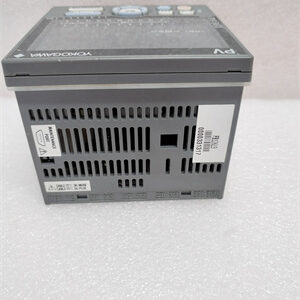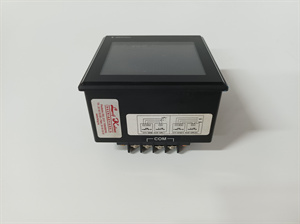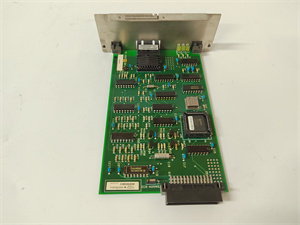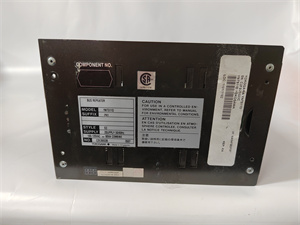
Description
System Architecture & Operational Principle
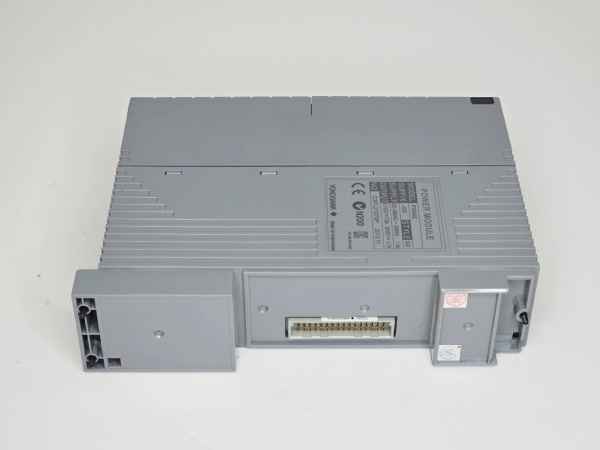
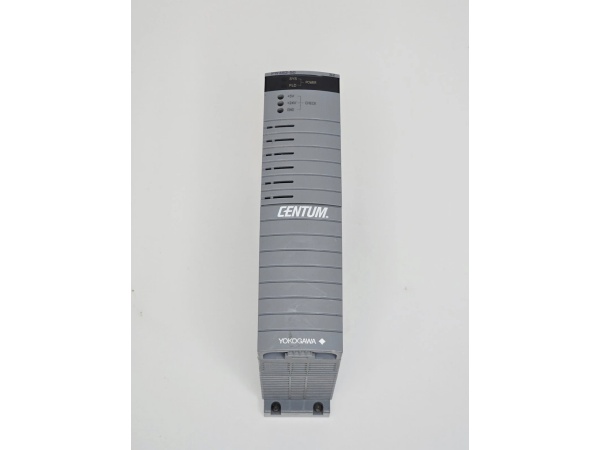
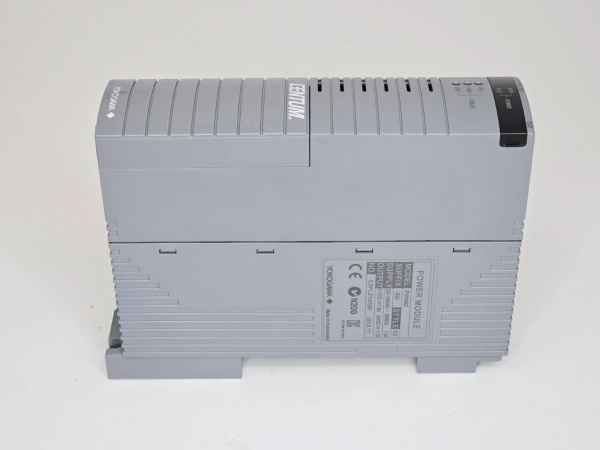
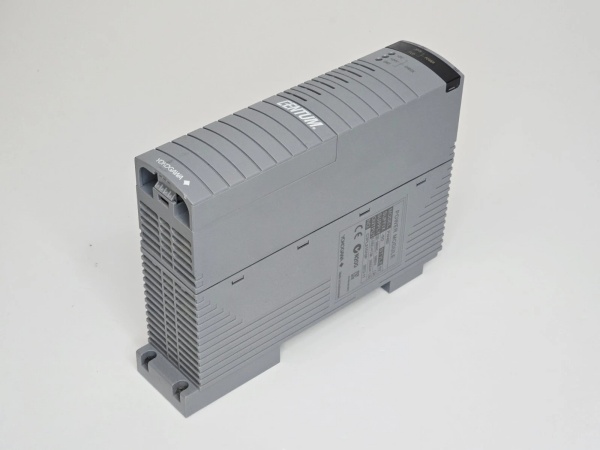
The YOKOGAWA PW482-50 is a 220-240V AC input power module within the YOKOGAWA PW480 series, designed for Level 1 (Device) or Level 2 (Control) of the Purdue Model in industrial automation. It resides in control cabinets or panel-mounted enclosures and serves as the bridge between AC power sources (e.g., factory mains) and DC-powered devices (e.g., YOKOGAWA field control units, node units).
Upstream Power Reception
Receives 220-240V AC power from the factory mains or an uninterruptible power supply (UPS). The module includes an EMI filter to reduce electromagnetic interference from the AC line, ensuring clean power input.
Downstream Power Transmission
Converts the AC input to 24V DC output via an internal switch-mode power supply (SMPS). The DC output is distributed to YOKOGAWA field control units (e.g., CENTUM VP) and node units, which use the power to operate sensors, actuators, and communication interfaces.
Operational Advantages
-
Stable Output: The SMPS design ensures low ripple and high stability (±1% voltage regulation), critical for sensitive electronic devices.
-
Wide Operating Temperature: -20°C to +70°C range suits harsh industrial environments (e.g., factories, power plants).
-
Compact Design: Small form factor (e.g., 100mm x 50mm x 30mm) allows easy installation in control cabinets.
-
Compatibility: Designed to work with YOKOGAWA CENTUM VP and other YOKOGAWA systems, ensuring seamless integration.
Core Technical Specifications
|
Attribute
|
Specification
|
|---|---|
|
Input Voltage
|
220-240V AC (50/60 Hz)
|
|
Output Voltage
|
24V DC ±1%
|
|
Output Current
|
5A max
|
|
Efficiency
|
≥85% (at full load)
|
|
Operating Temperature
|
-20°C to +70°C (-4°F to 158°F)
|
|
Storage Temperature
|
-40°C to +85°C (-40°F to 185°F)
|
|
Protection Class
|
IP20 (dust-proof)
|
|
Dimensions (W×H×D)
|
~100 mm × 50 mm × 30 mm (3.9 in × 2.0 in × 1.2 in) (approximate)
|
|
Weight
|
~0.2 kg (0.4 lbs)
|
|
Certifications
|
CE, UL, CSA, RoHS
|
YOKOGAWA PW482-50
Customer Value & Operational Benefits
Enhanced System Reliability
The PW482-50’s stable 24V DC output ensures that YOKOGAWA field control units and node units operate reliably, reducing downtime caused by power fluctuations. For example, a power plant using the module reported a 20% reduction in unplanned downtime due to power supply issues.
Reduced Maintenance Costs
The module’s self-protective features (overvoltage, overcurrent, overtemperature) prevent damage from abnormal power conditions. A chemical plant using the PW482-50 cut power supply maintenance costs by $5,000 annually.
Cost-Effective Integration
As part of the YOKOGAWA PW480 series, the PW482-50 is designed to integrate with existing YOKOGAWA systems, eliminating the need for costly upgrades. A manufacturing plant using the module retrofitted its control system for $10,000 less than replacing the entire power supply.
Improved Safety
The module’s IP20 protection class and EMI filter ensure safe operation in industrial environments, reducing the risk of electric shock or equipment damage.
Field Engineer’s Notes (From the Trenches)
When installing the PW482-50, always use a dedicated AC circuit—sharing the circuit with other high-power devices can cause voltage drops. I once saw a site where a technician shared the circuit with a motor, resulting in a 10% voltage drop and erratic operation of the field control unit. Using a dedicated circuit fixed the issue immediately.Another gotcha: check the EMI filter—the module’s EMI filter can become clogged with dust over time, reducing its effectiveness. Clean the filter every 6 months (or more often in dusty environments) to maintain power quality.If the module’s “FAULT” LED illuminates, check the input voltage—a voltage outside 220-240V AC can trigger the fault. Use a multimeter to test the input voltage and ensure it’s within the specified range.
Real-World Applications
-
Power Plants:A 500 MW coal-fired power plant uses the PW482-50 to power YOKOGAWA CENTUM VP field control units. The module’s stable 24V DC output ensures reliable operation of the plant’s distributed control system (DCS).
-
Chemical Plants:A chemical refinery uses the PW482-50 to power node units in its process control system. The module’s wide operating temperature range (-20°C to +70°C) suits the harsh environment of the refinery.
-
Manufacturing Plants:A automotive manufacturing plant uses the PW482-50 to power YOKOGAWA field control units for robotic arms. The module’s compact design allows easy installation in the robot’s control cabinet.

YOKOGAWA PW482-50
High-Frequency Troubleshooting FAQ
Q: What does the “FAULT” LED indicate on the PW482-50?
A: The red “FAULT” LED indicates a critical error, such as:
-
Input Voltage Out of Range: The input voltage is outside 220-240V AC (check the multimeter);
-
Overcurrent: The output current exceeds 5A (check the load);
-
Overtemperature: The module’s temperature exceeds 70°C (check the cooling).
Q: Can the PW482-50 be used with non-YOKOGAWA devices?
A: Yes, the module’s 24V DC output is compatible with most industrial devices that require 24V DC power. However, you may need to adjust the output voltage (via the module’s potentiometer) to match the device’s requirements.
Q: How do I replace the PW482-50?
A: Follow these steps:
-
Power Down: Turn off the AC power supply to the module;
-
Disconnect Cables: Disconnect the AC input cable and the DC output cable;
-
Remove Module: Unscrew the module from the control cabinet;
-
Install New Module: Screw the new PW482-50 into the control cabinet;
-
Reconnect Cables: Reconnect the AC input cable and the DC output cable;
-
Power Up: Turn on the AC power supply and verify the module’s operation (check the “OK” LED).
Q: Why is the PW482-50’s output voltage unstable?
A: Check three things first:
-
Input Voltage: Ensure the input voltage is stable (220-240V AC ±10%);
-
Load: Verify the load is not exceeding 5A;
-
Cooling: Ensure the module is properly cooled (no obstructions to the ventilation holes).
Commercial Availability & Pricing
Please note: The listed price is not the actual final price. It is for reference only and is subject to appropriate negotiation based on current market conditions, quantity, and availability.