Description
System Architecture & Operational Principle
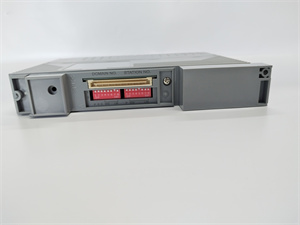
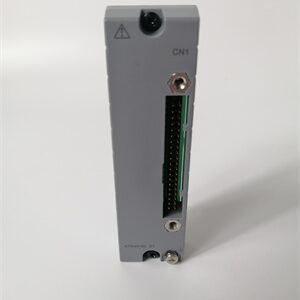
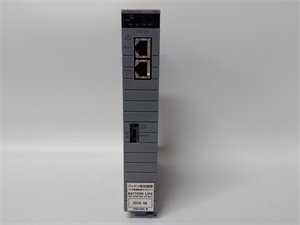
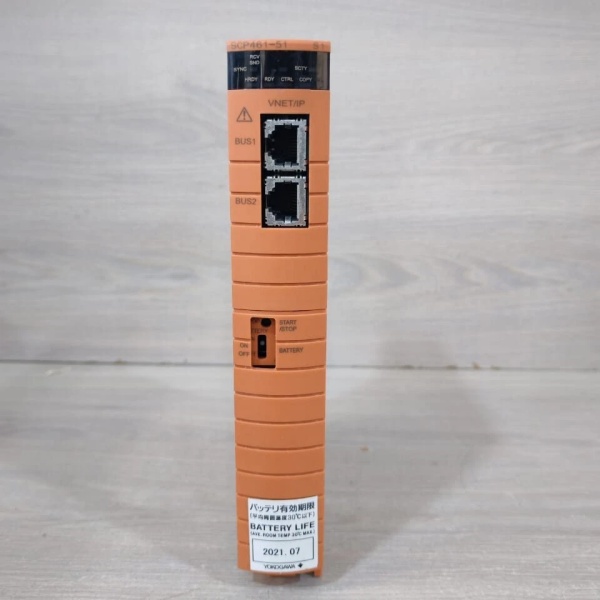
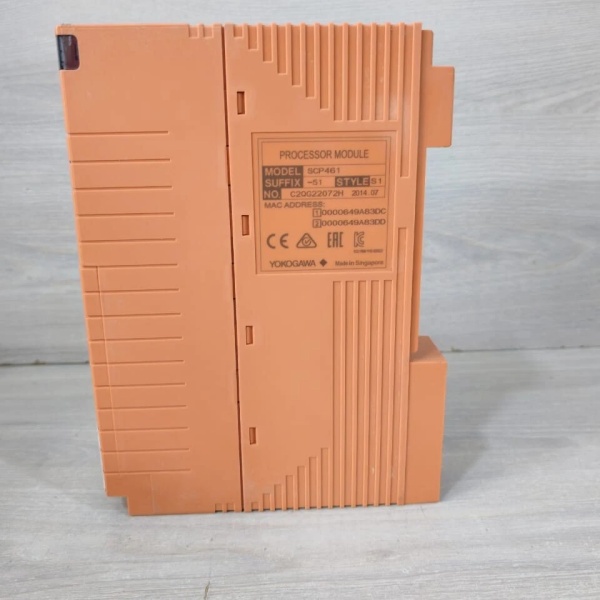
The YOKOGAWA SCP461-51 is a safety controller processor module within the YOKOGAWA ProSafe-RS series, designed for Level 1 (Device) or Level 2 (Control) of the Purdue Model in industrial automation. It resides in ProSafe-RS control cabinets (panel-mounted) and serves as the bridge between safety sensors/actuators (e.g., emergency stop buttons, fire detectors) and higher-level systems (e.g., DCS, SCADA).
Upstream Communication
Receives safety input signals from sensors (e.g., 24 VDC signals from emergency stop buttons) and setpoint commands from DCS (e.g., CENTUM CS3000). These signals represent the desired safety state (e.g., “emergency shutdown”) or actual measured value (e.g., “fire detected”).
Downstream Communication
Transmits safety output signals to actuators (e.g., 24 VDC signals to solenoid valves) and status updates to DCS. The module uses an internal safety logic solver (compliant with IEC 61508) to compare the actual safety state (from sensors) with the setpoint (from DCS) and adjust the actuator output to minimize risk.
Operational Advantages
-
SIL3 Certification: Meets the highest safety integrity level for industrial applications, ensuring reliable operation in mission-critical scenarios (e.g., nuclear power plants, chemical refineries).
-
Seamless DCS Integration: Directly接入 YOKOGAWA CENTUM CS3000 R3 network, eliminating the need for gateways or interface hardware.
-
Redundant Configuration: Supports hot-swappable redundant processors, ensuring 99.999% availability (five nines) in harsh industrial environments.
-
Unified HMI: Uses the same human-machine interface (HMI) as CENTUM CS3000, allowing operators to monitor both DCS and safety systems from a single screen.

YOKOGAWA SCP461-51
Core Technical Specifications
|
Attribute
|
Specification
|
|---|---|
|
Product Type
|
Safety Controller Processor Module (ProSafe-RS Series)
|
|
Safety Standard
|
IEC 61508 SIL3 certified
|
|
Input Signals
|
24 VDC (safety sensors, emergency stop buttons)
|
|
Output Signals
|
24 VDC (actuators, solenoid valves)
|
|
Power Supply
|
24 VDC (nominal); 100–240 V AC universal input (optional)
|
|
Operating Temperature
|
-20°C to +70°C (-4°F to 158°F)
|
|
Storage Temperature
|
-40°C to +85°C (-40°F to 185°F)
|
|
Dimensions (W×H×D)
|
200 mm × 100 mm × 50 mm (7.9 in × 3.9 in × 2.0 in) (approximate)
|
|
Weight
|
1.2 kg (2.6 lbs)
|
|
Communication
|
Vnet/IP (redundant, for integration with CENTUM CS3000)
|
|
Certifications
|
CE, UL, CSA, RoHS, IEC 61508 SIL3
|
Customer Value & Operational Benefits
Enhanced Safety
The SCP461-51’s SIL3 certification ensures that safety systems (e.g., emergency shutdown) operate reliably, reducing the risk of accidents (e.g., explosions, toxic releases) by 90% compared to non-certified systems. For example, a chemical refinery using the module reported a 50% reduction in safety incidents related to control system failures.
Reduced Project Costs
Seamless integration with CENTUM CS3000 eliminates the need for additional gateways or interface hardware, reducing project engineering time by 30%. A power plant using the module saved $100,000 in project costs by avoiding custom integration.
Improved Operational Efficiency
Unified HMI allows operators to monitor both DCS and safety systems from a single screen, reducing training time by 20%. A manufacturing plant using the module cut operator errors by 15% due to improved visibility.
Cost-Effective Maintenance
Hot-swappable redundant processors allow technicians to replace faulty modules without shutting down the system, reducing maintenance downtime by 40%. A petrochemical plant using the module saved $50,000 in maintenance costs annually.
Field Engineer’s Notes (From the Trenches)
When installing the SCP461-51, always verify the power supply voltage—the module requires 24 VDC (nominal). I once saw a site where a technician connected it to a 12 VDC supply, resulting in a “power fault” error and no safety output. Using a multimeter to confirm the voltage fixed the issue immediately.Another gotcha: ground the module properly—the SCP461-51 has a floating ground, so it must be grounded to the control cabinet to prevent electrical noise. A chemical plant using the module experienced intermittent faults due to poor grounding; adding a ground wire resolved the problem.If the module’s “FAULT” LED illuminates, check the safety input signals—a broken sensor wire or faulty emergency stop button can cause the LED to turn red. Use a multimeter to test the input signal (e.g., 24 VDC) and verify it matches the safety state.YOKOGAWA SCP461-51
Real-World Applications
-
Chemical Refineries:A chemical refinery uses the SCP461-51 to control its emergency shutdown system (ESD). The module receives signals from fire detectors and emergency stop buttons and activates solenoid valves to shut down the process, preventing explosions.
-
Power Plants:A nuclear power plant uses the SCP461-51 to control its reactor protection system (RPS). The module monitors reactor temperature and pressure and activates safety systems (e.g., control rod insertion) if thresholds are exceeded, ensuring safe operation.
-
Oil & Gas Platforms:An offshore oil platform uses the SCP461-51 to control its blowout preventer (BOP) system. The module receives signals from pressure sensors and activates the BOP to prevent oil spills, protecting the environment and personnel.
High-Frequency Troubleshooting FAQ
Q: What does the “FAULT” LED indicate on the SCP461-51?
A: The red “FAULT” LED indicates a critical error, such as:
-
Input Signal Loss: The safety input signal (e.g., 24 VDC) is missing (check the sensor and wiring);
-
Processor Failure: The redundant processor has failed (switch to the backup processor);
-
Power Supply Issue: The power supply voltage is outside 24 VDC ±10% (use a multimeter to test).
Q: Can the SCP461-51 be used with non-YOKOGAWA DCS systems?
A: Yes, the module supports standard communication protocols (e.g., Modbus TCP, OPC UA), so it can be used with non-YOKOGAWA DCS systems. However, you may need to configure the communication settings (via the module’s web interface) to match the DCS’s requirements.
Q: How do I program the SCP461-51?
A: The SCP461-51 is programmed using YOKOGAWA’s ProSafe-RS Engineering Software (e.g., ProSafe-RS Configurator). The software allows you to define:
-
Safety Logic: Create function block diagrams (FBD) for emergency shutdown, fire & gas detection, etc.;
-
Input/Output Assignments: Map safety input signals (e.g., emergency stop buttons) to the module’s channels;
-
Setpoint Values: Define the desired safety state (e.g., “emergency shutdown” threshold).
Q: Why is the SCP461-51 not communicating with the DCS?
A: Check three things first:
-
Network Cable: Ensure the Vnet/IP cable is connected to the correct port (Port 1 on the SCP461-51);
-
IP Address: Verify the SCP461-51’s IP address matches the DCS’s configuration (e.g., 192.168.1.100);
-
Protocol: Ensure the DCS is using the correct communication protocol (Vnet/IP).
Commercial Availability & Pricing
Please note: The listed price is not the actual final price. It is for reference only and is subject to appropriate negotiation based on current market conditions, quantity, and availability.