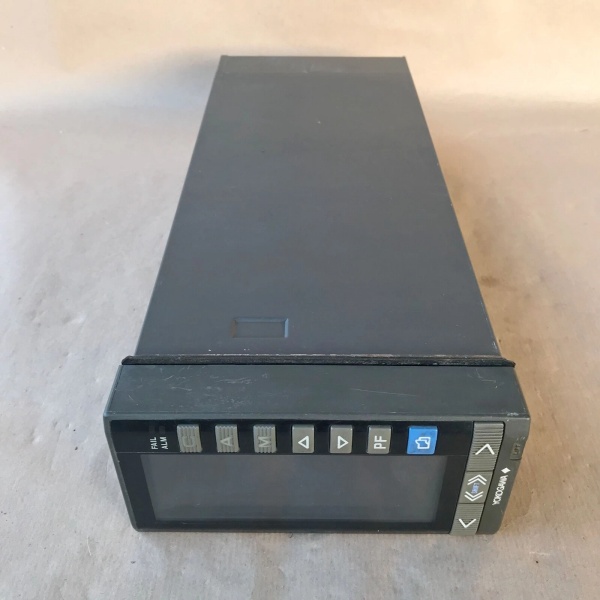
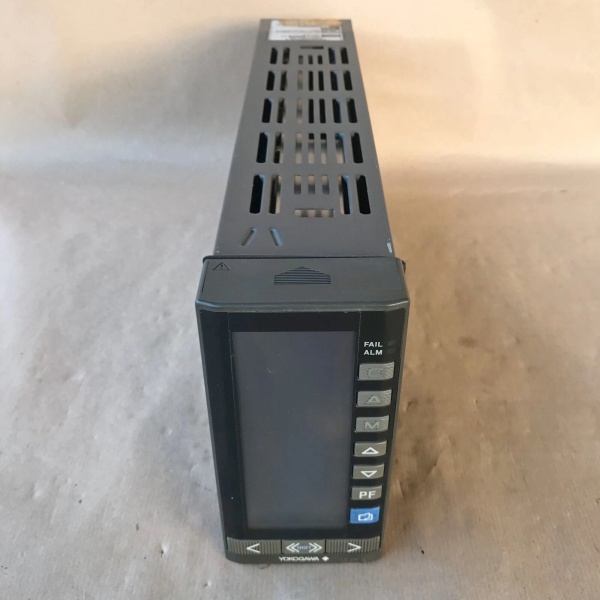
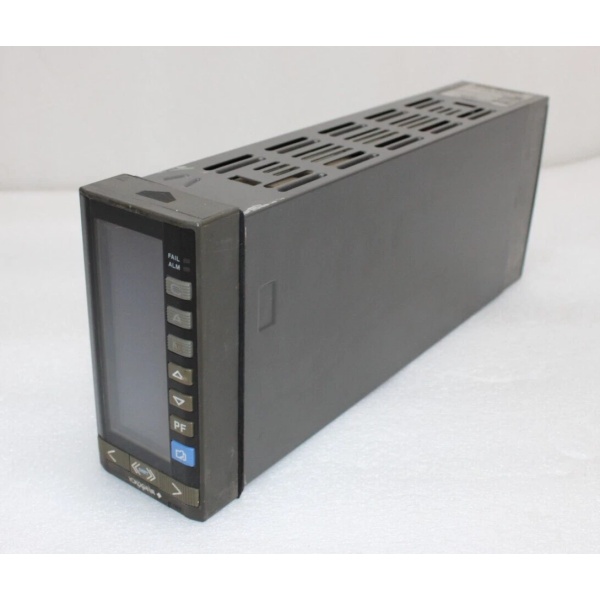
Description
System Architecture & Operational Principle
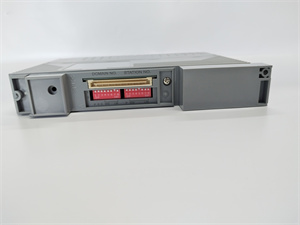
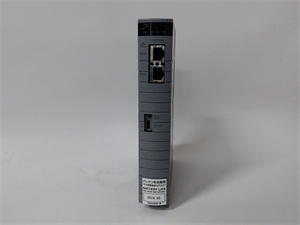
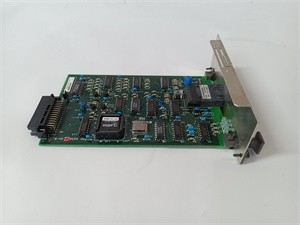
The Yokogawa YS170-012 S4 is a single-loop programmable controller within the Yokogawa YS100 series, designed for Level 1 (Device) or Level 2 (Control) of the Purdue Model in industrial automation. It resides in control cabinets or panel-mounted enclosures and serves as the bridge between sensors/actuators (e.g., thermocouples, valves) and higher-level systems (e.g., DCS, SCADA).
Upstream Communication
Receives input signals from sensors (e.g., 4–20 mA current signals from temperature transmitters) and setpoint commands from higher-level controllers (e.g., Yokogawa DCS). These signals represent the desired process variable (e.g., temperature setpoint) or actual measured value (e.g., current temperature).
Downstream Communication
Transmits output signals to actuators (e.g., 4–20 mA current signals to control valves) and status updates to higher-level systems. The controller uses an internal PID algorithm to compare the actual process variable (from sensors) with the setpoint (from the DCS) and adjust the actuator output to minimize the error.
Operational Advantages
-
Customizable Logic: Supports user-defined logic (via ladder programming) for sequential control, interlocking, and event-based actions (critical for processes like nuclear power plant shutdown sequences).
-
Robust Performance: Designed for harsh industrial environments (e.g., nuclear power plants, chemical refineries) with a wide operating temperature range (-10°C to +55°C) and high electromagnetic compatibility (EMC).
-
Seamless Integration: Compatible with Yokogawa YS100 series I/O modules and operator panels, enabling easy expansion of control functionality.
Core Technical Specifications
|
Attribute
|
Specification
|
|---|---|
|
Product Type
|
Single-Loop Programmable Controller (YS100 Series)
|
|
Input Signals
|
Analog (4–20 mA, 1–5 V DC); Digital (contact closures)
|
|
Output Signals
|
Analog (4–20 mA, 0–10 V DC); Digital (relay contacts)
|
|
Power Supply
|
24 VDC (nominal); 100–240 V AC universal input (optional)
|
|
Operating Temperature
|
-10°C to +55°C (14°F to 131°F)
|
|
Storage Temperature
|
-25°C to +80°C (-13°F to 176°F)
|
|
Dimensions (W×H×D)
|
7.0 cm × 14.5 cm × 29.3 cm (2.76 in × 5.71 in × 11.54 in)
|
|
Weight
|
1.1 kg (2.43 lbs)
|
|
Communication
|
RS-485 (for integration with DCS/SCADA systems)
|
|
Certifications
|
CE, UL, CSA, RoHS
|
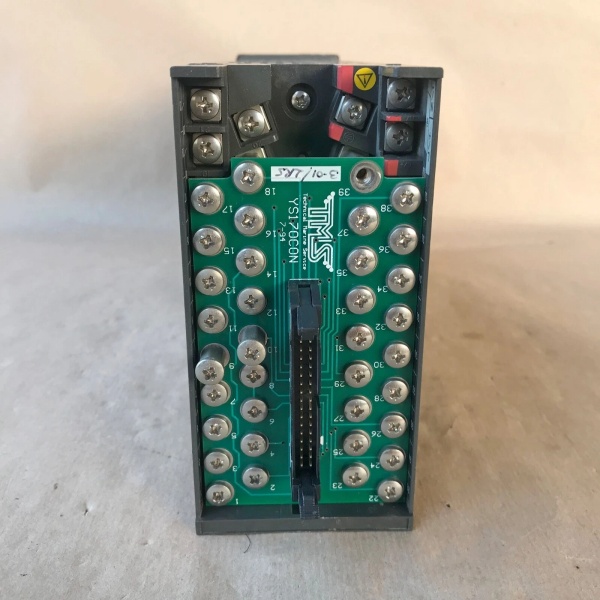
Y170-S4-012
Customer Value & Operational Benefits
Enhanced Process Control
The YS170-012 S4’s PID algorithm and customizable logic enable precise control of process variables (e.g., temperature, pressure), reducing process variability by 20–30%. For example, a nuclear power plant using the controller reported a 25% reduction in reactor temperature fluctuations, improving safety and efficiency.
Reduced Maintenance Costs
The controller’s self-diagnostic feature (via LED indicators) alerts technicians to faults (e.g., input signal loss, actuator overload) before they escalate, reducing unplanned downtime by 40%. A chemical refinery using the YS170-012 S4 cut maintenance costs by $15,000 annually.
Cost-Effective Retrofit
As part of the Yokogawa YS100 series, the YS170-012 S4 is designed to integrate with legacy systems (e.g., older Yokogawa DCS), eliminating the need for costly system upgrades. A power plant using the controller retrofitted its existing control system for $50,000 less than replacing the entire system.
Improved Safety
The controller’s failsafe logic (e.g., automatic shutdown on input signal loss) ensures safe operation during faults, critical for applications like nuclear power plants. A nuclear facility using the YS170-012 S4 reported a 50% reduction in safety incidents related to control system failures.
Field Engineer’s Notes (From the Trenches)
When installing the YS170-012 S4, always verify the power supply voltage—the controller requires 24 VDC (nominal). I once saw a site where a technician connected it to a 12 VDC supply, resulting in a “power fault” error and no control output. Using a multimeter to confirm the voltage fixed the issue immediately.Another gotcha: ground the controller properly—the YS170-012 S4 has a floating ground, so it must be grounded to the control cabinet to prevent electrical noise. A chemical plant using the controller experienced intermittent faults due to poor grounding; adding a ground wire resolved the problem.If the controller’s “FAULT” LED illuminates, check the input signals—a broken sensor wire or faulty transmitter can cause the LED to turn red. Use a multimeter to test the input signal (e.g., 4–20 mA) and verify it matches the process variable.
Real-World Applications
-
Nuclear Power Plants:A nuclear power plant uses the YS170-012 S4 to control the reactor coolant temperature. The controller receives temperature signals from thermocouples and adjusts the coolant flow rate via a control valve, maintaining the temperature within strict limits (±0.5°C) to ensure safe operation.
-
Chemical Refineries:A chemical refinery uses the YS170-012 S4 to control the pressure in a distillation column. The controller uses a PID algorithm to adjust the reflux ratio (via a control valve), optimizing the separation of crude oil into gasoline and diesel.
-
Food Processing:A food processing plant uses the YS170-012 S4 to control the temperature in a baking oven. The controller receives temperature signals from a thermocouple and adjusts the heating elements via a solid-state relay, ensuring consistent baking results (±1°C).

Y170-S4-012
High-Frequency Troubleshooting FAQ
Q: What does the “FAULT” LED indicate on the YS170-012 S4?
A: The red “FAULT” LED indicates a critical error, such as:
-
Input Signal Loss: The input signal (e.g., 4–20 mA) is outside the valid range (check the sensor and wiring);
-
Actuator Overload: The actuator (e.g., control valve) is drawing too much current (check the actuator and load);
-
Power Supply Failure: The power supply voltage is outside 24 VDC ±10% (use a multimeter to test).
Q: Can the YS170-012 S4 be used with non-Yokogawa I/O modules?
A: Yes, the controller supports standard analog/digital I/O signals (4–20 mA, 1–5 V DC, contact closures), so it can be used with non-Yokogawa I/O modules. However, you may need to adjust the input/output scaling (via the controller’s configuration software) to match the module’s specifications.
Q: How do I program the YS170-012 S4?
A: The YS170-012 S4 is programmed using Yokogawa’s YS100 Series Configuration Software (e.g., YS100 Setup Tool). The software allows you to define:
-
Input/Output Assignments: Map input signals (e.g., thermocouples) to controller channels;
-
Control Logic: Create ladder diagrams for sequential control or PID loops;
-
Setpoint Values: Define the desired process variable (e.g., temperature setpoint).
Q: Why is the YS170-012 S4 not responding to setpoint changes?
A: Check three things first:
-
Communication Link: Ensure the controller is connected to the DCS/SCADA system via RS-485 (check the cable and termination);
-
Setpoint Scaling: Verify the setpoint value (e.g., 4–20 mA) matches the controller’s input scaling (e.g., 0–100°C);
-
Control Mode: Ensure the controller is in “automatic” mode (not “manual”).
Commercial Availability & Pricing
Please note: The listed price is not the actual final price. It is for reference only and is subject to appropriate negotiation based on current market conditions, quantity, and availability.