Description
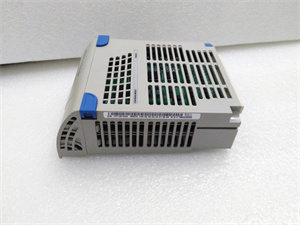
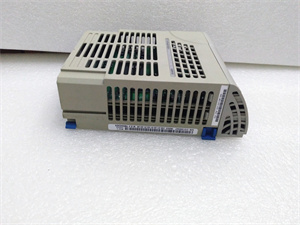
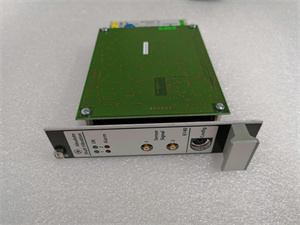
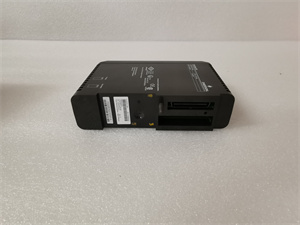
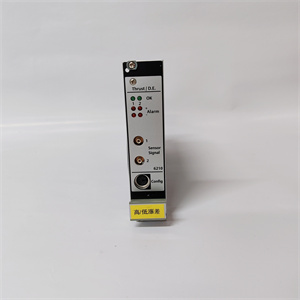
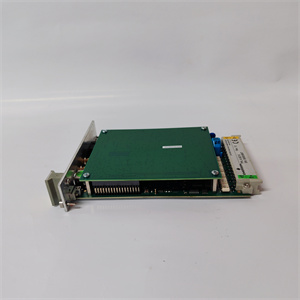
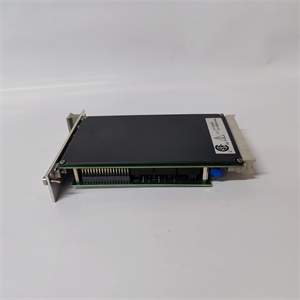
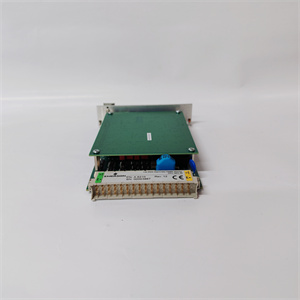
Emerson A6210 Thrust Position, Differential Expansion, and Rod Position Monitor
The Emerson A6210 is a high-performance monitoring module designed for critical industrial applications, including power generation, oil & gas, and manufacturing. It integrates three core functions into a single unit: thrust position monitoring, differential expansion tracking, and rod position detection, ensuring real-time equipment health assessment and safety.
Core Functions and Applications
-
Thrust Position Monitoring:
- Tracks axial shaft displacement in turbomachinery (e.g., turbines, compressors) to prevent rotor-to-case contact.
- Resolves movements as small as ±0.001 mm, using eddy current sensors to detect sudden shifts that could lead to catastrophic failures.
-
Differential Expansion Monitoring:
- Measures thermal growth differences between turbine casings and rotors during start-up/shutdown cycles.
- Supports tandem/complementary or cone/ramp modes to adapt to varying temperature fluctuations in power plants and industrial facilities.
-
Rod Position Monitoring:
- Detects piston rod wear in reciprocating compressors by monitoring rider band movement.
- Enables predictive maintenance by alerting operators to early-stage wear, reducing unplanned downtime.
Technical Specifications
| Parameter | Value |
|---|---|
| Input Type | Eddy current differential |
| Channels | 2 independent |
| Sensor Compatibility | Emerson 6422, 6423, 6424, 6425 |
| Voltage Range | 24 VDC ±10% |
| Measuring Frequency | 0–8 Hz (10 Hz, -3 dB) |
| Isolation | Galvanic separation from power supply |
| Response Time | <40 ms for thrust position |
| Environmental Rating | IP20 (front panel), IP00 (module) |
| Operating Temperature | 0°C to 65°C |
| Dimensions | 16 cm × 16 cm × 12 cm |
| Weight | 0.8 kg |
EMERSON A6210
Key Features
-
Multi-Mode Flexibility:
- Combines three critical monitoring functions in one module, reducing hardware complexity and installation costs.
- Supports API 670 compliance for machinery protection in high-risk environments.
-
Reliability and Safety:
- Dual-channel redundancy with voting logic for SIL 3-rated safety systems.
- Real-time self-diagnostics for hardware health, power supply, and sensor integrity via front-panel LEDs.
-
Ease of Integration:
- Hot-swappable design allows maintenance without system downtime.
- Seamless compatibility with Emerson’s AMS 6500 Machinery Health Monitor, DeltaV™, and Ovation™ DCS systems via MODBUS or OPC-UA.
-
Advanced Signal Processing:
- PeakVue Technology enhances detection of early-stage bearing defects and impacts in noisy environments.
- Built-in linearization algorithms optimize sensor accuracy post-installation.
Industry Applications
-
Power Generation:
Monitors turbine thrust bearings and differential expansion in coal/gas-fired plants to prevent rotor-stator collisions. -
Oil & Gas:
Detects rod wear in reciprocating compressors and ensures safe operation of turbomachinery in offshore platforms. -
Manufacturing:
Tracks piston rod position in injection molding machines and presses to avoid equipment damage.
Competitor Comparison
The A6210 outperforms alternatives like Bently Nevada 3300 XL and Siemens SITRANS V in:
- Multi-Functionality: Combines thrust, expansion, and rod monitoring in a single module.
- Temperature Range: Operates reliably at 0–65°C, compared to 0–50°C for some competitors.
- Integration: Native compatibility with Emerson’s AMS 6500 system reduces engineering effort.

EMERSON A6210
Selection and Maintenance
- System Compatibility: Verify compatibility with AMS 6500 controller versions and existing sensor infrastructure.
- Environmental Conditions: Ensure IP20 rating and 0–65°C temperature range suit the installation environment.
- Redundancy Needs: For SIL 3 applications, consider the A6250 triple-redundant module.
- Calibration: Perform periodic calibration using Emerson’s AMS Machinery Manager software.
Supplier Information
Shanxi Xinyeda International Trade Co., Ltd. is a trusted provider of Emerson A6210 modules and industrial automation spare parts. For sales and technical support, visit www.xydcontrol.com or contact their team directly.