Description
System Architecture & Operational Principle
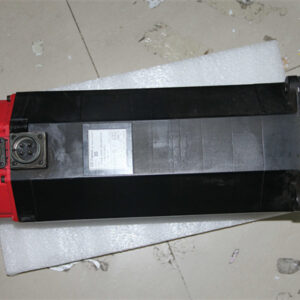
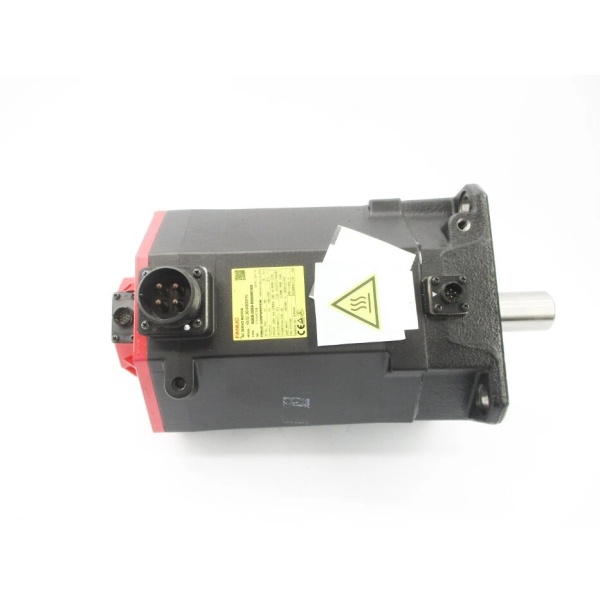
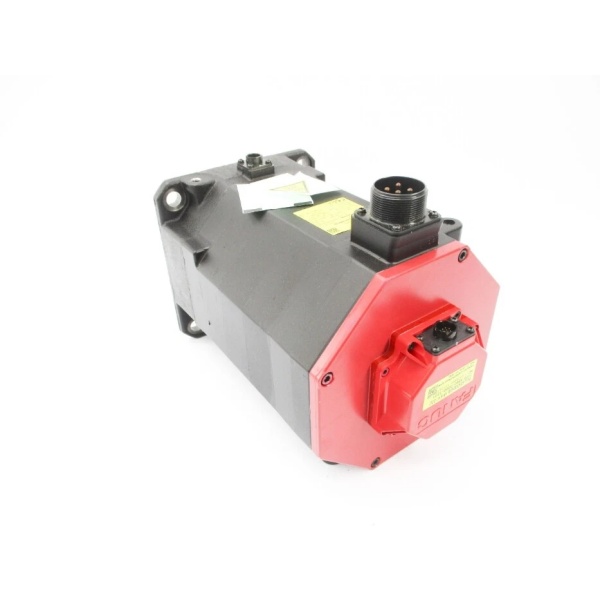
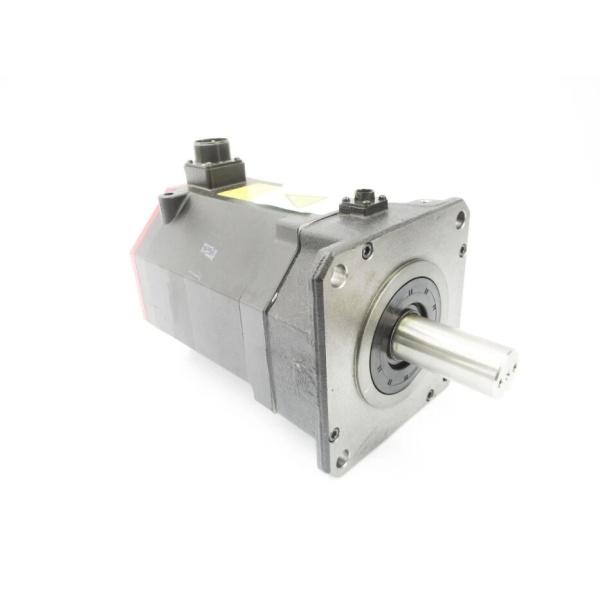
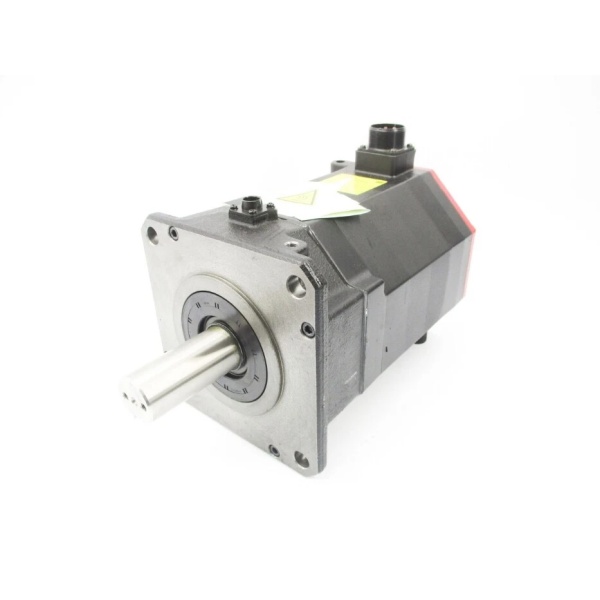
The Fanuc A06B-0269-B500 is a 5.5kW AC servo motor within the Fanuc αi Series, designed for Level 1 (Device) or Level 2 (Control) of the Purdue Model in industrial automation. It resides in the machine tool or robotic arm (directly coupled to the load, e.g., ball screw or gearbox) and serves as the bridge between servo amplifiers (e.g., Fanuc αiA 1000) and mechanical loads (e.g., spindle, axis).
Upstream Communication
Receives pulse-width modulation (PWM) signals from the servo amplifier, which encodes commands for torque, velocity, or position. The motor’s permanent magnet synchronous rotor (with rare-earth magnets) interacts with the stator’s rotating magnetic field to generate precise rotational motion.
Downstream Communication
Transmits feedback signals to the servo amplifier via the A1000 encoder, which provides real-time data on rotor position, speed, and torque. This closed-loop feedback enables the amplifier to adjust the output voltage/current, ensuring the motor adheres to the commanded motion profile.
Operational Advantages
-
High Precision: The A1000 encoder offers 17-bit resolution (131,072 counts per revolution), enabling micron-level positioning accuracy—critical for CNC milling or robotic pick-and-place.
-
High Efficiency: Permanent magnet synchronous design minimizes energy loss, with efficiency ratings up to 95% (compared to 85-90% for induction motors).
-
Dynamic Response: Fast torque buildup (within 1 ms) and high overload capacity (300% rated torque for short periods) allow the motor to handle sudden load changes (e.g., starting a heavy spindle).
Core Technical Specifications
|
Attribute
|
Specification
|
|---|---|
|
Motor Type
|
AC servo motor (permanent magnet synchronous)
|
|
Rated Power
|
5.5 kW
|
|
Input Voltage
|
400-480 V AC (3-phase)
|
|
Rated Current
|
9.3 A
|
|
Stall Torque
|
30 Nm
|
|
Rated Speed
|
4000 rpm (maximum)
|
|
Encoder Type
|
A1000 series absolute encoder (17-bit resolution)
|
|
Shaft Type
|
Straight shaft with M10×1 thread (keyway optional)
|
|
Brake Option
|
Equipped (24V DC brake, engages when power is off)
|
|
Operating Temperature
|
0°C to +40°C (32°F to 104°F)
|
|
Storage Temperature
|
-20°C to +60°C (-4°F to 140°F)
|
|
Weight
|
~30 kg (66 lbs)
|
|
Certifications
|
CE, UL, CSA
|
A06B-0269-B500
Customer Value & Operational Benefits
Enhanced Machinery Performance
The A06B-0269-B500’s high precision and dynamic response enable faster cycle times and tighter tolerances in CNC machining. For example, a mold-making shop using the motor to drive a spindle can reduce machining time by 20% while maintaining ±0.001-inch accuracy.
Reduced Maintenance Costs
The motor’s brushless design eliminates the need for carbon brush replacements (a common maintenance task in DC motors). Additionally, the A1000 encoder’s sealed construction resists dust and moisture, reducing the risk of encoder failure—critical for cleanroom or dusty environments.
Energy Savings
The motor’s high efficiency (up to 95%) reduces electricity consumption by 10-15% compared to older induction motors. For a factory with 10 such motors, this translates to $5,000+ in annual energy savings.
Seamless Integration
As part of the Fanuc αi Series, the A06B-0269-B500 integrates seamlessly with Fanuc CNC systems (e.g., Fanuc 0i-MF) and servo amplifiers (e.g., αiA 1000). This eliminates the need for custom wiring or parameter tuning—simply connect the motor to the amplifier and configure the CNC system.
Field Engineer’s Notes (From the Trenches)
When installing the A06B-0269-B500, always verify the shaft alignment—misalignment between the motor shaft and the load (e.g., ball screw) can cause premature bearing failure. Use a dial indicator to check radial and axial runout (should be <0.002 inches). I once saw a site where a contractor ignored alignment, resulting in a $2,000 bearing replacement after 6 months.Another gotcha: check the brake wiring—the motor’s brake is a 24V DC normally closed (NC) contact. If the brake fails to engage when power is off, check the brake wiring for loose connections or incorrect voltage. I’ve fixed countless “motor creep” faults by tightening the brake wires.If the motor overheats (overtemperature fault), check the load—excessive friction (e.g., worn bearings) or overloading (e.g., cutting too deep in CNC) can cause the motor to overheat. Use a thermal imager to check the motor’s surface temperature (should be <80°C).
Real-World Applications
-
CNC Machining: Spindle DriveA job shop uses the A06B-0269-B500 to drive the spindle of a 5-axis CNC mill. The motor’s 4000 rpm maximum speed and 30 Nm stall torque enable the spindle to handle high-speed cutting (e.g., aluminum) while maintaining accuracy. The A1000 encoder provides real-time feedback to the Fanuc 0i-MF CNC system, ensuring the spindle stays within ±0.001-inch tolerance.
-
Robotics: Robotic Arm JointAn automotive assembly plant uses the A06B-0269-B500 to drive the shoulder joint of a 6-axis robotic arm. The motor’s fast dynamic response (1 ms torque buildup) allows the arm to pick up parts from a conveyor and place them in a fixture with sub-millimeter accuracy. The brake engages when the robot is idle, preventing the arm from drifting.

A06B-0269-B500
High-Frequency Troubleshooting FAQ
Q: What does an “overtemperature fault” indicate on the A06B-0269-B500?
A: An overtemperature fault (alarm code: SV0436) usually means:
-
Overloading: The motor is drawing more current than its rated 9.3A (check the load, e.g., cutting depth in CNC).
-
Cooling Issue: The motor’s cooling fan is blocked or not working (clean the fan or replace it).
-
Ambient Temperature: The surrounding temperature is above 40°C (104°F) (improve ventilation or use a cooling jacket).
Q: Can the A06B-0269-B500 be used with non-Fanuc amplifiers?
A: No, the motor is designed to work exclusively with Fanuc αi Series amplifiers (e.g., αiA 1000). Non-Fanuc amplifiers may not provide the correct PWM signals or feedback, leading to inaccurate motion or motor damage.
Q: How do I replace the A1000 encoder?
A: Follow these steps:
-
Power Down: Turn off the servo amplifier and disconnect the motor’s power cable.
-
Remove the Encoder Cover: Unscrew the 4 screws holding the encoder cover (located on the motor’s rear).
-
Disconnect the Encoder Cable: Unplug the encoder cable from the motor (note the pinout).
-
Install the New Encoder: Secure the new A1000 encoder to the motor (using the provided screws) and reconnect the cable.
-
Calibrate: Use the Fanuc CNC system to calibrate the encoder (follow the CNC manual for steps).
Q: Why is the motor not reaching its rated speed?
A: Check three things first:
-
Amplifier Output: Ensure the servo amplifier is providing the correct voltage (400-480V AC) to the motor.
-
Load: The load (e.g., spindle) may be too heavy—reduce the load or use a larger motor.
-
Encoder Feedback: The A1000 encoder may be faulty—test the encoder with a multimeter (check the output voltage).
Commercial Availability & Pricing
Please note: The listed price is not the actual final price. It is for reference only and is subject to appropriate negotiation based on current market conditions, quantity, and availability.