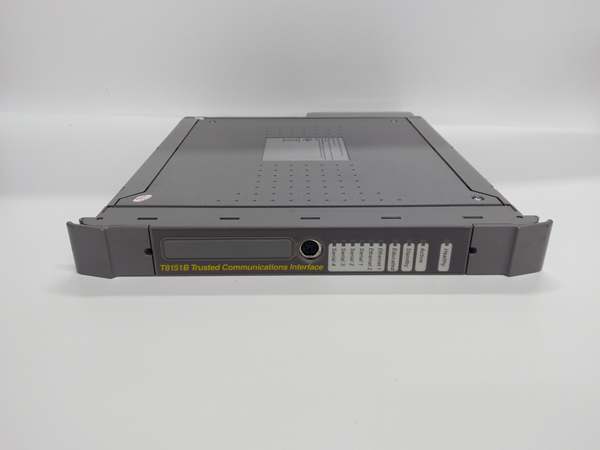
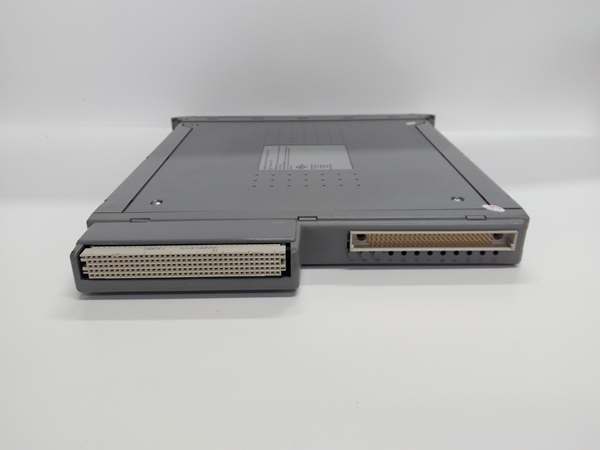
Description
System Architecture & Operational Principle
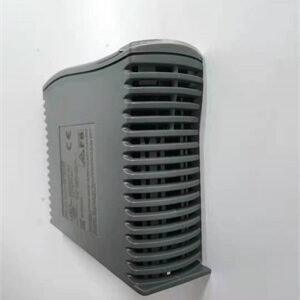
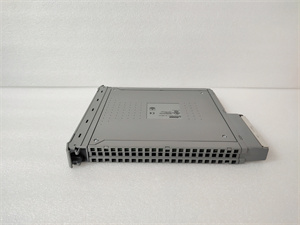
The ICS TRIPLEX T8151B is a Trusted TMR (Triple Modular Redundant) Communication Interface/Processor Module designed for safety-critical industrial applications, serving as a critical component in the ICS TRIPLEX Trusted® system. It operates at Purdue Model Level 2–3 (Basic Control/Supervisory Control), acting as the bridge between the Trusted controller and external devices (e.g., engineering workstations, third-party PLCs, HMI systems).
Architectural Role
The T8151B is installed in a Trusted® chassis (e.g., T8100 series) and interfaces with:
-
Upstream: Trusted TMR processor (e.g., T8110B) via the redundant backplane, receiving control logic and commands.
-
Downstream: External devices (e.g., Siemens S7 PLCs, Schneider Electric drives) via dual Ethernet ports (10/100 Mbps) and four serial ports (RS-232/RS-485), supporting protocols like Modbus TCP/IP, Ethernet/IP, and Trusted Network Protocol.
Its primary role is to minimize communication load on the TMR processor by handling data exchange with external systems, ensuring the processor can focus on critical safety logic (e.g., emergency shutdown, interlock). The module uses a 2-out-of-3 (2oo3) voting mechanism for data integrity, where three independent communication channels transmit data, and the majority vote is used to ensure reliability.
Operational Principle
The T8151B operates on a fault-tolerant architecture:
-
Data Reception: Receives data from external devices via Ethernet/serial ports.
-
Voting Logic: The module’s three communication channels process the data independently, and a voter compares the results. If two or more channels agree, the data is sent to the TMR processor.
-
Data Transmission: Transmits control commands from the TMR processor to external devices via the same channels, ensuring redundancy and reliability.
-
Self-Diagnostics: Continuous monitoring of communication links, power supply, and module health, with fault logging and LED indicators for quick diagnosis.
The Trusted® backplane provides redundant power and data paths, ensuring that a backplane fault in one channel does not affect the others. This architecture delivers fault tolerance and deterministic performance, essential for safety-critical applications.

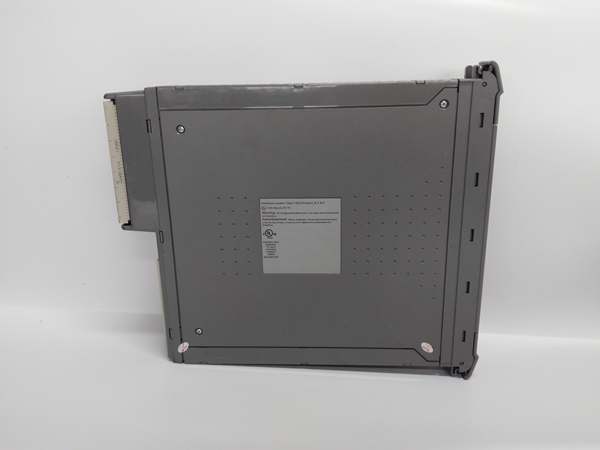
ICS TRIPLEX T8151B
Core Technical Specifications
-
Processor: Motorola PowerPC (for communication processing)
-
Communication Ports: 2x 10/100 Mbps Ethernet (RJ45), 4x serial (RS-232/RS-485, via T8153 adapter)
-
Protocols Supported: Modbus TCP/IP, Ethernet/IP, Trusted Network Protocol, Modbus RTU (via serial)
-
Safety Certification: IEC 61508 SIL 3 (TÜV Rheinland)
-
Operating Temperature: -40°C to +70°C (-40°F to +158°F)
-
Power Supply: Dual redundant +24 V DC (from Trusted® chassis backplane)
-
Hot-Swap: Supported (online replacement without system shutdown)
-
Dimensions: 266 mm × 93 mm × 303 mm (10.5 in × 3.6 in × 12.0 in)
-
Weight: ~2.5 kg (5.5 lbs)
-
Indicators: LED status lights for power, communication activity, and faults
Customer Value & Operational Benefits
1. Reduced TMR Processor Load
By handling communication tasks, the T8151B frees up the TMR processor to focus on critical safety logic, improving system responsiveness and reducing the risk of processor overload.
2. Fault-Tolerant Communication
The 2oo3 voting mechanism and redundant communication channels ensure that data integrity is maintained even if one channel fails, critical for applications where communication errors can lead to safety incidents.
3. Flexible Integration
Support for multiple communication protocols (Modbus, Ethernet/IP, Trusted) allows the T8151B to integrate with a wide range of external devices, making it suitable for retrofitting existing systems or new installations.
4. Simplified Maintenance
Hot-swap capability and LED status indicators reduce downtime during maintenance, while self-diagnostics help quickly identify and resolve communication faults.
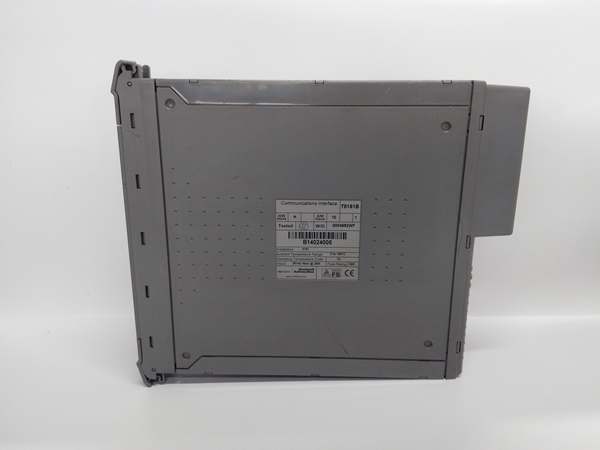
ICS TRIPLEX T8151B
Field Engineer’s Notes (From the Trenches)
When installing the T8151B, always verify the Ethernet cable shielding—unshielded cables can pick up electromagnetic interference (EMI) from nearby equipment (e.g., VFDs, motors), leading to communication errors. I once spent hours troubleshooting a “no comms” fault only to find the cable was unshielded. Use shielded twisted-pair (STP) Ethernet cable for all port connections.Check the Trusted® chassis backplane power—the module requires dual redundant +24 V DC, and low voltage can cause intermittent resets. Use a multimeter to measure the backplane voltage (should be 24 V DC ±10%) before installation.Update the firmware (via AVEVA’s website) after installation—firmware updates often fix bugs and improve compatibility with new devices. I recommend checking for updates every 6 months, especially if you’re using the module for critical applications.
Real-World Applications
1. Emergency Shutdown (ESD) System Communication
In a refinery, the T8151B connects the Trusted® TMR controller to the plant’s DCS (Distributed Control System). It transmits emergency shutdown commands from the controller to the DCS, which then shuts down pumps, closes valves, and activates alarms. The 2oo3 voting mechanism ensures that the commands are executed reliably, even if one communication channel fails.
2. Fire and Gas (F&G) System Integration
In an offshore platform, the T8151B integrates the Trusted® controller with fire and gas detectors (e.g., smoke detectors, gas sensors). It receives signals from the detectors and sends them to the controller, which triggers the deluge system and closes fire doors. The module’s fault-tolerant design ensures that the system continues to operate even if one detector or communication channel fails.