Description
System Architecture & Operational Principle
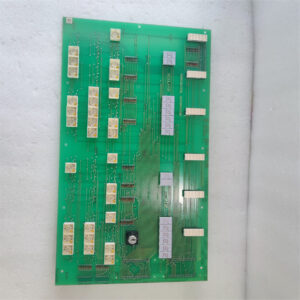
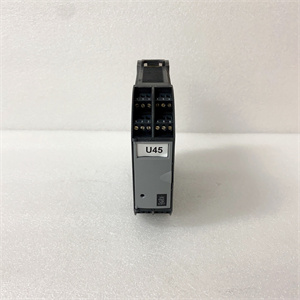
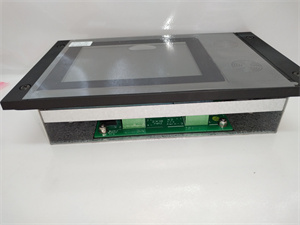
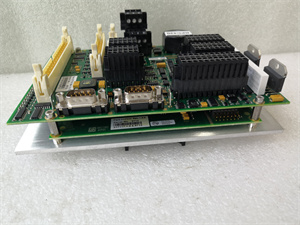
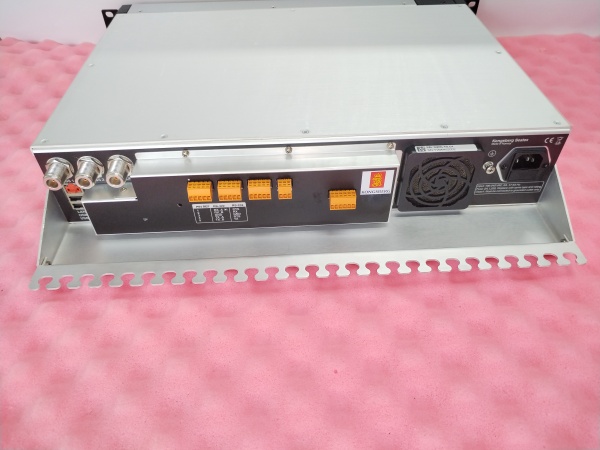
The KONGSBERG DPS112 is a process control station designed for maritime and industrial automation, typically deployed in dynamic positioning (DP) systems (e.g., offshore drilling platforms, DP vessels) or industrial process control (e.g., power generation, chemical plants). It serves as a central communication hub between field devices (sensors, actuators) and higher-level control systems (e.g., K-Pos DP controller, K-Chief automation platform).
Architectural Role
The DPS112 is positioned at Purdue Model Level 1–2 (Basic Control/Supervisory Control), acting as the interface between:
-
Upstream: Field devices (e.g., GPS receivers, gyrocompasses, pressure sensors) via I/O modules or direct connections.
-
Downstream: Higher-level control systems (e.g., K-Pos DP controller) via redundant communication links (Ethernet, serial).
Its primary role is to aggregate data from field devices, perform preliminary processing (e.g., signal filtering, fault detection), and transmit commands to actuators (e.g., thrusters, valves) while maintaining redundant communication to ensure reliability.
Operational Principle
The DPS112 uses a modular architecture with:
-
Redundant Communication Interfaces: Supports dual Ethernet ports (for link aggregation/failover) and serial ports (RS-232/RS-485) for legacy device integration.
-
Intelligent Diagnostics: Monitors communication links, power supply, and I/O modules in real time; triggers alerts for faults (e.g., link failure, overvoltage).
-
Environmental Hardening: Ruggedized enclosure (IP65) and wide temperature range (-40°C to +70°C) for harsh maritime/offshore environments.
The module communicates with field devices via standard protocols (e.g., NMEA 0183 for GPS, Modbus for sensors) and with higher-level systems via KONGSBERG’s proprietary protocols (e.g., K-Pos API).
Key Architectural Advantages
-
Redundancy: Dual communication links eliminate single points of failure, critical for DP systems where downtime can result in millions of dollars in losses.
-
Intelligence: On-board diagnostics reduce the need for external test equipment, minimizing maintenance time.
-
Scalability: Modular design allows adding I/O modules or communication interfaces to accommodate growing system requirements.

KONGSBERG DPS112
Core Technical Specifications
|
Parameter
|
Specification
|
|---|---|
|
Communication
|
Dual 10/100 Mbps Ethernet (link aggregation/failover); RS-232/RS-485 serial
|
|
Operating Temperature
|
-40°C to +70°C (-40°F to +158°F)
|
|
Protection Rating
|
IP65 (dust-tight, water-jet resistant)
|
|
Power Supply
|
24 VDC (redundant power inputs available)
|
|
Power Consumption
|
≤100 W max
|
|
Dimensions
|
~400 mm × 300 mm × 200 mm (15.7 in × 11.8 in × 7.9 in)
|
|
Weight
|
~10 kg (22 lbs)
|
|
Certifications
|
CE, UL/cUL, DNV GL (maritime)
|
|
I/O Capacity
|
Up to 16 I/O modules (via expansion slots)
|
|
Protocols Supported
|
NMEA 0183, Modbus RTU/TCP, K-Pos API, Ethernet/IP
|
Customer Value & Operational Benefits
1. Uncompromised Reliability with Redundant Communication
The DPS112’s dual Ethernet links ensure continuous communication even if one link fails. This is critical for DP systems (e.g., offshore drilling platforms), where a communication failure can lead to loss of position and costly downtime.
2. Reduced Maintenance Costs with Intelligent Diagnostics
The module’s on-board diagnostics monitor communication links, power supply, and I/O modules in real time. For example, if a serial link fails, the DPS112 triggers an alert with a specific fault code (e.g., “SERIAL LINK FAILURE”), allowing technicians to quickly identify and fix the issue without using external test equipment.
3. Scalability for Growing Systems
The DPS112’s modular design allows adding I/O modules (e.g., analog input/output) or communication interfaces (e.g., fiber optic) to accommodate growing system requirements. This scalability is ideal for industrial plants (e.g., power generation) where production lines often expand to meet demand.
4. Rugged Reliability for Harsh Environments
The DPS112’s IP65 protection and wide temperature range (-40°C to +70°C) make it suitable for offshore platforms (saltwater, vibration) and industrial plants (dust, high temperatures). For example, in a Gulf of Mexico offshore platform, the DPS112 withstands saltwater corrosion and high temperatures, ensuring reliable operation in harsh conditions.

KONGSBERG DPS112
Field Engineer’s Notes (From the Trenches)
When installing the DPS112, always use shielded twisted-pair (STP) cable for Ethernet and serial links—unshielded cable can pick up electromagnetic interference (EMI) from nearby equipment (e.g., thrusters, generators), leading to communication errors. I once spent hours troubleshooting a “link failure” fault only to find the cable was unshielded.Verify the power supply voltage (24 VDC) before connecting the module—low voltage can cause the DPS112 to reset intermittently, leading to false fault signals. Use a multimeter to measure the voltage at the module’s power terminals (should be 23–25 VDC).Test the redundant communication links after installation—disconnect one Ethernet link and verify that the other link takes over automatically. This ensures that the failover function works correctly, which is critical for DP systems.
Real-World Applications
1. Offshore Drilling Platform Dynamic Positioning (DP)
On a Gulf of Mexico offshore drilling platform, the DPS112 is used as a communication hub between the K-Pos DP controller and field devices (GPS receivers, gyrocompasses, thrusters). The module aggregates data from these devices, performs preliminary processing (e.g., signal filtering), and transmits commands to the thrusters to maintain the platform’s position. The redundant Ethernet links ensure continuous communication, even if one link is damaged by saltwater corrosion.
2. Marine Vessel Propulsion Control
On a DP2-class supply vessel, the DPS112 interfaces with the K-Thrust propulsion system to control the vessel’s thrusters. The module receives commands from the K-Pos controller (e.g., “increase thrust to 50%”) and transmits them to the thrusters via serial links. The intelligent diagnostics monitor the serial links for faults (e.g., loose connections), reducing maintenance time and ensuring reliable operation.
3. Industrial Power Plant Process Control
In a coal-fired power plant, the DPS112 is used to control the boiler feedwater system. The module receives data from pressure sensors (monitoring boiler pressure) and flow meters (monitoring feedwater flow) via Modbus RTU. It transmits commands to control valves (adjusting feedwater flow) to maintain the boiler pressure within safe limits. The IP65 protection ensures reliable operation in the plant’s dusty environment.