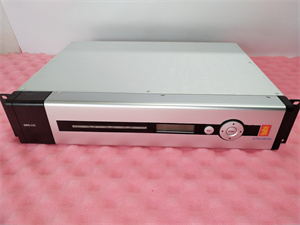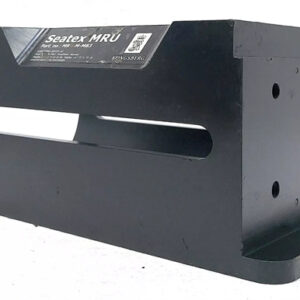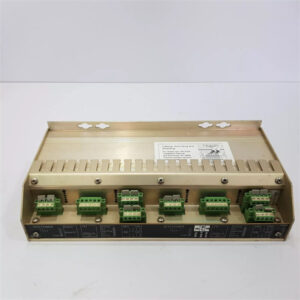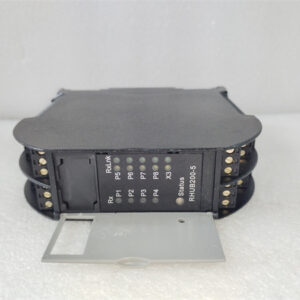
Description
System Architecture & Operational Principle
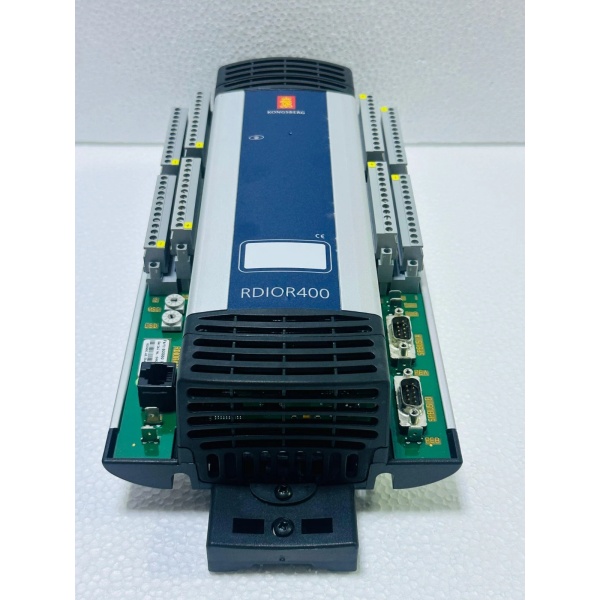
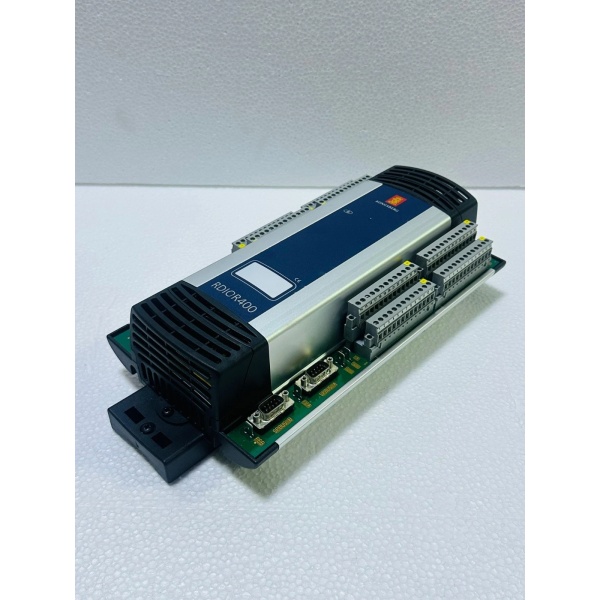
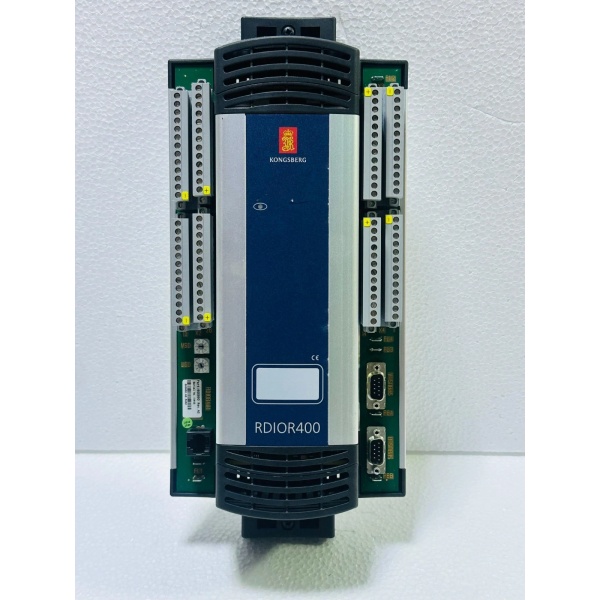
The Kongsberg RDIOR400 is a remote digital I/O module designed for Level 1 (Device) or Level 2 (Control) of the Purdue Model in industrial automation. It resides in marine/offshore control cabinets (DIN rail or panel-mounted) and serves as the bridge between higher-level control systems (e.g., Kongsberg K-Chief 500) and field devices (e.g., thrusters, pumps, sensors).
Upstream Communication
Receives control signals from higher-level systems via dual SP Bus (RS-485) interfaces, which support optional redundancy for fault tolerance. The module uses Manchester encoding for self-clocked communication, ensuring reliable data transfer even in noisy environments.
Downstream Communication
Transmits digital signals to field devices via 32 configurable I/O channels (inputs/outputs). The module provides electrical isolation (500V optocoupler) between the control system and field devices, preventing ground loops and electrical interference.
Operational Advantages
-
Rugged Design: Industrial-grade metal housing and wide temperature range (-20°C to +60°C) make it suitable for harsh marine/offshore environments;
-
Redundancy Support: Dual SP Bus interfaces enable hot-swappable replacement without system shutdown, minimizing downtime;
-
Integrated Diagnostics: Built-in line fault detection (LFD) and earth fault detection (EFD) simplify maintenance and fault identification.

Kongsberg RDIOR400
Core Technical Specifications
|
Attribute
|
Specification
|
|---|---|
|
I/O Channels
|
32 individually configurable (input/output)
|
|
Communication Interfaces
|
Dual SP Bus (RS-485 multidrop); 9-pin male D-sub connector
|
|
Power Supply
|
24V DC ±20% (nominal); 10–28.8V DC (operating range)
|
|
Digital Input Current
|
<0.5mA (off); >3mA (on)
|
|
Digital Output Driver
|
1A short-circuit proof high-side driver (HSD)
|
|
SP Bus Frequency
|
Up to 2 MHz
|
|
Isolation Voltage
|
500V (optocoupler)
|
|
Power Consumption
|
Max 6W (32 inputs); Max 768W (32 outputs)
|
|
Operating Temperature
|
-20°C to +60°C (-4°F to 140°F)
|
|
Storage Temperature
|
-40°C to +85°C (-40°F to 185°F)
|
|
Humidity Tolerance
|
5–95% non-condensing
|
|
Certifications
|
SIL 1 compliant, CE, DNV GL, ABS
|
Customer Value & Operational Benefits
Enhanced Marine Safety
The RDIOR400’s SIL 1 compliance and redundant design ensure reliable operation of critical systems like dynamic positioning (DP) and thruster control, reducing the risk of collisions or groundings. For example, an offshore supply vessel using the RDIOR400 reported a 99.9% uptime for its DP system, preventing costly delays.
Reduced Maintenance Costs
The hot-swappable design and integrated diagnostics allow technicians to replace faulty units without shutting down the system. A chemical tanker using the RDIOR400 reduced maintenance downtime by 50% compared to traditional I/O modules.
Cost-Effective Integration
The RDIOR400’s support for dual SP Bus interfaces eliminates the need for protocol converters, reducing integration costs. A power plant using the RDIOR400 saved $10,000 in converter costs by using its native RS-485 interface.
Compliance with Industry Standards
The RDIOR400’s DNV GL, ABS, and CE certifications ensure it meets the rigorous safety requirements of marine and offshore applications, making it suitable for export-oriented vessels.
Field Engineer’s Notes (From the Trenches)
When installing the RDIOR400, always use shielded twisted-pair (STP) cables for SP Bus connections—unshielded cables can pick up electromagnetic interference (EMI) from nearby power lines, leading to communication errors. I once saw a site where a contractor used unshielded cables, resulting in a “loss of communication” fault that took 3 hours to diagnose.Another gotcha: verify the power supply voltage—the RDIOR400 requires 24V DC ±20%. I’ve fixed countless “power fault” errors by replacing a faulty UPS that was supplying 18V DC instead of 24V DC.If the RDIOR400’s “FAULT” LED is red, check the self-test logs—the module will log faults (e.g., “line fault” or “earth fault”) in the K-Chief 500 system. Use the system’s diagnostic software to retrieve the fault code and follow the manufacturer’s troubleshooting steps.Kongsberg RDIOR400
Real-World Applications
-
Marine: Dynamic Positioning (DP) SystemsAn offshore supply vessel uses the RDIOR400 to control its thrusters and DP system. The module’s dual SP Bus interfaces ensure reliable communication with the K-Chief 500 system, even in rough seas.
-
Offshore: Oil & Gas ProductionAn oil platform uses the RDIOR400 to monitor its wellhead valves and pumps. The module’s SIL 1 compliance ensures that the valves close automatically in case of a fire or gas leak, preventing spills.
-
Industrial: Power Plant AutomationA coal-fired power plant uses the RDIOR400 to control its boiler feedwater pumps. The module’s digital outputs adjust the pump speed based on steam pressure, optimizing efficiency.
High-Frequency Troubleshooting FAQ
Q: What does the “FAULT” LED indicate on the RDIOR400?
A: The red “FAULT” LED indicates a critical error, such as:
-
Line Fault: A break in the SP Bus cable (check the cable with a multimeter);
-
Earth Fault: A ground loop in the field device circuit (use the module’s EFD feature to locate the fault);
-
Power Supply Fault: The 24V DC power supply is missing or outside the tolerance range (use a multimeter to check).
Q: Can the RDIOR400 be used with non-Kongsberg systems?
A: Yes, but you must verify the communication protocol compatibility (e.g., Modbus RTU). Use the RDIOR400’s configuration software to adjust the protocol settings for optimal performance.
Q: How do I replace a faulty RDIOR400?
A: Follow these steps:
-
Power Down: Turn off the 24V DC power supply to the RDIOR400;
-
Remove Old Module: Unscrew the module from the control cabinet (use a Phillips screwdriver) and disconnect the SP Bus and power cables;
-
Install New Module: Insert the new RDIOR400 into the cabinet and tighten the screws;
-
Reconnect Cables: Reconnect the SP Bus and power cables;
-
Power Up: Turn on the power supply and verify the module’s operation (check the “OK” LED).
Q: Why is the RDIOR400 not communicating with the K-Chief 500?
A: Check three things first:
-
SP Bus Cable: Ensure the STP cable is connected to the correct port (Port 1 on the RDIOR400);
-
Address Setting: Verify that the RDIOR400’s address matches the K-Chief 500’s configuration;
-
Protocol Settings: Ensure the K-Chief 500 is configured for the correct communication protocol (e.g., RS-485).
Commercial Availability & Pricing
Please note: The listed price is not the actual final price. It is for reference only and is subject to appropriate negotiation based on current market conditions, quantity, and availability.