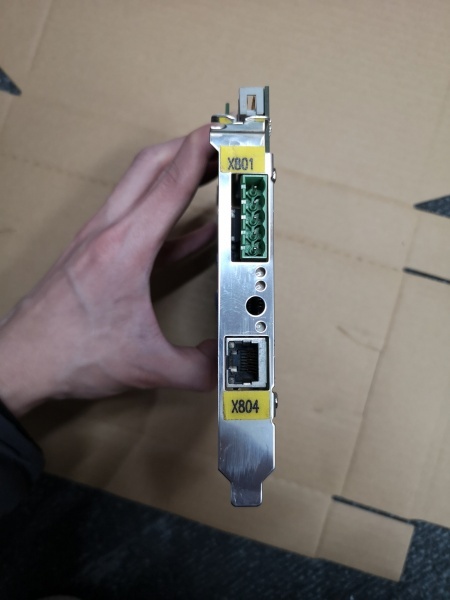
Description
System Architecture & Operational Principle
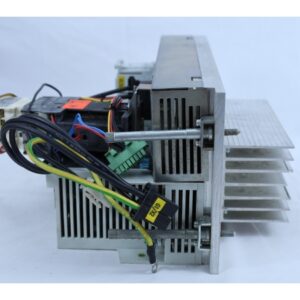
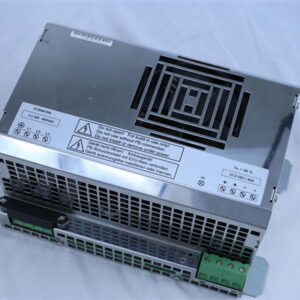
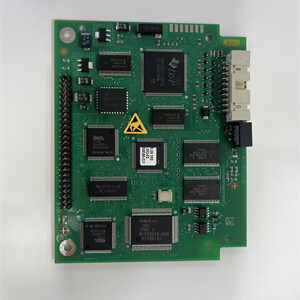
The KUKA DSE-IBSC33-1.40 is a digital electronic servo control module that forms the backbone of the KUKA robot control system. It is typically installed in the robot control cabinet and works in conjunction with the MFC3 (Multi-Function Card) to execute servo control functions.
Core Functional Blocks
-
Servo Command Processing: Receives motion commands (e.g., position, speed, torque) from the robot controller (KRC) and converts them into control signals for the servo motors.
-
Motor Control: Uses advanced algorithms (e.g., PID, field-oriented control) to regulate the servo motors, ensuring precise motion control (repeatability ±0.05mm for arc welding applications).
-
Communication Interface: Supports multiple industrial communication protocols, including EtherCAT (real-time Ethernet) and Profibus (fieldbus), to connect with peripheral devices (e.g., servo drives, sensors).
-
Fault Diagnosis: Monitors the status of the servo system (e.g., motor temperature, current draw) and reports faults (e.g., overcurrent, encoder errors) to the KRC for troubleshooting.
Operational Workflow
-
Command Reception: The DSE module receives motion commands from the KRC via the MFC3 card.
-
Signal Conversion: Converts the commands into analog/digital signals suitable for the servo drives.
-
Motor Actuation: The servo drives adjust the motor current to achieve the desired motion (e.g., moving the robot arm to a target position).
-
Feedback Loop: Receives feedback from the servo motors (e.g., encoder signals) and sends it back to the DSE module for closed-loop control.
-
Status Reporting: Transmits operational data (e.g., motor speed, temperature) to the KRC for monitoring and logging.
The DSE-IBSC33-1.40 is designed to provide high-precision motion control and reliable communication in industrial automation environments, making it suitable for applications like arc welding, material handling, and assembly.

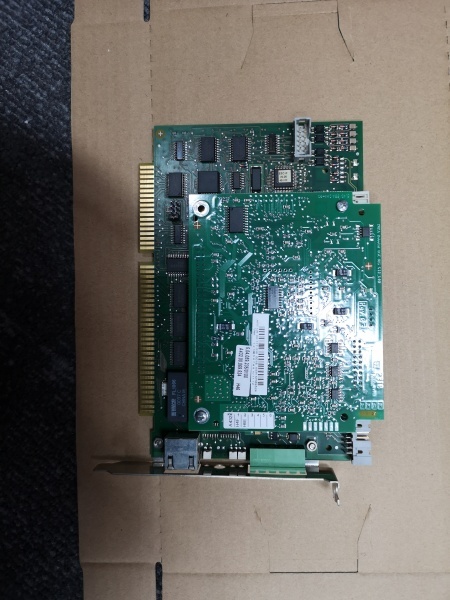
KUKA DSE-IBSC33-1.40
Core Technical Specifications
|
Parameter
|
Specification
|
|---|---|
|
Compatibility
|
Works with MFC3 control card (KUKA Robot Control System)
|
|
Communication
|
EtherCAT (real-time Ethernet), Profibus (fieldbus)
|
|
Input Voltage
|
24V DC (from control cabinet)
|
|
Operating Temperature
|
0°C to +45°C (ambient)
|
|
Protection Level
|
IP20 (dust-protected, indoor use)
|
|
Dimensions
|
Compact design (fits in standard control cabinet)
|
|
Weight
|
~0.5 kg (estimated)
|
|
Certifications
|
CE, UL, cUL Listed
|
Customer Value & Operational Benefits
1. High Precision for Critical Applications
The DSE-IBSC33-1.40 enables micrometer-level motion control, which is critical for applications like arc welding (ensuring consistent weld seams) and assembly (placing components with ±0.05mm accuracy). This precision reduces defect rates and improves product quality.
2. Reliable Communication
Support for EtherCAT (real-time Ethernet) ensures fast and reliable communication between the control cabinet and servo drives, minimizing latency and ensuring synchronized motion in multi-axis systems. This is essential for high-speed applications like pick-and-place robots.
3. Easy Integration
The module is designed to be plug-and-play with KUKA’s MFC3 control card, reducing installation time and effort. Its compatibility with existing KUKA systems makes it a cost-effective solution for upgrading or expanding robot cells.
4. Reduced Downtime
Built-in fault diagnosis features (e.g., overcurrent protection, encoder error detection) help identify issues early, reducing unplanned downtime. For example, a welding cell using the DSE module can avoid prolonged stoppages by alerting operators to motor faults before they escalate.
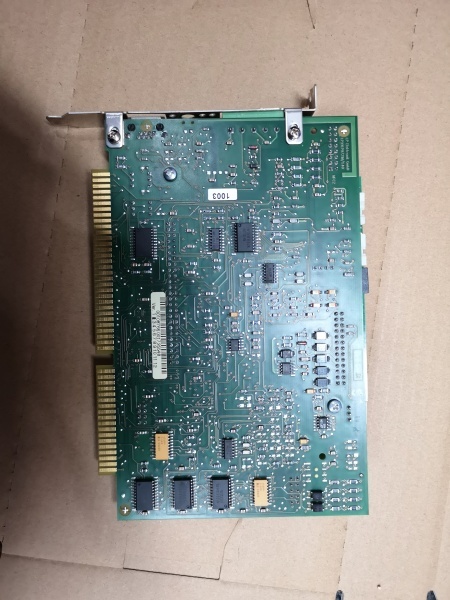
KUKA DSE-IBSC33-1.40
Field Engineer’s Notes (From the Trenches)
When installing the DSE-IBSC33-1.40, always verify the 24V DC input voltage with a multimeter—low voltage can cause the module to malfunction. I once saw a site use a 20V DC supply, leading to intermittent servo errors.Route communication cables separately from power cables—parallel runs can induce EMI, causing communication errors. Use shielded twisted-pair (STP) cables for EtherCAT/Profibus connections.Update the firmware regularly (via KUKA WorkVisual software) to fix bugs and improve compatibility with new servo drives. Annual firmware updates are recommended to keep the module up-to-date.
Real-World Applications
1. Arc Welding Robots
A automotive manufacturer uses the DSE-IBSC33-1.40 in its arc welding cells to control the robot arms. The module’s precise motion control ensures that the welding torch follows the programmed path accurately, resulting in consistent weld quality (defect rate reduced by 20%).
2. Material Handling Robots
A logistics company uses the module in its pick-and-place robots to control the gripper’s movement. The EtherCAT communication protocol enables fast synchronization between the robot and the conveyor belt, increasing throughput by 15%.