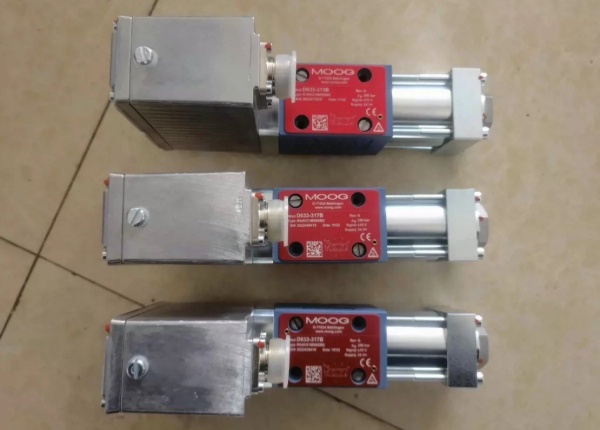
Description
D634-541A: Product Overview
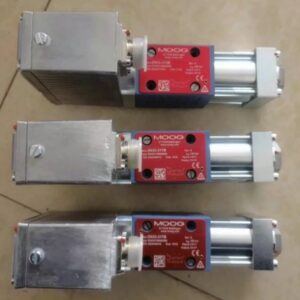
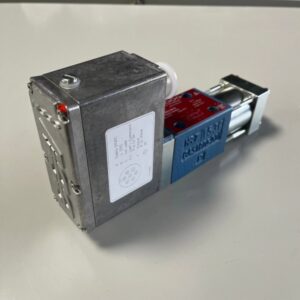
The MOOG D634-541A is a high-dynamic electrohydraulic direct drive servo valve (DDV) from the D634 Series, engineered for applications requiring ultra-fast response and precise control of hydraulic actuators. Unlike two-stage servo valves (e.g., D691/D761), the D634 Series eliminates the nozzle-flapper pilot stage, using a direct electromagnetic drive to actuate the main spool. This “zero-lap” design minimizes internal leakage and enables near-instantaneous flow adjustment, making it ideal for systems where millisecond-level precision is critical—such as aerospace flight controls, high-speed machinery, and dynamic test rigs.
As part of MOOG’s flagship DDV lineup, the D634-541A serves as the core component in closed-loop control architectures, interfacing electronic controllers (PLCs, motion controllers) with hydraulic actuators (cylinders, motors). It excels in applications with constant or predictable system pressures, where its speed advantage outweighs sensitivity to load fluctuations (a tradeoff vs. two-stage valves). Typical deployments include aircraft rudder/elevator actuation, high-speed stamping presses, and materials testing equipment requiring rapid cyclic loading.

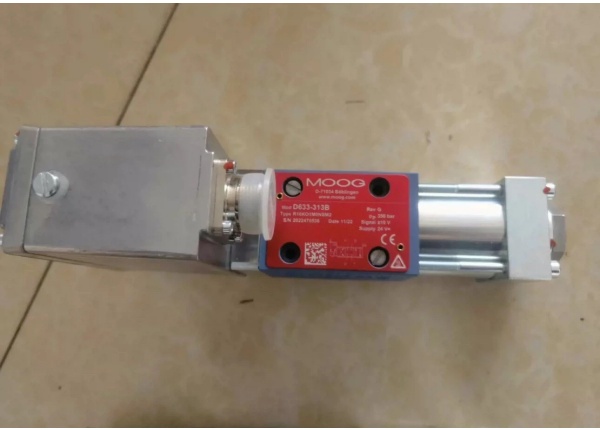
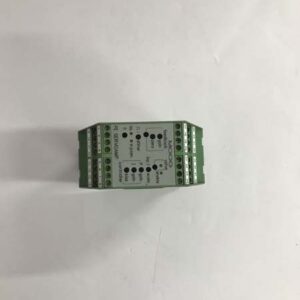
Moog D633-472B
D634-541A: Technical Specifications
-
Model Number: D634-541A
-
Manufacturer: Moog Inc.
-
Product Type: Electrohydraulic Direct Drive Servo Valve (DDV, Zero-Lap)
-
Valve Configuration: 4-way spool (zero overlap, symmetric flow paths)
-
Nominal Flow: 25 GPM (94.6 L/min) @ 1000 psi (69 bar) differential pressure
-
Maximum Pressure: 3500 psi (241 bar) per port
-
Input Signal: ±10VDC (standard), ±40mA (via optional G761 series amplifier)
-
Response Time: <5 ms (step input to 90% flow)
-
Resolution: <0.1% of full scale (hysteresis <0.3%)
-
Operating Temperature: -30°C to +90°C (fluid-dependent)
-
Fluid Compatibility: Petroleum-based oils (ISO VG 32/46/68), HFC/HFD synthetic fluids (e.g., Houghto-Safe 1150)
-
Weight: 3.1 kg (6.8 lbs, valve body only)
-
Dimensions: 165mm (L) x 95mm (W) x 120mm (H) (approximate)
-
Certifications: CE, ISO 9001, AS9100 (aerospace quality), MIL-STD-810 (environmental resistance)
Core Features & Customer Value
-
Direct Drive (Zero-Lap Design): Eliminates the pilot stage for near-instantaneous spool response (<5 ms), critical for high-speed applications like aircraft control surfaces or stamping presses. This reduces cycle time variability and improves throughput.
-
Ultra-High Resolution: <0.1% FS resolution (hysteresis <0.3%) enables precise control of small actuator displacements (e.g., ±0.05mm in positioning systems), essential for semiconductor manufacturing or optical alignment tools.
-
Compact & Rugged: Stainless steel body and hardened spool lands resist contamination, with a compact footprint (165x95x120mm) simplifying integration in space-constrained systems (e.g., UAV actuators). Service life reaches 15,000–20,000 hours with clean fluid (particle count <10 μm, β₃≥200).
-
Flexible Integration: Native support for ±10VDC/±40mA signals and optional G761 amplifiers ensures compatibility with standard controllers. Electronic zero-adjustment screws allow fine-tuning without disassembly, reducing setup time.
-
Low Internal Leakage: Zero-lap spool design minimizes leakage (<0.5 GPM at 3000 psi), conserving energy in closed-center systems (e.g., aircraft hydraulic networks).
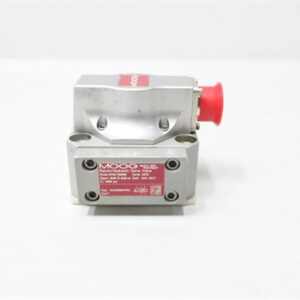
Moog D633-472B
Typical Applications
The D634-541A is optimized for high-dynamic, precision hydraulic control:
-
Aerospace: Flight control actuators (rudder, elevator, aileron) in commercial/military aircraft; UAV landing gear deployment.
-
High-Speed Machinery: Stamping presses (ram positioning at 50+ strokes/min), injection molding (high-speed clamp/unclamp).
-
Test & Simulation: Materials fatigue rigs (cyclic loading up to 50 Hz), automotive crash test actuators.
-
Robotics: High-speed pick-and-place robots (joint positioning accuracy ±0.02mm), semiconductor wafer handling.
Example: In a commercial aircraft’s fly-by-wire system, the D634-541A controls the elevator actuator, adjusting pitch within 2ms of pilot input to maintain stability during turbulence—far faster than two-stage valves could achieve.