Description
System Architecture & Operational Principle
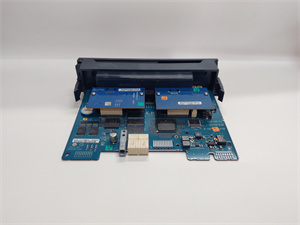
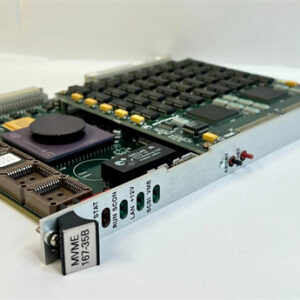
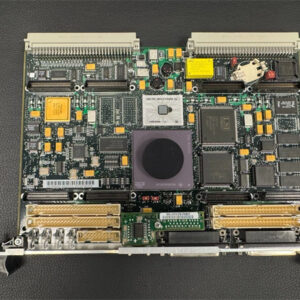
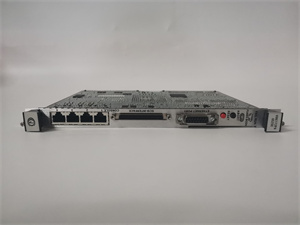
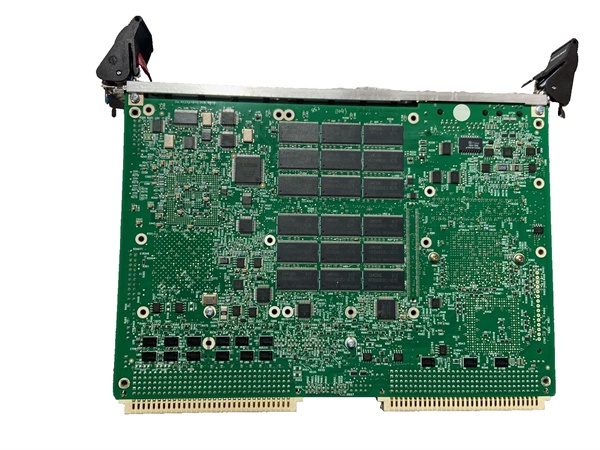
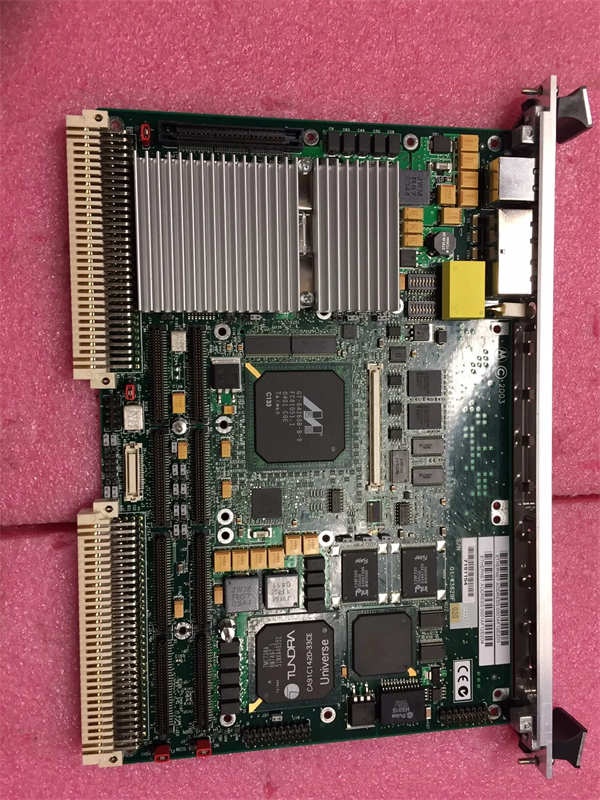
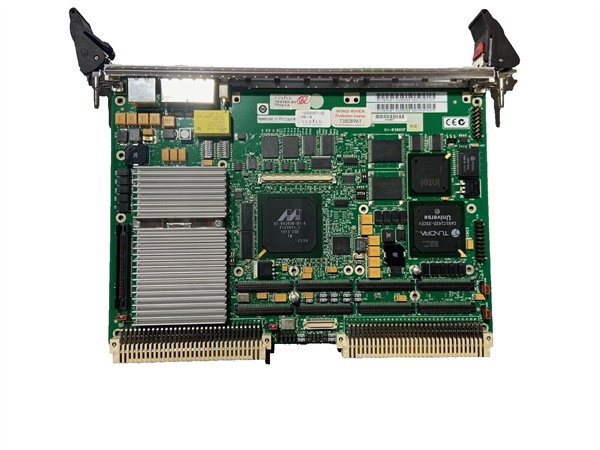
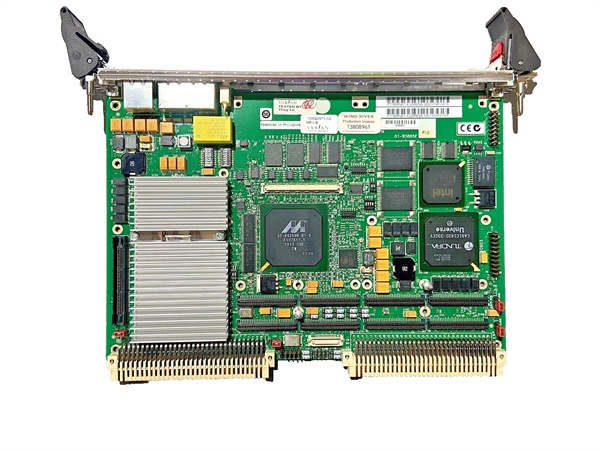
The Motorola MVME6100-0161 is a 6U VMEbus-compliant single board computer (SBC) designed for industrial and embedded applications requiring high performance and reliability. It serves as the computational core in VME-based systems, interfacing with field devices (sensors, actuators) and external networks (SCADA, DCS) via a combination of VME64 backplane communication and high-speed I/O ports.
Core Functional Blocks
The SBC is composed of four primary functional blocks, each optimized for industrial/embedded use:
-
Processing Unit:
-
CPU: 1.267 GHz PowerPC 7457 processor (32-bit RISC), featuring 512 KB of on-chip L2 cache and 2 MB of L3 cache for reduced memory latency.
-
Memory: 512 MB of ECC SDRAM (error-correcting code) for reliable data storage and retrieval, plus 128 MB of Flash memory (divided into two 64 MB banks) for firmware and configuration storage.
-
-
Bus Interface:
-
VME64: Supports 2eSST (Two Edge Source Synchronous Transfer) protocol with a transfer rate of 320 MB/s, compatible with legacy VMEbus standards (ANSI/VITA 1-1994 VME64, VITA 1.1-1997 extensions).
-
PCI: Dual 64-bit PCI buses (33/66/100 MHz) for connecting mezzanine cards (PMC) and onboard peripherals (e.g., Ethernet, SCSI).
-
-
I/O Subsystem:
-
Ethernet: Dual Gigabit Ethernet ports (10/100/1000 Mb/s) for high-speed network connectivity, with one port fixed to the front panel and the other configurable for rear P2 Ethernet.
-
Serial: Two EIA-232-D (RS-232) ports for legacy device integration, with one port routed to the front panel and the other optionally routed to the P2 connector.
-
PMC Expansion: Two 64-bit PCI expansion slots (PMC-X) for adding specialized functionality (e.g., A/D conversion, communication modules).
-
-
Power & Cooling:
-
Power Consumption: ~15–20 W typical (depends on configuration), powered by VMEbus (+5V DC, ±12V DC).
-
Cooling: Conduction-cooled (no fans) for reliable operation in harsh environments (-40°C to +85°C); ideal for vacuum, high-vibration, or sealed enclosures.
-
Operational Workflow
-
Power-Up: The SBC draws power from the VME backplane (+5V DC) and initializes the BIOS/UEFI firmware.
-
Boot Process: The firmware configures the CPU, memory, and I/O interfaces, then boots the operating system (e.g., VxWorks, Linux).
-
Task Execution: The PowerPC 7457 processor executes real-time control programs (e.g., signal processing, PID loops) and communicates with field devices via VME64 or Ethernet.
-
Data Transfer: High-speed DMA transfers move data between the SBC and VME backplane, while the Ethernet ports handle network communication (e.g., SCADA data upload).

Motorola MVME5500-0161
Core Technical Specifications
|
Parameter
|
Specification
|
|---|---|
|
Processor
|
1.267 GHz PowerPC 7457 (32-bit RISC)
|
|
Cache
|
512 KB L2 (on-chip), 2 MB L3 (on-chip)
|
|
Memory
|
512 MB ECC SDRAM, 128 MB Flash (two 64 MB banks)
|
|
VMEbus Interface
|
2eSST protocol (320 MB/s), compatible with VME64/ANSI/VITA standards
|
|
PCI Buses
|
Dual 64-bit (33/66/100 MHz)
|
|
I/O Ports
|
Dual Gigabit Ethernet, 2x RS-232, 2x PMC-X slots
|
|
Operating Temperature
|
-40°C to +85°C (conduction-cooled)
|
|
Power Consumption
|
~15–20 W typical
|
|
Form Factor
|
6U VME (233.35 mm × 160 mm × 41 mm)
|
|
Weight
|
~1.2 kg (2.6 lbs) (estimated)
|
|
Certifications
|
CE, UL, RoHS, MIL-STD-810F (vibration/shock)
|
Customer Value & Operational Benefits
1. High Performance for Real-Time Applications
The 1.267 GHz PowerPC 7457 processor and 512 MB ECC SDRAM enable the MVME6100-0161 to handle complex control algorithms (e.g., PID loops, motion control) and large datasets (e.g., from 100+ I/O channels). This is critical for applications like power generation (turbine control) or industrial automation (robotic control).
2. Rugged Reliability for Harsh Environments
The conduction-cooled design (no moving parts) and wide operating temperature range (-40°C to +85°C) make the SBC suitable for:
-
Aerospace: Avionics systems (e.g., flight control computers).
-
Defense: Naval sonar processing, armored vehicle control.
-
Industrial: Oil & gas refineries, power generation (turbine control).
3. Flexible Expansion for Custom Applications
The dual PMC-X slots allow users to add custom functionality (e.g., FPGA-based signal processing, GPU-accelerated analytics) without modifying the core SBC. This flexibility is ideal for prototype development and system upgrades.
4. Long-Term Availability & Lifecycle Support
Motorola’s commitment to long-life embedded systems ensures the MVME6100-0161 is available for 10+ years, with spare parts and firmware updates provided by NXP Semiconductors. This reduces the risk of obsolescence for critical infrastructure (e.g., power grids, transportation systems).
Field Engineer’s Notes (From the Trenches)
When installing the MVME6100-0161, always use a torque wrench to tighten the VME backplane connectors—over-tightening can damage the pins, while under-tightening causes intermittent communication. I once saw a technician strip the VMEbus pins because he used a pipe wrench instead of the recommended tool.Verify the conduction-cooling interface (thermal pad/heat sink) before powering up—poor contact can lead to overheating and premature failure. Use a thermal imager to check for hot spots if the SBC shuts down unexpectedly.Test the Ethernet ports (ping the device’s IP address) after installation—use a crossover cable if connecting directly to a laptop. I’ve spent hours troubleshooting “no comms” faults only to find a bad Ethernet cable.Motorola MVME5500-0161
Real-World Applications
1. Aerospace: Flight Control Computer
A commercial aircraft manufacturer uses the MVME6100-0161 as the core of its fly-by-wire flight control system. The SBC’s VME64 interface connects to flight sensors (e.g., accelerometers, gyroscopes), while the Ethernet port streams data to the cockpit display. The -40°C to +85°C operating range ensures reliable operation in extreme climates.
2. Defense: Naval Sonar Processing
A European navy uses the MVME6100-0161 to replace aging MVME2600 boards in its anti-submarine warfare (ASW) system. The PowerPC 7457’s 1.267 GHz processor accelerates FFT-based acoustic analysis, reducing system latency by 65%. The conduction-cooled design allows installation in sealed sonar racks without airflow modifications.
3. Industrial: Power Generation Turbine Control
A U.S. power plant uses the MVME6100-0161 to control a 500 MW gas turbine. The SBC executes PID loops to adjust fuel flow and turbine speed, maintaining grid frequency (50/60 Hz) within strict limits. The dual Ethernet ports enable remote monitoring via the plant’s SCADA system.