
Description
System Architecture & Operational Principle
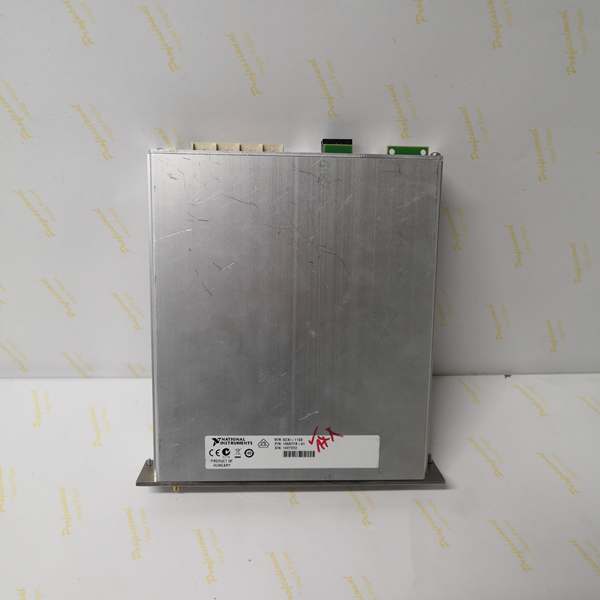
The NI SCXI-1193 is a 32-channel RF multiplexer switch module designed for the SCXI platform, which extends the functionality of data acquisition (DAQ) systems by providing signal conditioning and routing. It acts as a signal routing hub in SCXI-based test setups, allowing multiple input signals to be selectively switched to a single output (or vice versa) for processing by downstream DAQ or analysis devices.
Core Functional Blocks
-
Relay Matrix: The module uses electromechanical latching relays (silver-palladium/gold contacts) to route signals. Each relay is independently controlled, enabling flexible configuration of multiplexer topologies (e.g., 32×1, dual 16×1, quad 8×1).
-
SCXI Interface: Connects to the SCXI chassis via a dedicated slot, receiving power (+5 VDC, ±18.5–25 VDC) and control signals (trigger inputs/outputs) from the backplane.
-
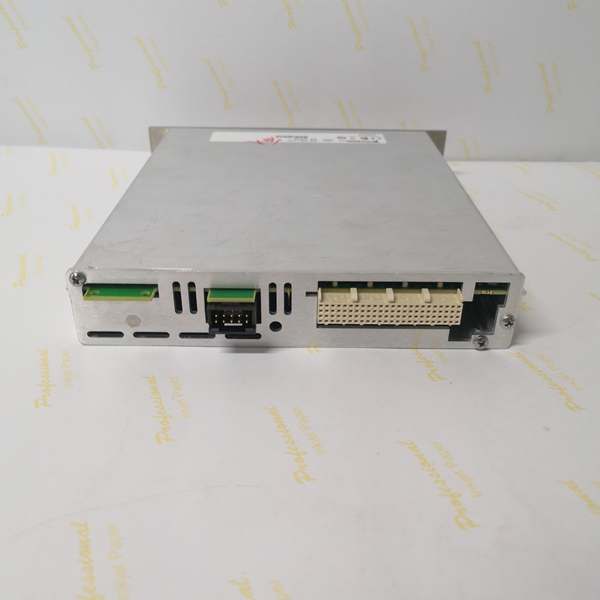
Connector Panel: Features 36 MCX jacks (32 input channels + 4 commons) for signal I/O and 2 SMB jacks for trigger signals. MCX connectors provide high-density, low-loss connections for RF cables.
-
Control Logic: Managed by the SCXI chassis or host computer via NI-Switch software. The module supports Independent topology for custom signal paths (e.g., sparse matrices) and predefined topologies (e.g., 32×1 unterminated multiplexer) for quick setup.
Operational Workflow
-
Configuration: The user selects a topology (e.g., 32×1 multiplexer) via NI Measurement & Automation Explorer (MAX) or programmatically using the
niSwitchlibrary. -
Signal Routing: When a channel is activated, the corresponding relay closes, connecting the input signal to the common output. The module supports unterminated (high-impedance) or terminated (50 Ω) configurations (via external terminators).
-
Triggering: The module accepts trigger inputs (from SCXI trigger lines or front panel) to synchronize switching with other devices (e.g., function generators, oscilloscopes). Trigger outputs can be used to notify downstream devices of switching events.
-
Monitoring: LED indicators on the module show power status and relay activity, aiding in troubleshooting.
Core Technical Specifications
|
Parameter
|
Specification
|
|---|---|
|
Channels
|
32 single-ended (36 MCX jacks: 32 CH + 4 COM)
|
|
Bandwidth
|
DC to 500 MHz (RF performance maintained across all channels)
|
|
Scan Rate
|
Maximum 100 operations/second (full-channel sweep)
|
|
Relay Type
|
Electromechanical latching (silver-palladium/gold contacts)
|
|
Relay Life
|
50 million mechanical cycles; 300k electrical cycles (30V/0.3A DC)
|
|
Trigger Inputs
|
2 SMB jacks (SCXI trigger lines 0–7, front/rear panels); min pulse width 150 ns
|
|
Trigger Outputs
|
2 SMB jacks (programmable pulse width: 1 μs–62 μs)
|
|
Power Requirements
|
+5 VDC (50 mA); +18.5–25 VDC (170 mA); -18.5–25 VDC (170 mA)
|
|
Operating Temperature
|
0°C to +50°C (ambient)
|
|
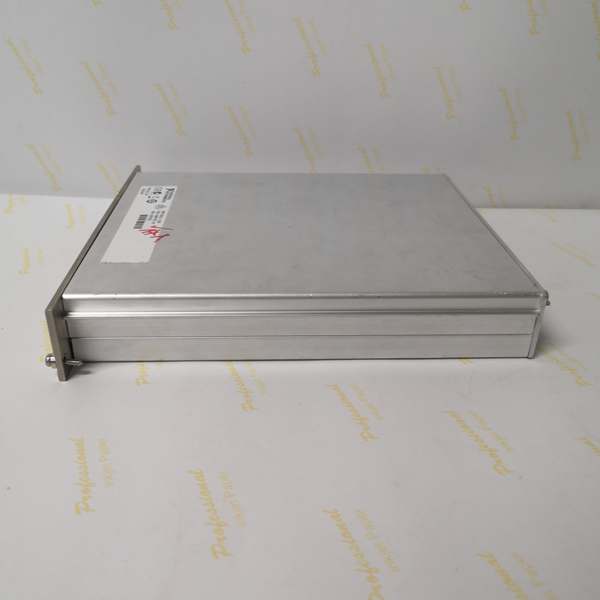
Dimensions
|
1.2 x 6.8 x 7.8 inches (3.0 x 17.3 x 19.8 cm)
|
|
Weight
|
2 ounces (57 g)
|
NI SCXI-1193
Customer Value & Operational Benefits
1. High-Density Signal Routing
The 32-channel design allows multiple signals (e.g., from antennas, sensors, or test points) to be routed through a single module, reducing cabling complexity and system footprint. This is critical for RF testing (e.g., testing 32 antennas with a single spectrum analyzer) or industrial monitoring (e.g., switching between 32 sensor signals for a DAQ system).
2. Flexible Configuration
The module supports predefined topologies (32×1, dual 16×1, quad 8×1) for quick setup and custom sparse matrices for complex signal routing (e.g., connecting any input to any output). This flexibility adapts to diverse applications, from simple multiplexing to advanced test setups.
3. Reliable RF Performance
With a 500 MHz bandwidth and 50 Ω characteristic impedance, the SCXI-1193 maintains signal integrity for high-frequency applications. The electromechanical relays provide low insertion loss (<1 dB) and high isolation (>70 dB), ensuring accurate signal routing without distortion.
4. Easy Integration with SCXI Systems
The module plugs into any SCXI chassis (e.g., SCXI-1000), leveraging the chassis’s power supply and backplane communication. It integrates seamlessly with NI software (LabVIEW, LabWindows/CVI) for automated control and data acquisition.
Field Engineer’s Notes (From the Trenches)
When configuring the SCXI-1193, always verify the relay topology in NI MAX—using the wrong topology (e.g., 16×1 instead of 32×1) can lead to signal loss. I once saw a technician spend hours troubleshooting a “no signal” fault only to find the topology was misconfigured.Check the MCX connector cleanliness—dust or debris on the connectors can cause intermittent signal loss. Use a lint-free wipe and isopropyl alcohol to clean the connectors before installation.Monitor relay life—the module’s relays have a finite electrical life (300k cycles). Use NI-Switch’sniSwitch Get Relay Countfunction to track usage and replace the module proactively to avoid unexpected failures.NI SCXI-1193
Real-World Applications
1. RF Antenna Testing
A telecommunications company uses the SCXI-1193 to test 32 antennas for a 5G base station. The module routes each antenna’s signal to a spectrum analyzer, allowing engineers to characterize gain, bandwidth, and radiation patterns. The 500 MHz bandwidth supports testing of high-frequency 5G signals (e.g., 28 GHz).
2. Industrial Sensor Monitoring
A manufacturing plant uses the SCXI-1193 to switch between 32 temperature sensors (PT100) connected to a DAQ system. The module’s 32-channel design reduces the number of DAQ channels needed, lowering system cost. The relays’ high isolation prevents cross-talk between sensors.
3. Radar System Calibration
A defense contractor uses the SCXI-1193 to calibrate a radar system. The module routes test signals (from a signal generator) to 32 radar receivers, allowing engineers to verify receiver sensitivity and linearity. The 100 operations/second scan rate enables rapid testing of all receivers.