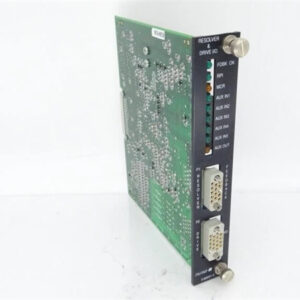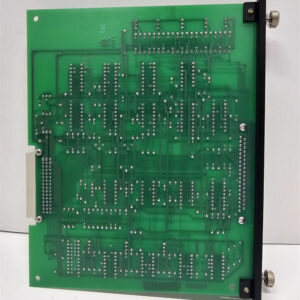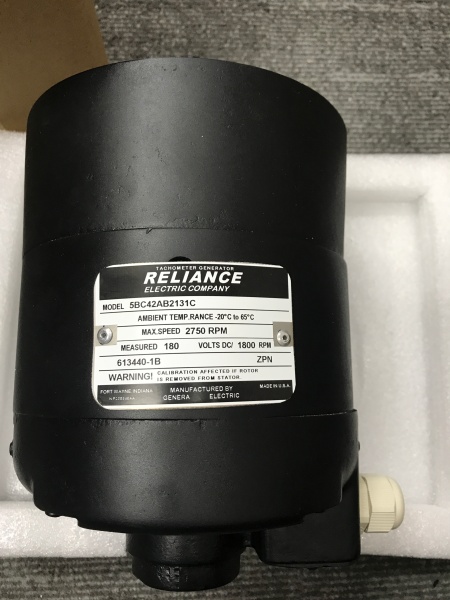
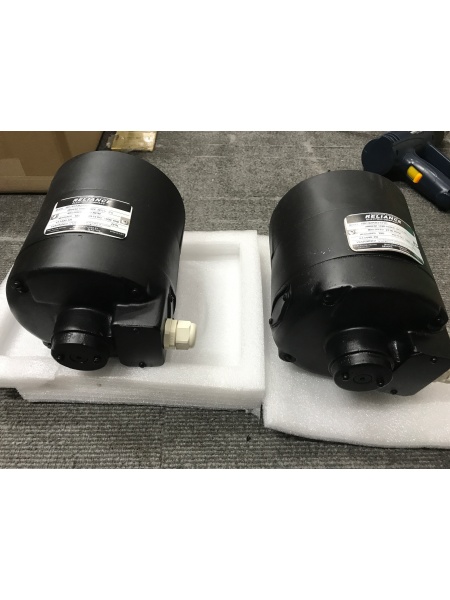
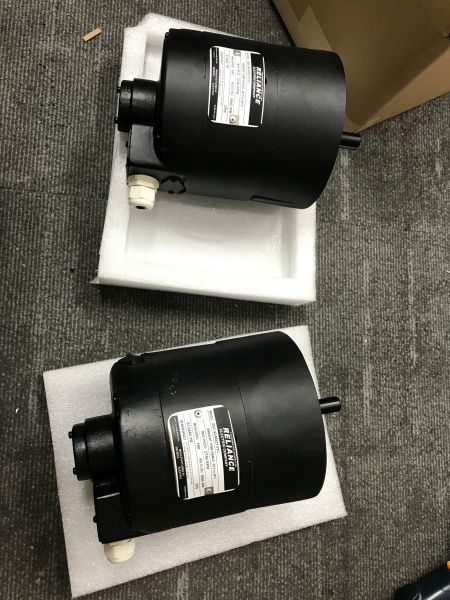
Description
System Architecture & Operational Principle
The RELIANCE 5BC42AB2131C sits at Purdue Model Level 1 (Basic Control) or Level 2 (Supervisory Control), bridging the gap between low-voltage control signals and high-power field devices. Upstream, it receives a 24V DC command from a PLC output module (e.g., Allen-Bradley 1734-OE4C), where a logic “1” energizes the relay coil. Downstream, the energized coil closes the Normally Open (NO) contact and opens the Normally Closed (NC) contact, routing power to devices like motor starters or hydraulic valves.
Its simplicity is its strength: no network protocol, just hardwired reliability. The relay mounts on a standard DIN rail in a control cabinet, drawing minimal backplane space. The inherent advantage is galvanic isolation between the control circuit (PLC) and load circuit (field device), preventing voltage spikes from damaging sensitive electronics. For example, in a packaging line, this relay isolates the PLC from a 480V motor starter coil, containing faults to the load side.

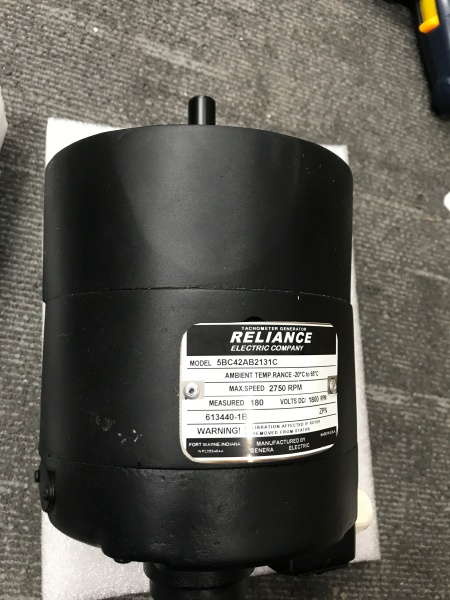
Reliance 5BC42AB2131C
Core Technical Specifications
-
Physical Interface: Screw terminal block (accepts 16-22 AWG wire)
-
Signal Type: Electromechanical switching (SPDT: 1 NO, 1 NC)
-
Channel Density: 1 pole per relay (single-unit package)
-
Communication Bus: None (hardwired input/output)
-
Coil Voltage: 24V DC (±10% tolerance)
-
Contact Rating: 250V AC/10A resistive; 30V DC/10A inductive
-
Switching Time: Operate ≤10ms, Release ≤5ms
-
Environmental Tolerance: -20°C to +70°C operating; 5-95% RH non-condensing
-
Power Draw: 2W (coil power at 24V DC)
-
Mechanical Life: 20 million operations (no load)
-
Electrical Life: 100,000 operations (at rated load)
-
Weight: 0.2 kg (0.44 lbs)
Customer Value & Operational Benefits
Reduced Maintenance Time with Hot-Swap Design
The relay’s plug-in base allows replacement without rewiring. I’ve swapped these in 5 minutes during a shift change, avoiding a 2-hour shutdown. The screw terminals hold wire firmly—no loose connections from vibration.
Prevent Unplanned Outages via Robust Contacts
Silver-cadmium oxide contacts resist welding under inductive loads (like solenoid valves). In a wastewater plant, these relays survived 3 years of 10A switching before showing minor arcing, far longer than cheaper alternatives.
Fast Root-Cause Analysis with Visual Status
The clear plastic housing lets you see the armature position. If a motor won’t start, a quick glance tells you if the relay is stuck open—cuts diagnostic time from 30 minutes to 2.
Field Engineer’s Notes (From the Trenches)
When installing the 5BC42AB2131C, always check the coil voltage beforewiring. I once assumed a 24V coil on a legacy system, but it was actually 120V AC—fried the coil in 10 seconds. Use a multimeter to confirm supply voltage.Wire gauge matters: 22 AWG is too thin for 10A loads over 6 feet—you’ll get voltage drop and overheating. Stick to 18 AWG for runs under 10 feet.Label the terminals! NO/NC gets mixed up fast. I write “LOAD” on NO and “COMMON” on the moving contact with a paint pen.If contacts arc, clean them with a fiberglass pencil—don’t sandpaper, it leaves residue. And always mount the relay vertically; horizontal mounting traps heat and shortens life.Reliance 5BC42AB2131C
Real-World Applications
-
Automotive Assembly Line Conveyor Control
-
The relay acts as a PLC output interface, switching 480V AC contactors for conveyor motors. NO contact closes when the PLC signals “start,” latching the motor on until an E-stop (NC contact) opens.
-
-
Municipal Water Pump Station Solenoid Valves
-
Used to toggle 24V DC solenoid valves for floodgates. NC contact keeps the valve closed during normal operation; a PLC “open” command energizes the coil, shifting to NO to release the gate.
-
High-Frequency Troubleshooting FAQ
Q: Is the RELIANCE 5BC42AB2131C compatible with modern Allen-Bradley PLC output modules?
A: Yes, if the PLC outputs 24V DC at ≥50mA (coil draw is ~83mA). Older PLCs (e.g., SLC 500) may need a transistor output adapter. Confirm the PLC’s sourcing/sinking configuration matches the relay’s coil (most 5BC42AB2131C coils are sinking).
Q: How do I diagnose “contact welding” on the 5BC42AB2131C?
A: With power off, use a multimeter in continuity mode. A welded NO contact will show <1Ω between NO and COMMON (should be >1MΩ). Worn contacts appear pitted or blackened—replace the relay if arcing is visible.
Q: Can the 5BC42AB2131C be used in a NEMA 4X washdown cabinet?
A: No, its IP20 rating isn’t waterproof. For washdown areas, use a NEMA 4X enclosure with gland fittings, or switch to a sealed relay (e.g., IDEC RH series). Moisture causes coil corrosion—I’ve seen 3 failures in 2 years from humidity.
Q: What’s the correct torque for the 5BC42AB2131C terminal screws?
A: 0.8-1.2 N·m (7-10 in-lbs). Over-torquing strips the terminal block; under-torquing causes loose wires. Use a calibrated screwdriver—cheap ones vary by 30%.
Commercial Availability & Pricing
Please note: The listed price is not the actual final price. It is for reference only and is subject to appropriate negotiation based on current market conditions, quantity, and availability.