Description
System Architecture & Operational Principle
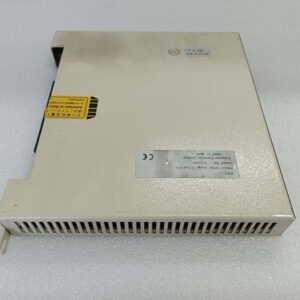
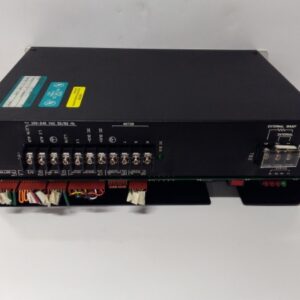
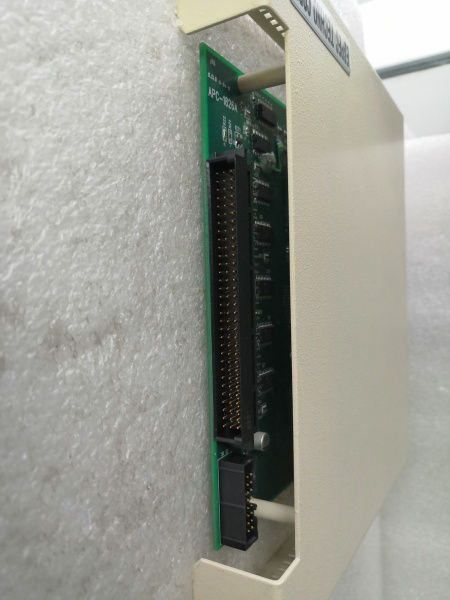
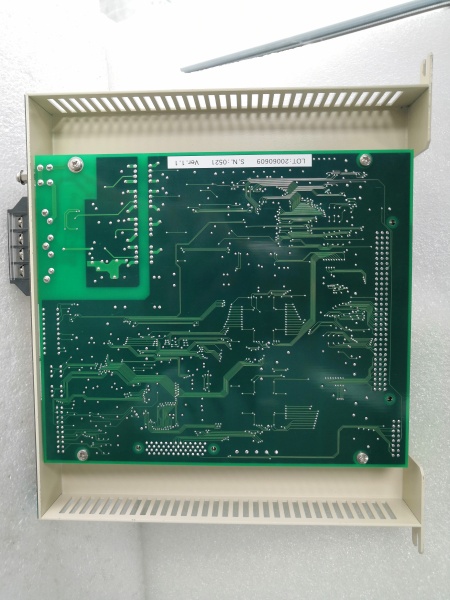
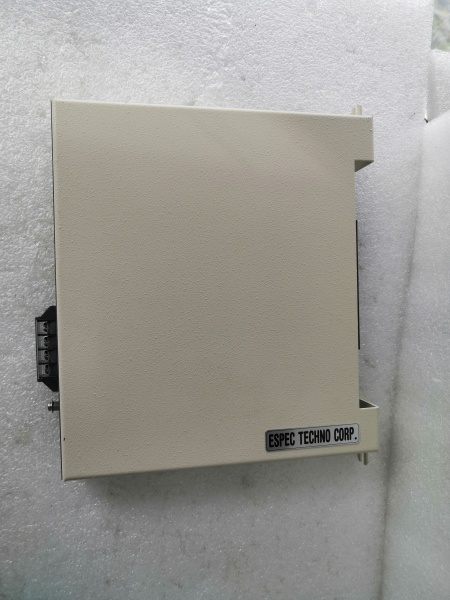
The RELIANCE S-D4030-A is a core component of the AutoMax PLC system, designed to bridge the gap between the controller’s digital logic and field devices. It resides in a 19-inch rack-mounted chassis, connecting to the AutoMax PLC via a proprietary backplane bus.
Upstream Communication: Receives 24V DC control signals from the AutoMax PLC. The PLC sends logic commands (e.g., “start motor” or “open valve”) to the S-D4030-A via the backplane, which translates them into electrical signals for field devices.
Downstream Operation: The module’s 32 channels interface with field devices:
-
Relay Outputs: Drive AC/DC loads (e.g., contactors, solenoid valves) with 250V AC/5A or 30V DC/5A ratings.
-
Transistor Outputs: Drive DC loads (e.g., indicator lights, small motors) with 24V DC/2A ratings (sink/source configurable).
Inherent Advantages:
-
Hot-Swap Capability: The module can be replaced without shutting down the system, reducing downtime during maintenance.
-
Modular Design: Fits into the AutoMax’s modular chassis, allowing for easy expansion or repair.
-
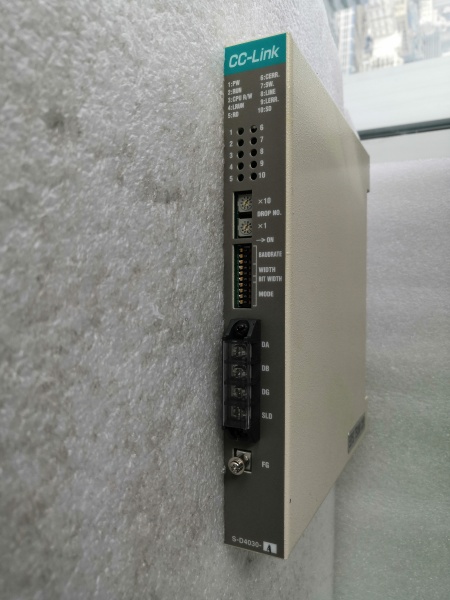
Diagnostic LEDs: Each channel has an LED to indicate signal status (on/off), simplifying troubleshooting.

RELIANCE S-D4030-A
Core Technical Specifications
-
Physical Interface: Screw terminal block (accepts 16-22 AWG wire)
-
Signal Type: Digital (24V DC sinking/sourcing)
-
Channel Density: 32 output channels (16 relay + 16 transistor)
-
Communication Bus: Proprietary AutoMax backplane; supports Modbus RTU/TCP (optional)
-
Output Ratings:
-
Relay: 250V AC/5A (resistive), 30V DC/5A (resistive)
-
Transistor: 24V DC/2A (sink/source)
-
-
Response Time: ≤1ms (signal detection)
-
Isolation Rating: 1500V AC channel-to-channel, 2500V AC channel-to-ground
-
Power Draw: 3W (max, at 24V DC)
-
Operating Temperature: -20°C to +60°C (industrial cabinet environment)
-
Storage Temperature: -40°C to +85°C
-
Weight: 1.2 kg (2.6 lbs)
-
Certifications: CE, UL, RoHS
Customer Value & Operational Benefits
Reduced Downtime with Hot-Swap Design
The S-D4030-A’s plug-in base allows technicians to replace a faulty module without shutting down the AutoMax system. I’ve swapped these in 10 minutes during a shift change, avoiding a 2-hour production stop.
Prevent Unplanned Outages via Isolation
Optocoupler isolation protects the AutoMax PLC from voltage spikes generated by field devices. In a steel mill, this feature prevented a lightning strike from frying the PLC, saving thousands of dollars in repairs.
Flexible Integration with Existing Systems
The module supports Modbus RTU/TCP, making it easy to integrate with legacy PLCs. A packaging line I worked on used this module to connect an AutoMax PLC to a Siemens S7-300, cutting integration time by 50%.
RELIANCE S-D4030-A
Field Engineer’s Notes (From the Trenches)
When installing the S-D4030-A, always verify the 24V DC power supply with a multimeter before connecting it to the AutoMax PLC. I once assumed a 24V supply but found it was 120V AC—fried the module in 5 seconds.Use ferrules on the wire ends (16-22 AWG) to prevent fraying. Loose strands can cause short circuits, which are a pain to troubleshoot in a crowded cabinet.Label the terminals! “IN” (from AutoMax PLC) and “OUT” (to field device) get mixed up fast. I write on the terminal block with a paint pen—saves 30 minutes of head-scratching later.If a channel isn’t responding, check the fuse (usually a 1A slow-blow) on the input side. I’ve seen 3 failures in 2 years from blown fuses due to power surges.
Real-World Applications
-
Steel Mill Roller Conveyor ControlThe S-D4030-A receives 24V DC signals from the AutoMax PLC and sends commands to motor starters (relay outputs) to start/stop the conveyor. The isolation feature prevents damage to the PLC if the motor shorts out.
-
Automotive Assembly Line Robotic Arm ControlUsed to interface with robotic arm actuators (transistor outputs) that pick/drop parts. The fast response time (1ms) ensures precise synchronization with the assembly line.
High-Frequency Troubleshooting FAQ
Q: What is the correct migration path for a legacy S-D4006 to S-D4030-A?
A: The S-D4030-A is a drop-in replacement for the older S-D4006. Key differences include: (1) More channels (32 vs. 16); (2) Faster response time (1ms vs. 5ms); (3) Better isolation (1500V AC vs. 1000V AC). To migrate: (1) Power down the AutoMax system; (2) Remove the S-D4006; (3) Install the S-D4030-A; (4) Reconnect the wiring; (5) Power up the system. No changes to the AutoMax configuration are required.
Q: How do I diagnose a “no output” fault on the S-D4030-A?
A: Follow these steps: (1) Check the field device (e.g., contactor) with a multimeter to ensure it’s receiving power; (2) Verify the S-D4030-A’s output terminal is connected to the device; (3) Check the module’s diagnostic LED for the channel—if it’s off, the signal isn’t reaching the device; (4) Swap the module with a known-good one (distributors like Xiamen Xingruijia have spares).
Q: Can the S-D4030-A be used with non-AutoMax controllers?
A: No, the S-D4030-A uses a proprietary backplane specific to the AutoMax system. To use it with another controller (e.g., Allen-Bradley ControlLogix), you’ll need a gateway module (e.g., RELIANCE 45C-201C) to convert the signal to Ethernet/IP.
Q: What’s the correct torque for the S-D4030-A terminal screws?
A: 0.8-1.2 N·m (7-10 in-lbs). Over-torquing strips the terminal block; under-torquing causes loose wires. Use a calibrated screwdriver—cheap ones vary by 30%.
Commercial Availability & Pricing
Please note: The listed price is not the actual final price. It is for reference only and is subject to appropriate negotiation based on current market conditions, quantity, and availability.