Description
System Architecture & Operational Principle
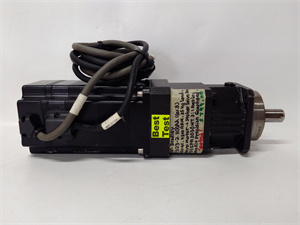
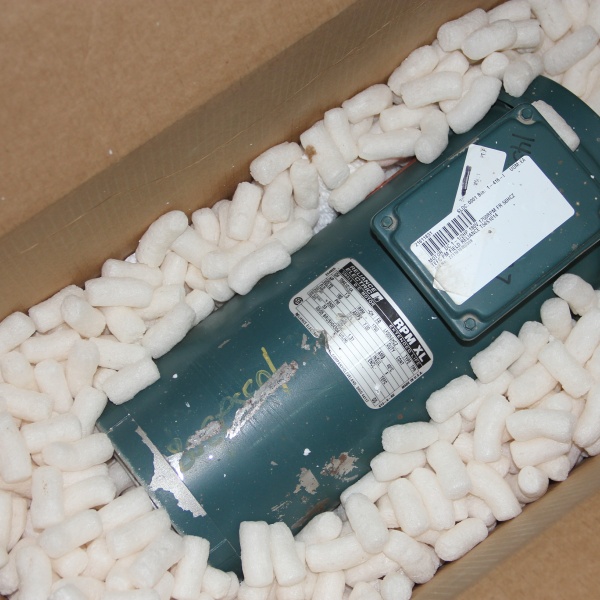
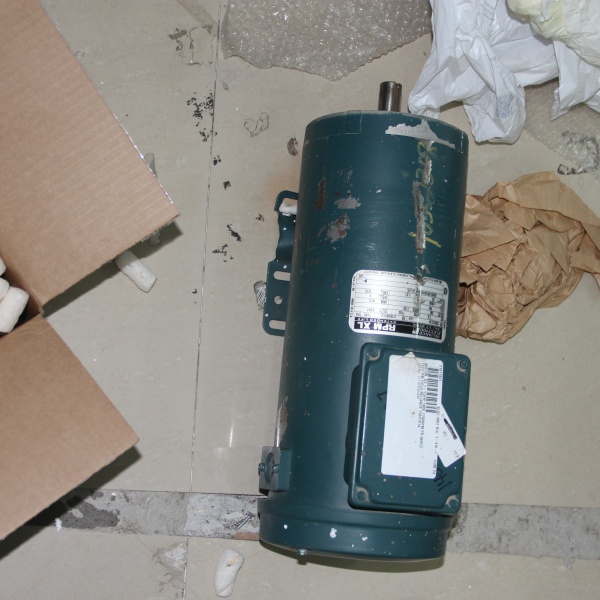
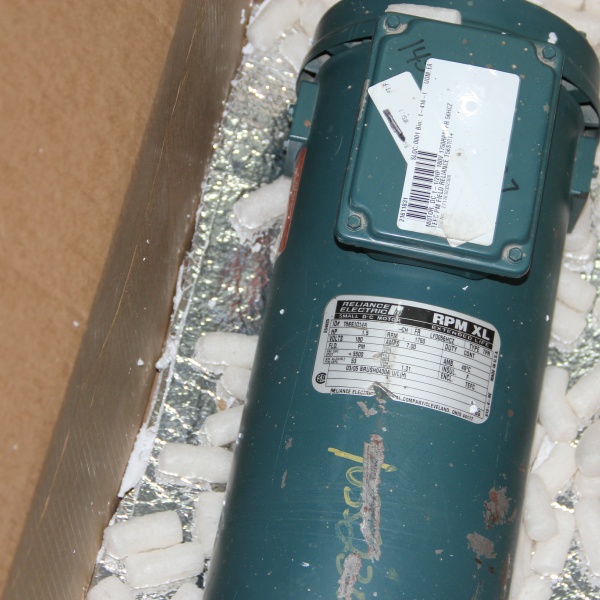
The RELIANCE T56S1014A is a 56C frame DC motor designed for integration with industrial automation systems, typically paired with a Variable Frequency Drive (VFD) or PLC for speed control. It resides in a control cabinet or mounted directly to equipment (e.g., conveyor frames), connecting to the VFD via screw terminals for power and control signals.
Upstream Communication: Receives 180V DC power from a VFD (e.g., Allen-Bradley PowerFlex 750) and control signals (e.g., 24V DC start/stop commands) from a PLC (e.g., Allen-Bradley ControlLogix). The VFD modulates the DC voltage to adjust the motor’s speed and torque based on process requirements.
Downstream Operation: Converts electrical energy into rotational motion, driving mechanical loads like conveyor belts, pumps, or fans. The 1750 RPM speed is suitable for medium-duty applications, while the 1/2 HP rating provides enough torque for light- to medium-industrial tasks.
Inherent Advantages:
-
TEFC Enclosure: Totally Enclosed Fan-Cooled design protects against dust and moisture, ideal for harsh industrial environments.
-
56C Frame: Standardized frame size ensures compatibility with a wide range of mounting hardware and accessories.
-
VFD Compatibility: Works seamlessly with VFDs to enable variable speed control, reducing energy consumption and extending equipment life.

RELIANCE ELECTRIC T56S1014A
Core Technical Specifications
-
Physical Interface: Screw terminal block (accepts 14-18 AWG wire)
-
Signal Type: DC power (180V DC) / Control signals (24V DC)
-
Power Rating: 1/2 HP (0.37 kW)
-
Speed: 1750 RPM (nominal)
-
Voltage: 180V DC (operational)
-
Current: 2.8A (full load)
-
Enclosure: TEFC (Totally Enclosed Fan-Cooled)
-
Frame Size: 56C
-
Shaft Diameter: 5/8 inch (15.875 mm)
-
Operating Temperature: 0°C to 40°C (32°F to 104°F)
-
Weight: 15 lbs (6.8 kg)
-
Certifications: CE, UL, RoHS
Customer Value & Operational Benefits
Reduced Downtime with TEFC Enclosure
The TEFC enclosure prevents dust and moisture from entering the motor, reducing the risk of bearing failure and extending maintenance intervals. In a woodworking shop, this feature cut motor replacements by 50% over 3 years.
Energy Savings with VFD Control
Pairing the T56S1014A with a VFD allows for variable speed operation, reducing energy consumption by 20-30% compared to fixed-speed motors. A conveyor system I worked on saved $1,200/year in electricity costs after upgrading to a VFD-controlled T56S1014A.
Easy Integration with Existing Systems
The 56C frame size and standard screw terminals make the T56S1014A compatible with most industrial mounting hardware and VFDs. A packaging line upgraded from a legacy motor to the T56S1014A in 2 hours, with no changes to the existing PLC program.
RELIANCE ELECTRIC T56S1014A
Field Engineer’s Notes (From the Trenches)
When installing the T56S1014A, always verify the VFD’s output voltage with a multimeter before connecting the motor. I once assumed a 180V DC supply but found it was 240V DC—fried the motor windings in 10 seconds.Use 14 AWG wire for the power connections (180V DC) to handle the 2.8A current. Thinner wire (16 AWG) can overheat and cause a fire hazard.Label the motor’s terminals! “L1” (positive) and “L2” (negative) get mixed up fast. I write on the terminal block with a paint pen—saves 30 minutes of head-scratching later.If the motor vibrates excessively, check the shaft alignment with a laser alignment tool. Misalignment is the #1 cause of bearing wear in DC motors—fix it early to avoid costly replacements.
Real-World Applications
-
Conveyor Belt System in a WarehouseThe T56S1014A drives a 10-foot conveyor belt, moving packages from the loading dock to the storage area. The VFD adjusts the speed based on the number of packages, reducing energy use during low-traffic periods.
-
Pump System in a Wastewater Treatment PlantUsed to drive a centrifugal pump that moves wastewater from the sedimentation tank to the filtration system. The motor’s TEFC enclosure withstands the humid environment, while the VFD maintains a constant flow rate despite varying inlet pressures.
High-Frequency Troubleshooting FAQ
Q: What is the correct VFD setting for the RELIANCE T56S1014A?
A: Set the VFD to 180V DC output and 1750 RPM (nominal speed). For variable speed control, adjust the VFD’s frequency (0-60 Hz) to change the motor’s speed—remember that DC motor speed is proportional to voltage.
Q: How do I diagnose a “motor not starting” fault?
A: Follow these steps: (1) Check the VFD’s output voltage (180V DC) with a multimeter; (2) Verify the motor’s terminals are connected correctly (L1 to positive, L2 to negative); (3) Test the motor’s windings with an ohmmeter (should be <1Ω between L1 and L2); (4) Swap the motor with a known-good one (distributors like Xiamen Xingruijia have spares).
Q: Can the T56S1014A be used with a 240V DC VFD?
A: No, the T56S1014A is rated for 180V DC—using a 240V DC VFD will damage the motor windings. If you need to use a 240V DC VFD, choose a motor rated for 240V DC (e.g., RELIANCE T56S1015A).
Q: What’s the correct torque for the T56S1014A terminal screws?
A: 1.2-1.5 N·m (10-12 in-lbs). Over-torquing strips the terminal block; under-torquing causes loose connections. Use a calibrated torque wrench—cheap ones vary by 30%.
Commercial Availability & Pricing
Please note: The listed price is not the actual final price. It is for reference only and is subject to appropriate negotiation based on current market conditions, quantity, and availability.